Wedding Flower Color Palettes by Season (Spring, Summer, Fall Guide)
Most couples begin planning their wedding by choosing colors first. They save inspiration photos, build Pinterest boards, and try to piece together a vision. But when it comes to florals, the most beautiful designs do not start with a fixed palette – they start with what is naturally growing.
At Moondance Flower Farm, we guide couples toward seasonal wedding flowers that reflect the time of year instead of forcing – or sourcing – blooms or colors that do not belong. This approach creates designs that feel more cohesive, more elevated, and more connected to the setting while also ensuring better quality and longevity.
This guide walks through wedding flower color palettes by season, showing what is possible in spring, summer, and fall. Along the way, you will see how wedding flowers by season naturally shape color, texture, and the overall look and feel of your day.
The most beautiful weddings do not fight nature – they follow it.
Spring Wedding Flowers (May – June Color Palettes)
Spring is one of the most naturally romantic times of year for weddings, with flowers that feel soft, fresh, and just beginning to open.
In Northern Michigan, the flower season starts in May and builds into June, bringing a mix of delicate early blooms and fuller, more layered varieties. This is when flowers like peonies, tulips, anemones, and lilacs are at their peak.
Because these blooms are only available for a short window, they naturally shape the look of the season. Color palettes tend to feel lighter and more tonal, often built around blush, cream, soft yellow, and fresh greens. Instead of strong contrast, spring designs typically rely on softness, shape, and subtle variation to create interest.
The result is a style that feels effortless, romantic, and closely tied to the landscape.
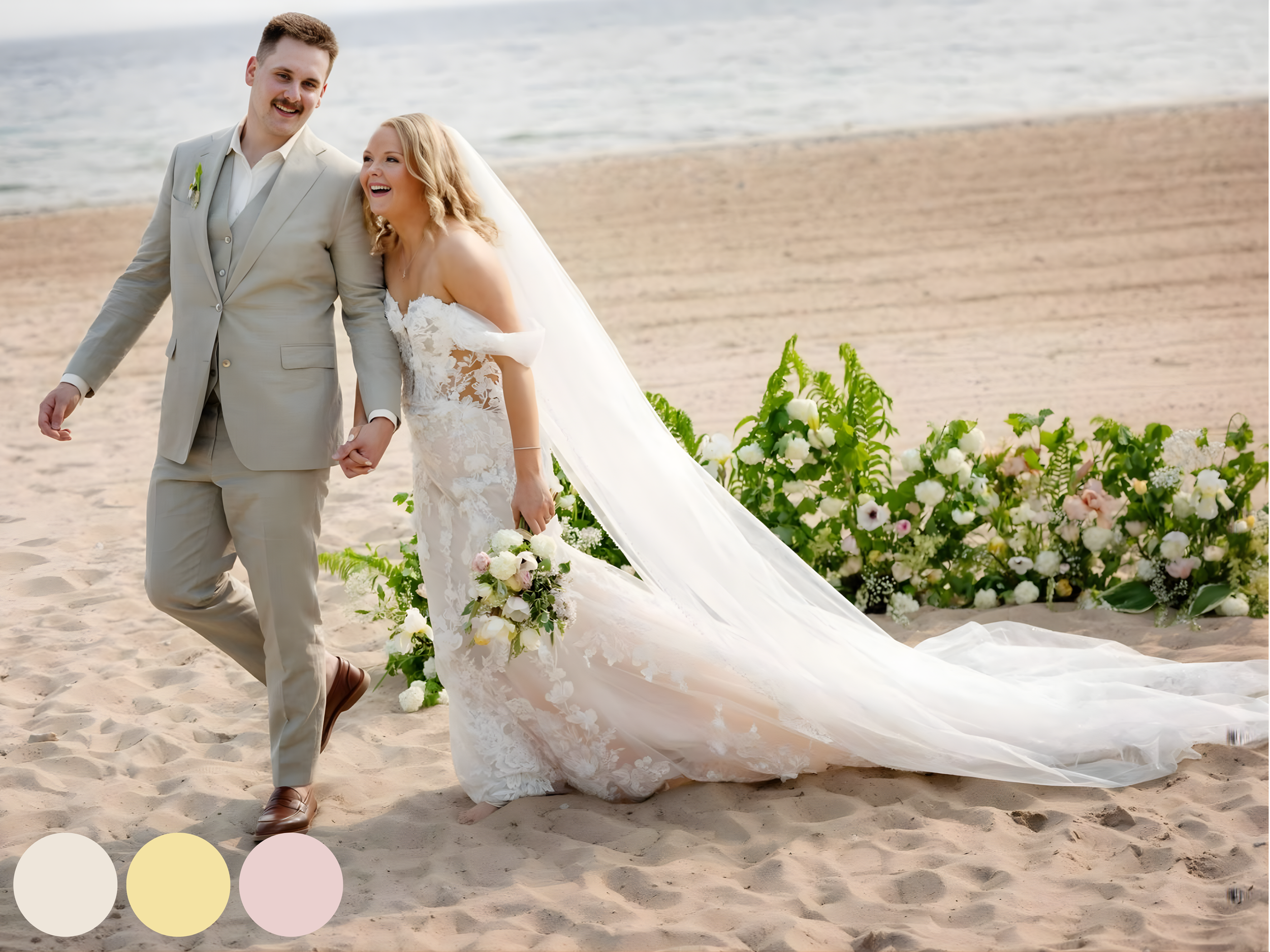
Spring Palette 1: Soft Romantic Spring Colors
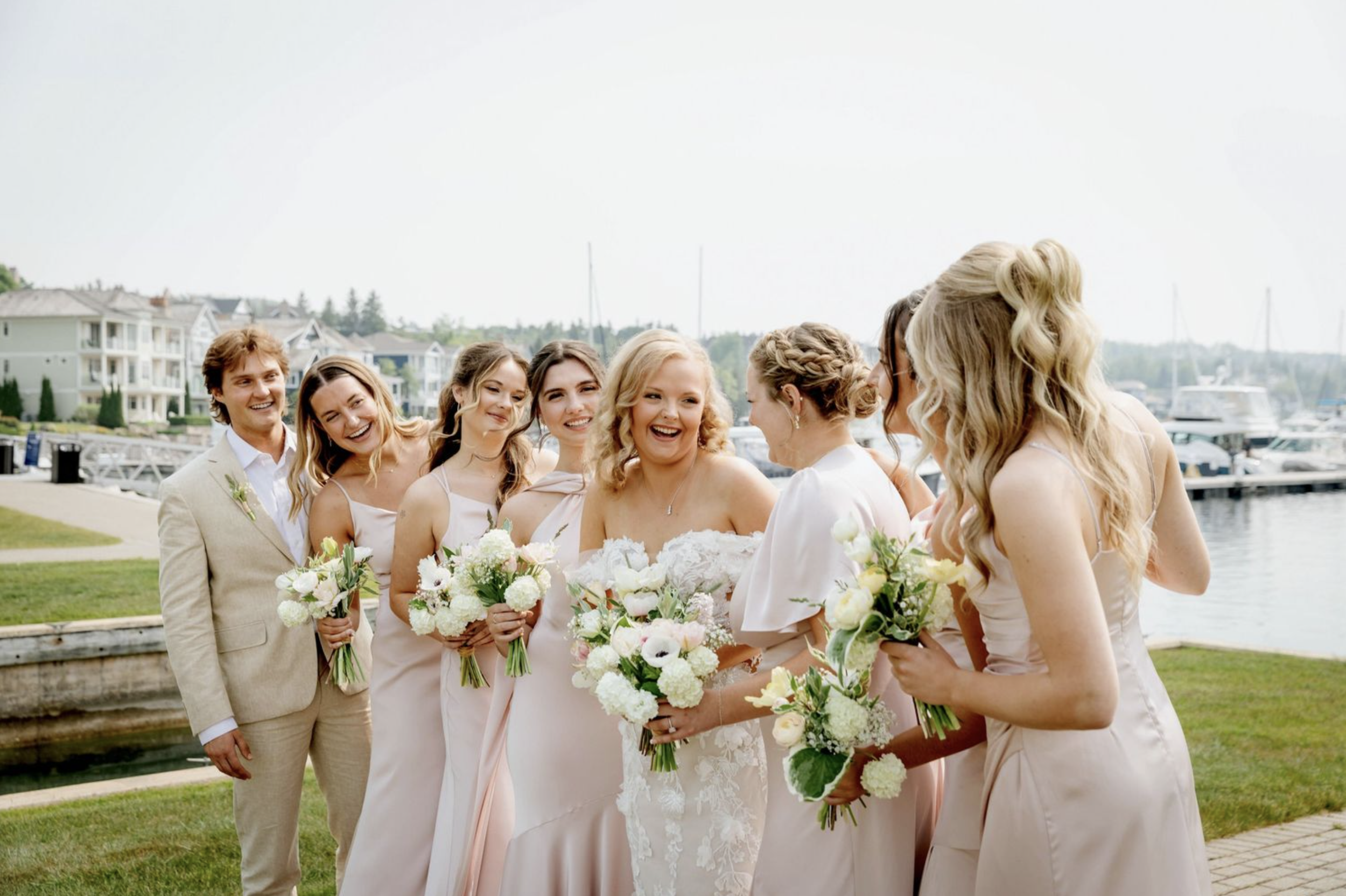
This Bay Harbor Marina wedding is a beautiful example of a soft, tonal spring palette built with spring wedding flowers at their natural peak.
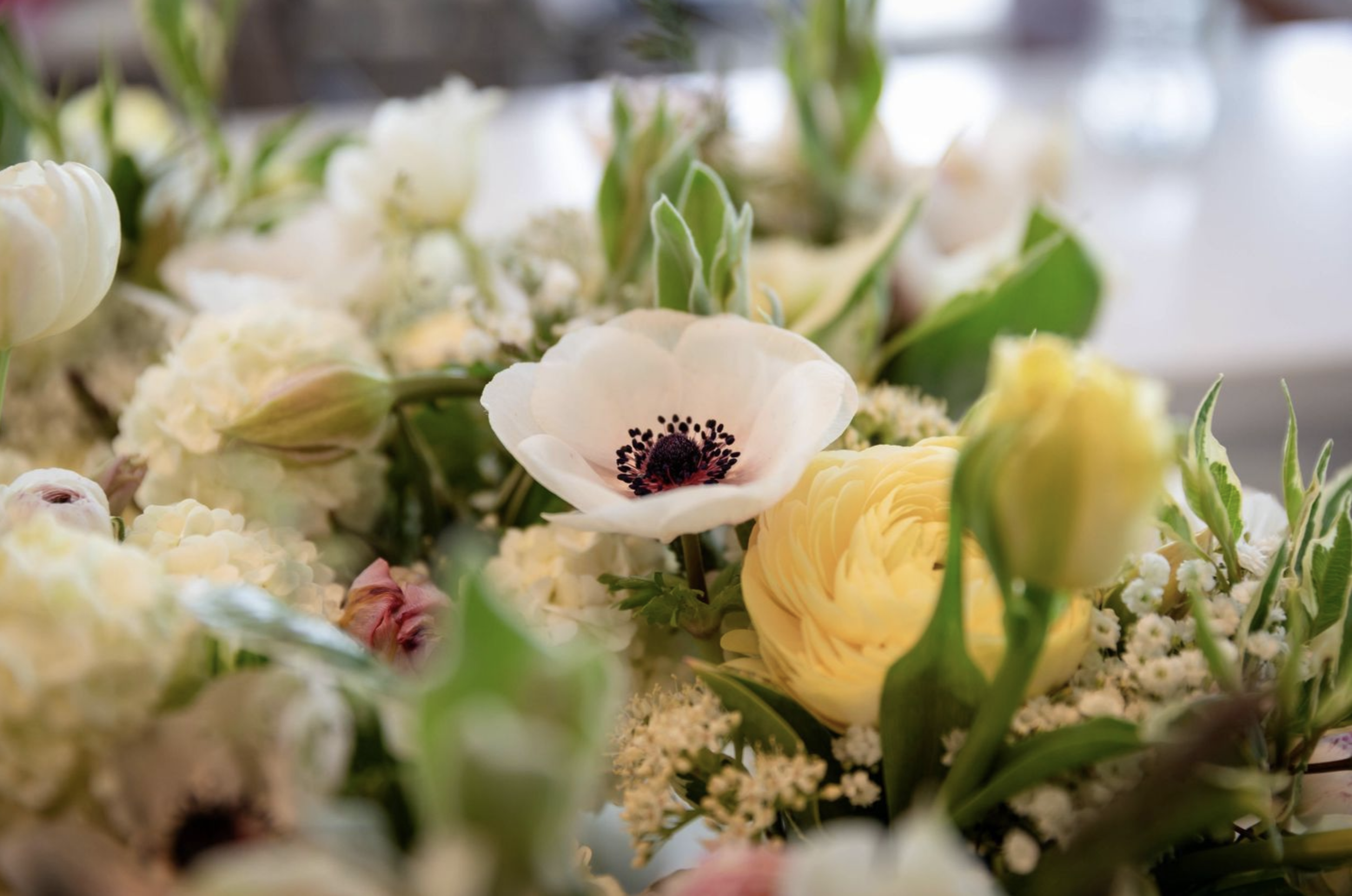
The design features peonies, anemones, irises, and tulips layered in blush, cream, and pale yellow, creating a look that feels full without being heavy. Each bloom plays a role, with larger focal flowers supported by smaller, more delicate varieties that add movement and texture.
Rather than relying on bold color contrast, this palette is defined by subtle shifts in tone and shape. The softness comes from the way the flowers are layered, allowing each element to blend naturally into the next.
Because these blooms are all part of the natural spring cycle, the palette feels cohesive and grounded. Nothing feels forced or out of place, which is what gives spring designs their signature ease.
Image credit: Center of Attention Photography
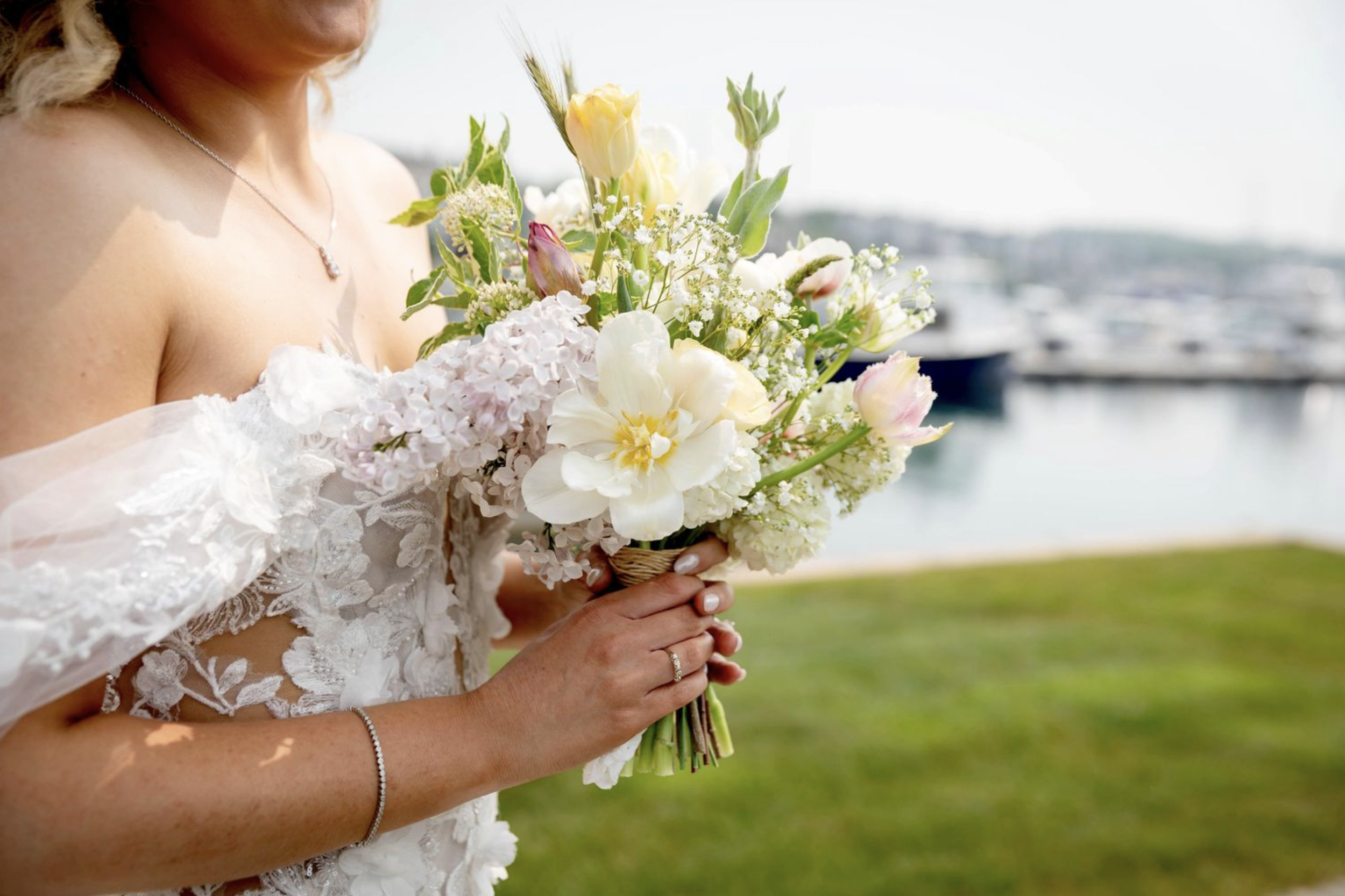
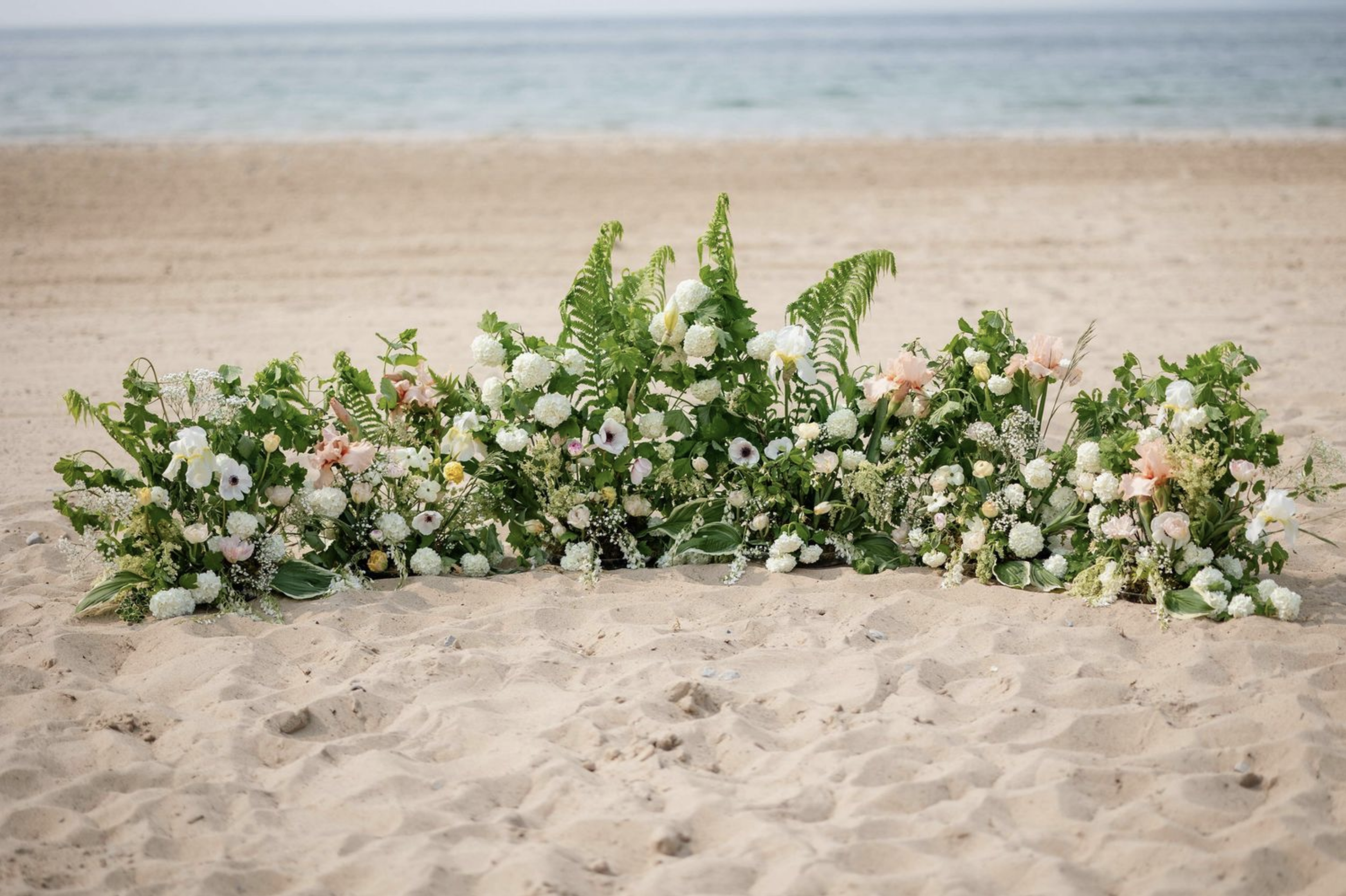
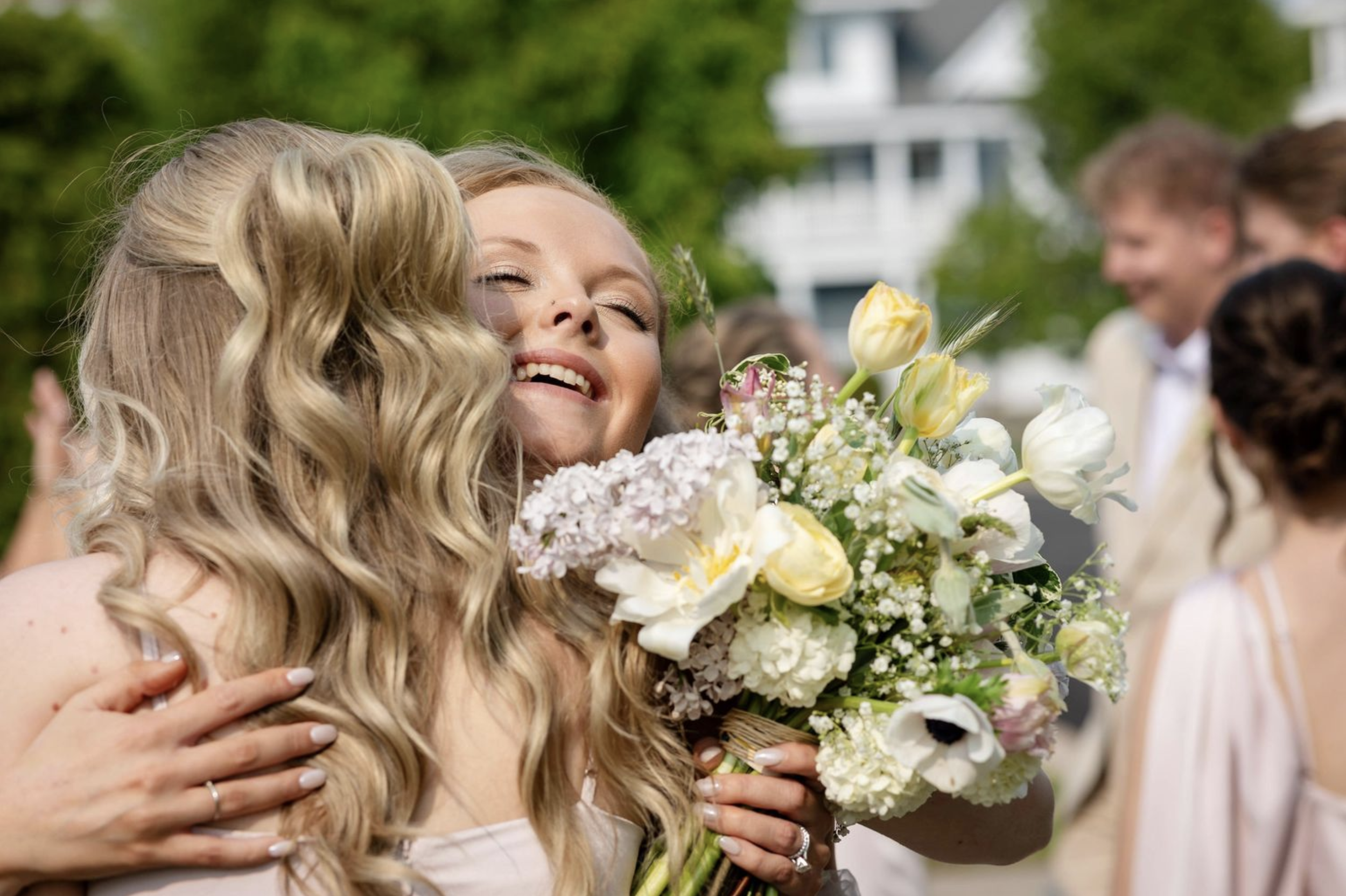
Spring Palette 2: Fresh Spring Garden
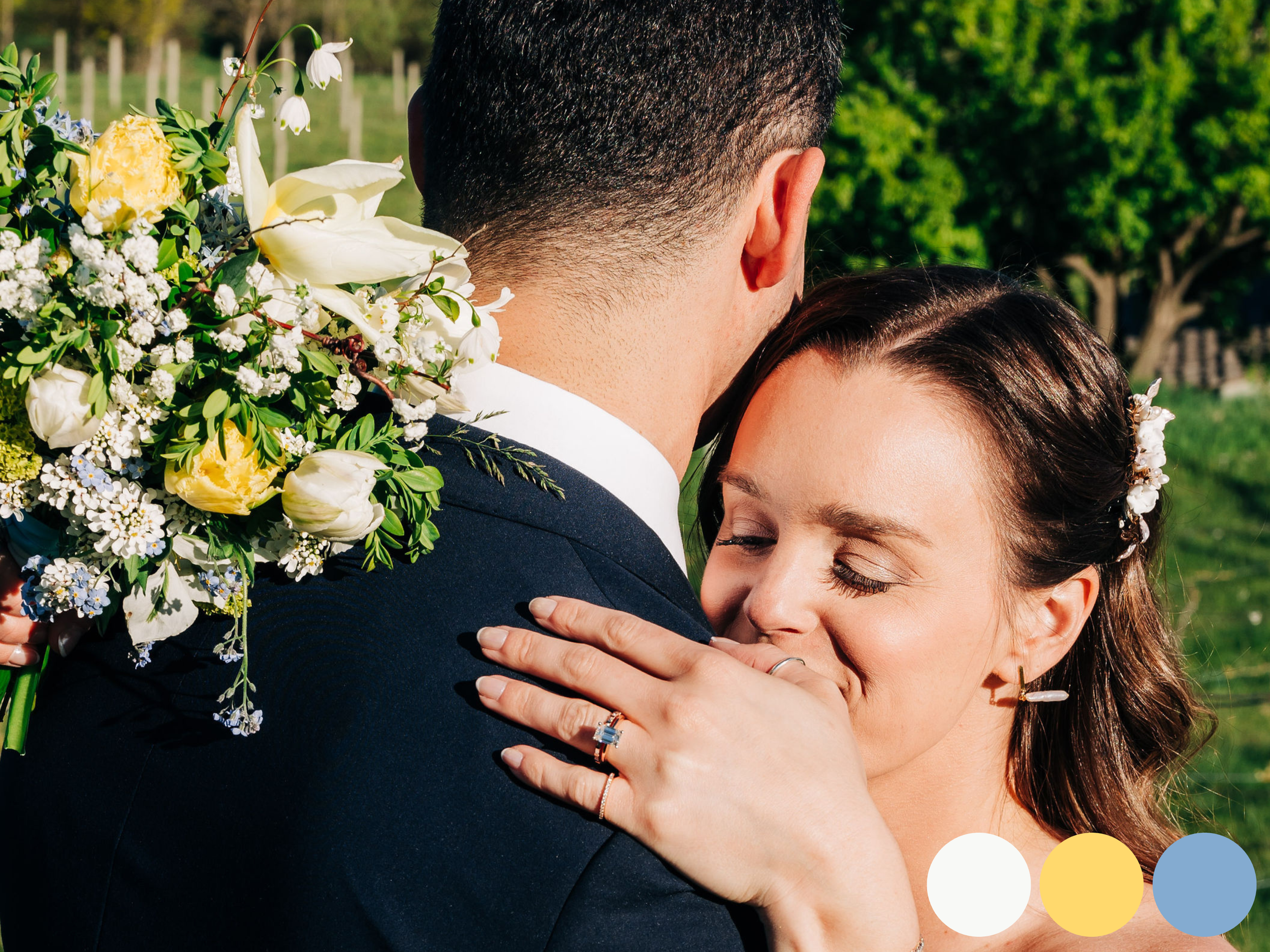
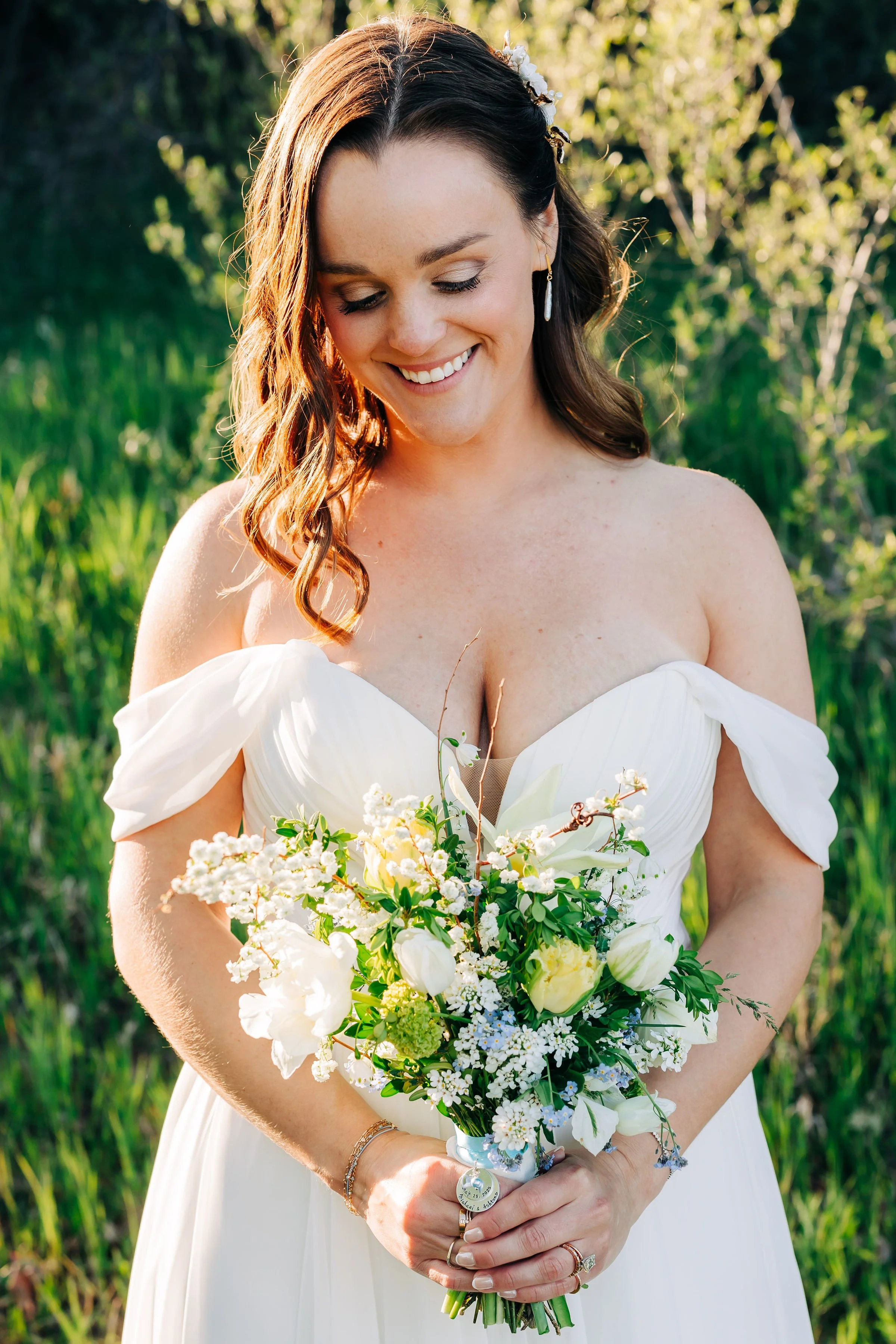
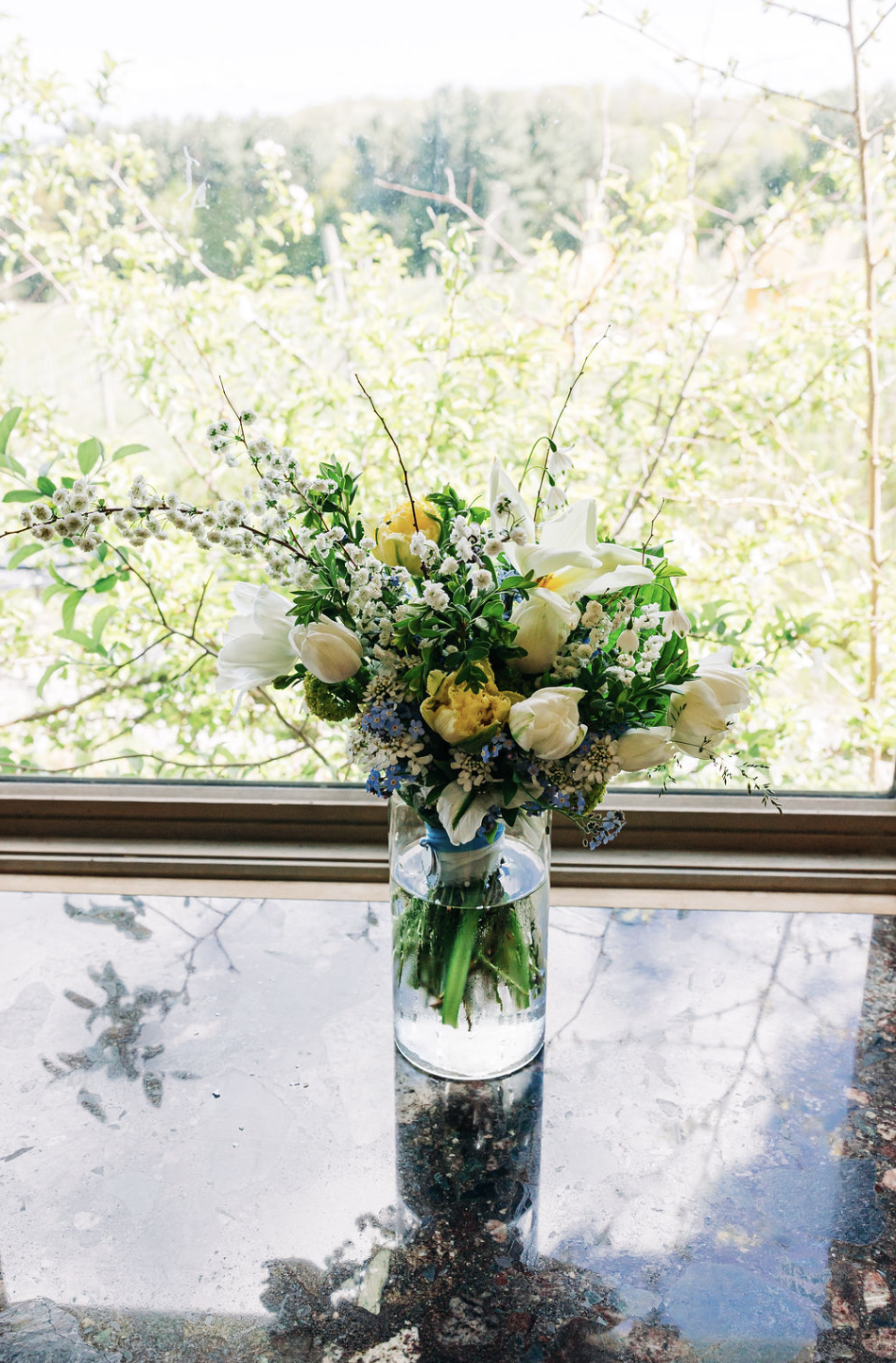
This palette leans into soft whites, fresh greens, and subtle hints of color like pale yellow and soft blue. The overall effect feels loose and natural, like the flowers were gathered straight from the field that morning. This approach is a natural fit for spring wedding flower color ideas, especially for couples who want something that feels effortless and connected to the season.
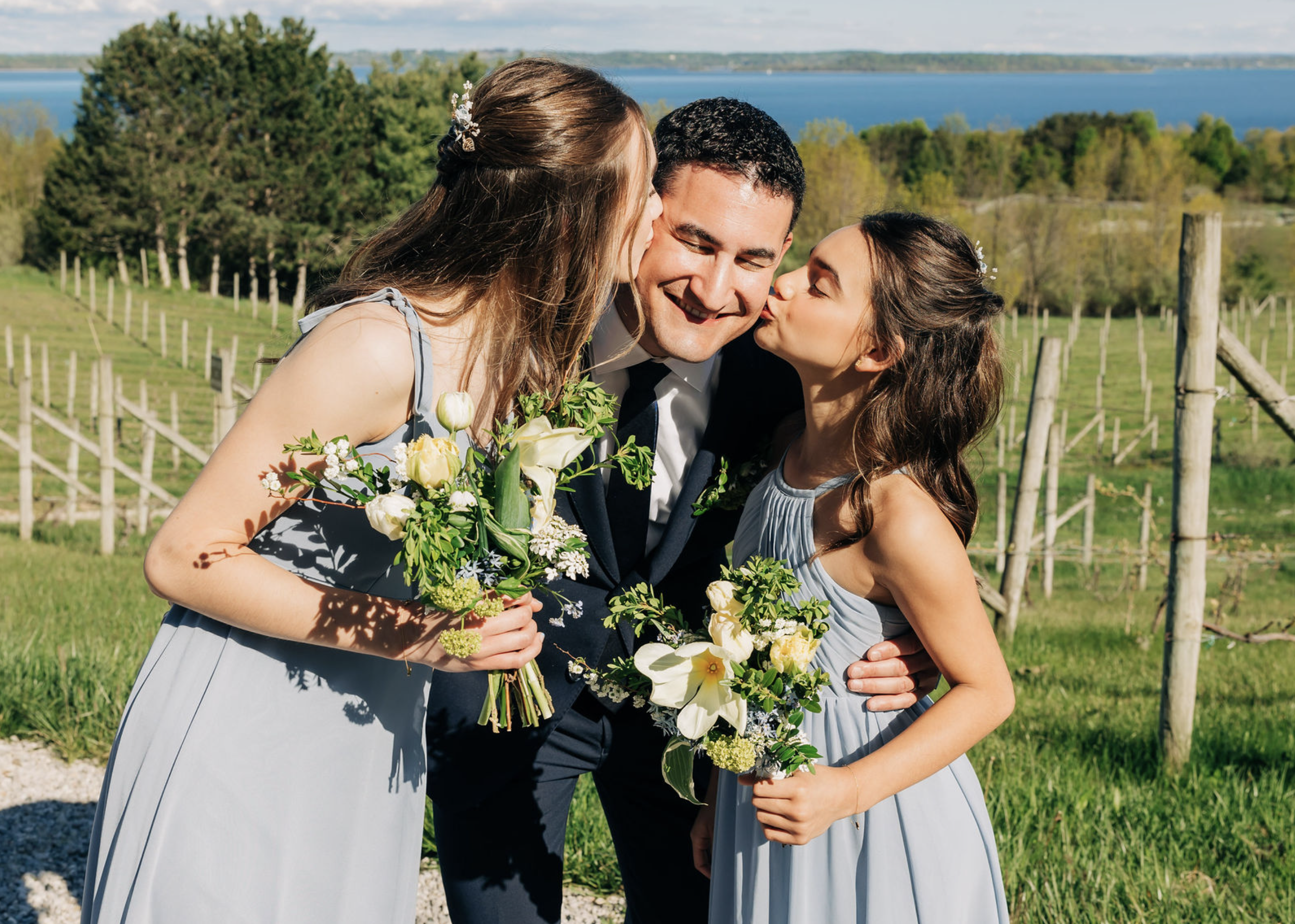
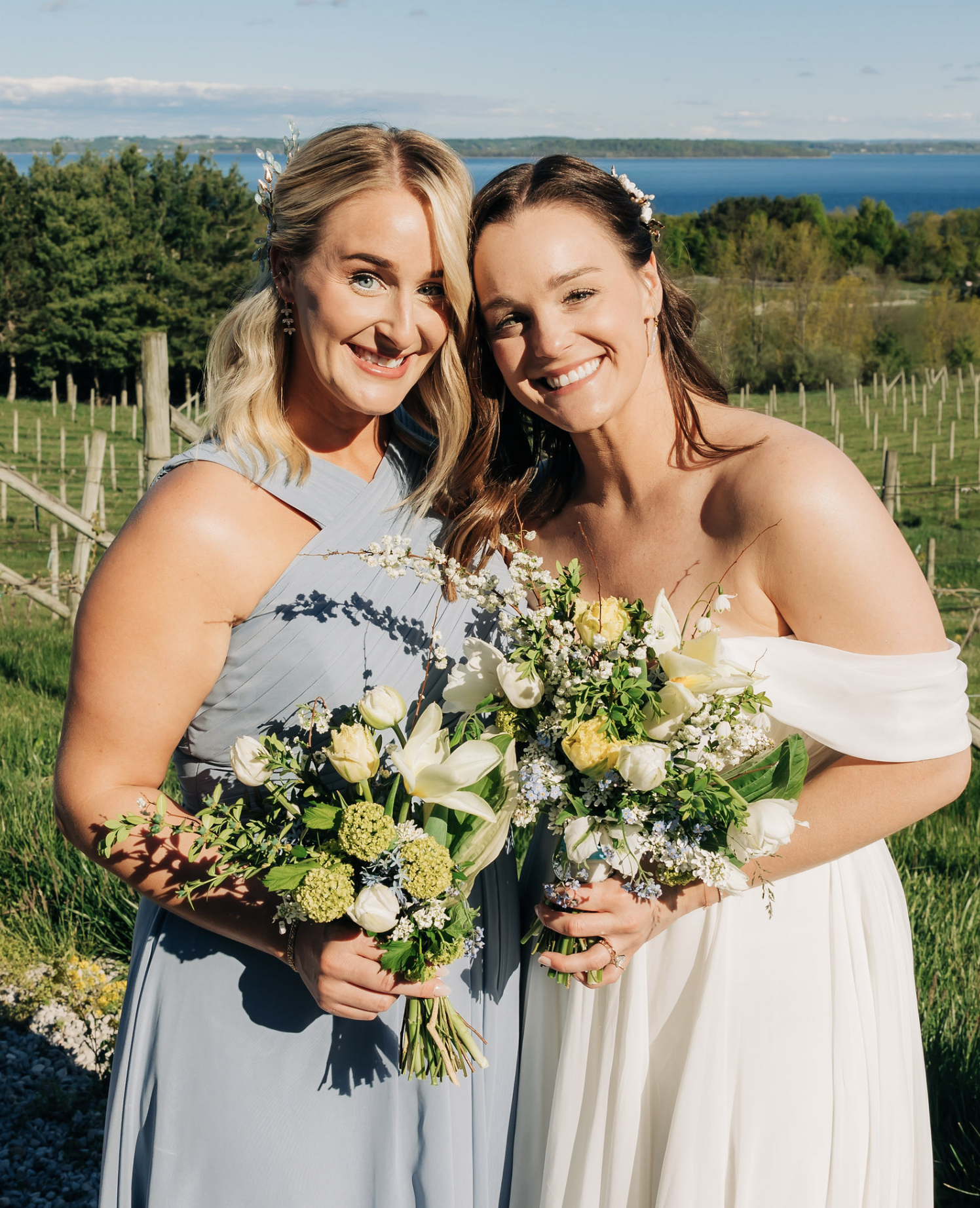
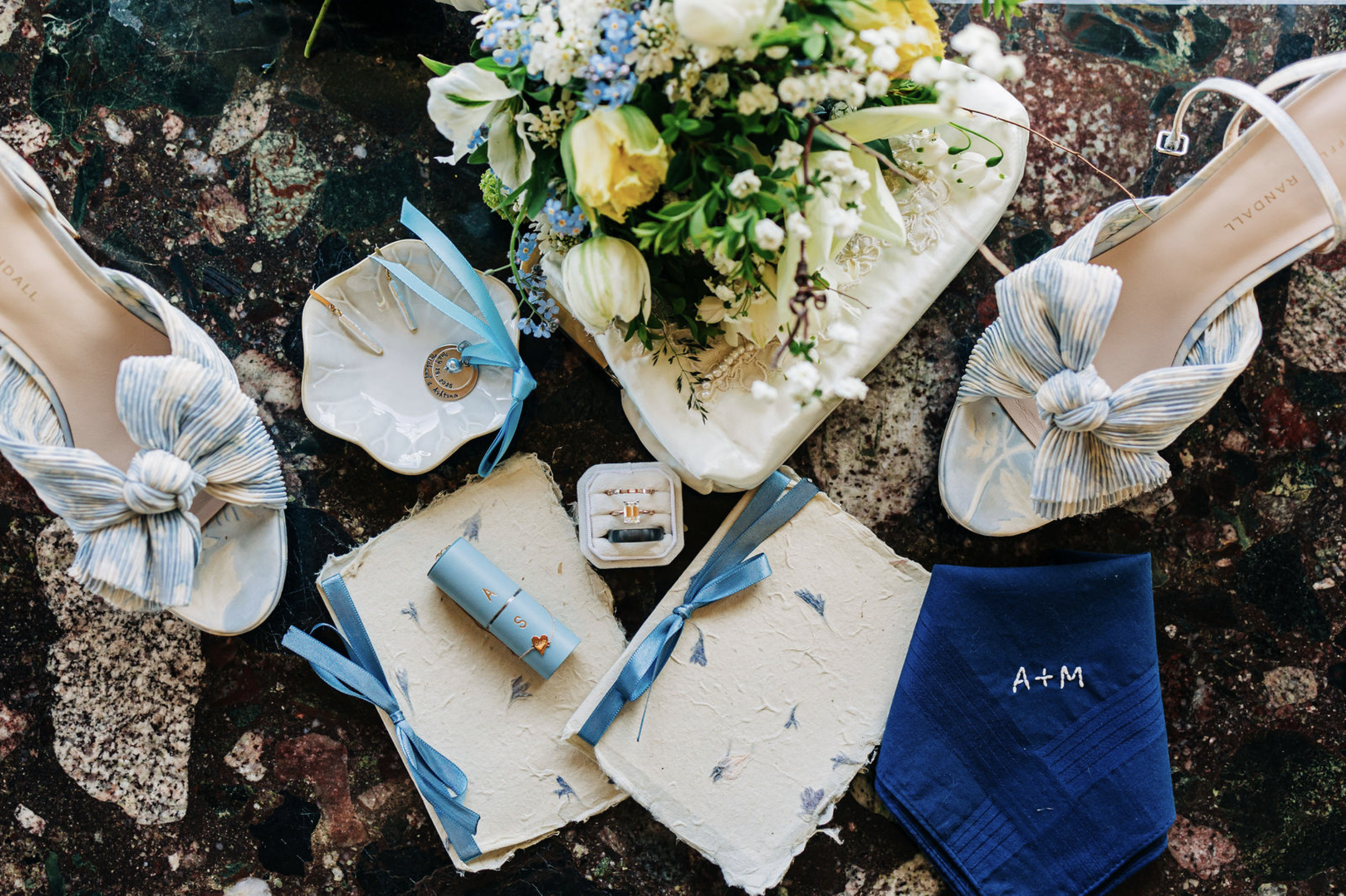
This May wedding at Willow Winery & Vineyard is a perfect example. Creamy whites, fresh greenery, buttery yellow tulips, and delicate blue accents come together in a way that feels effortless and full of movement.
Because these blooms are all part of seasonal flowers naturally blooming in May, the palette feels cohesive without needing to be overly styled. The color variation happens organically, creating dimension while still keeping the overall look soft and approachable.
This is often the direction we guide couples toward when they are drawn to white flowers but want something that still feels alive, layered, and connected to the season.
Image credit: Kristina Sobel Photography
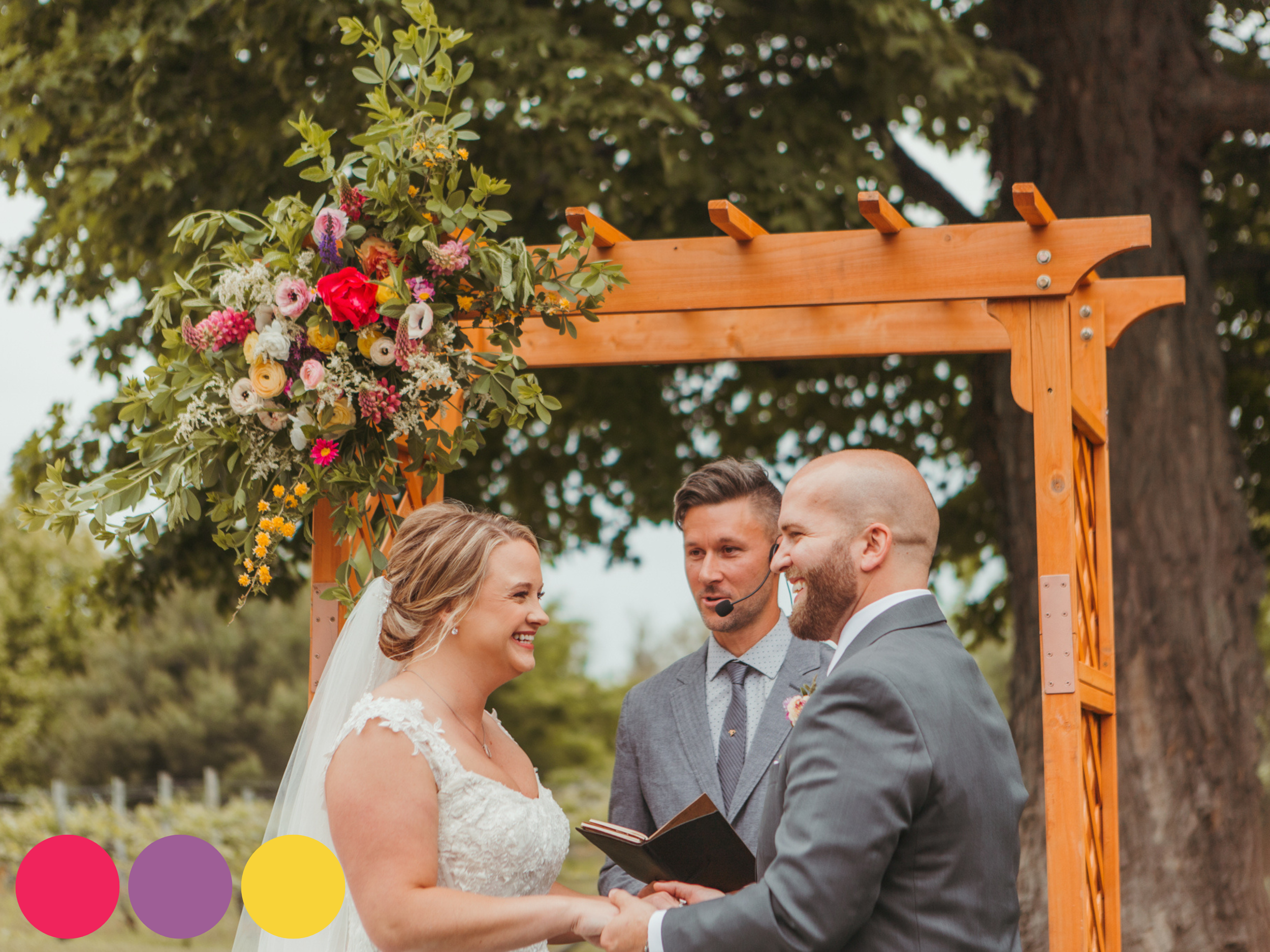
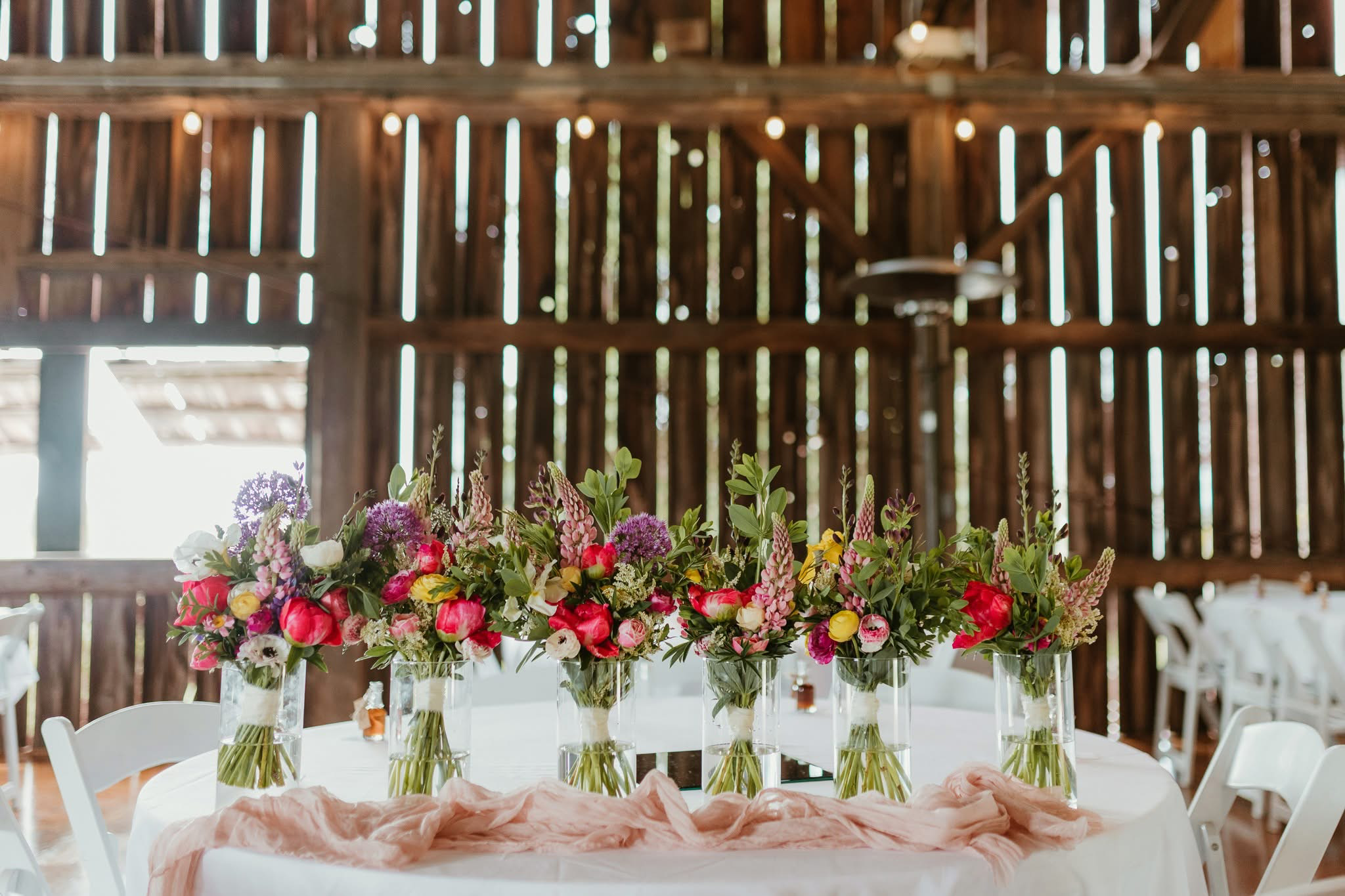
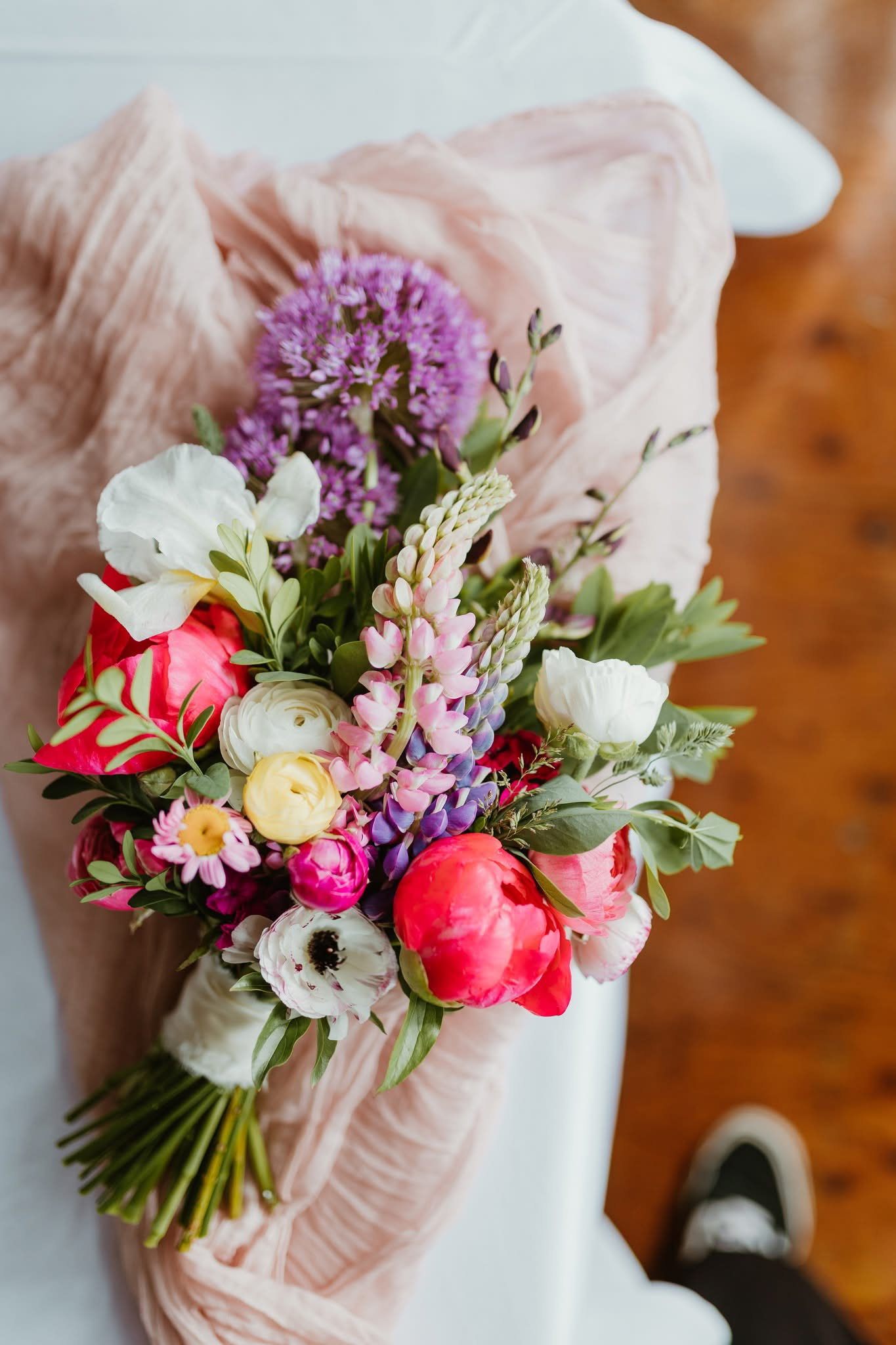
Spring Palette 3: Bold Spring Color
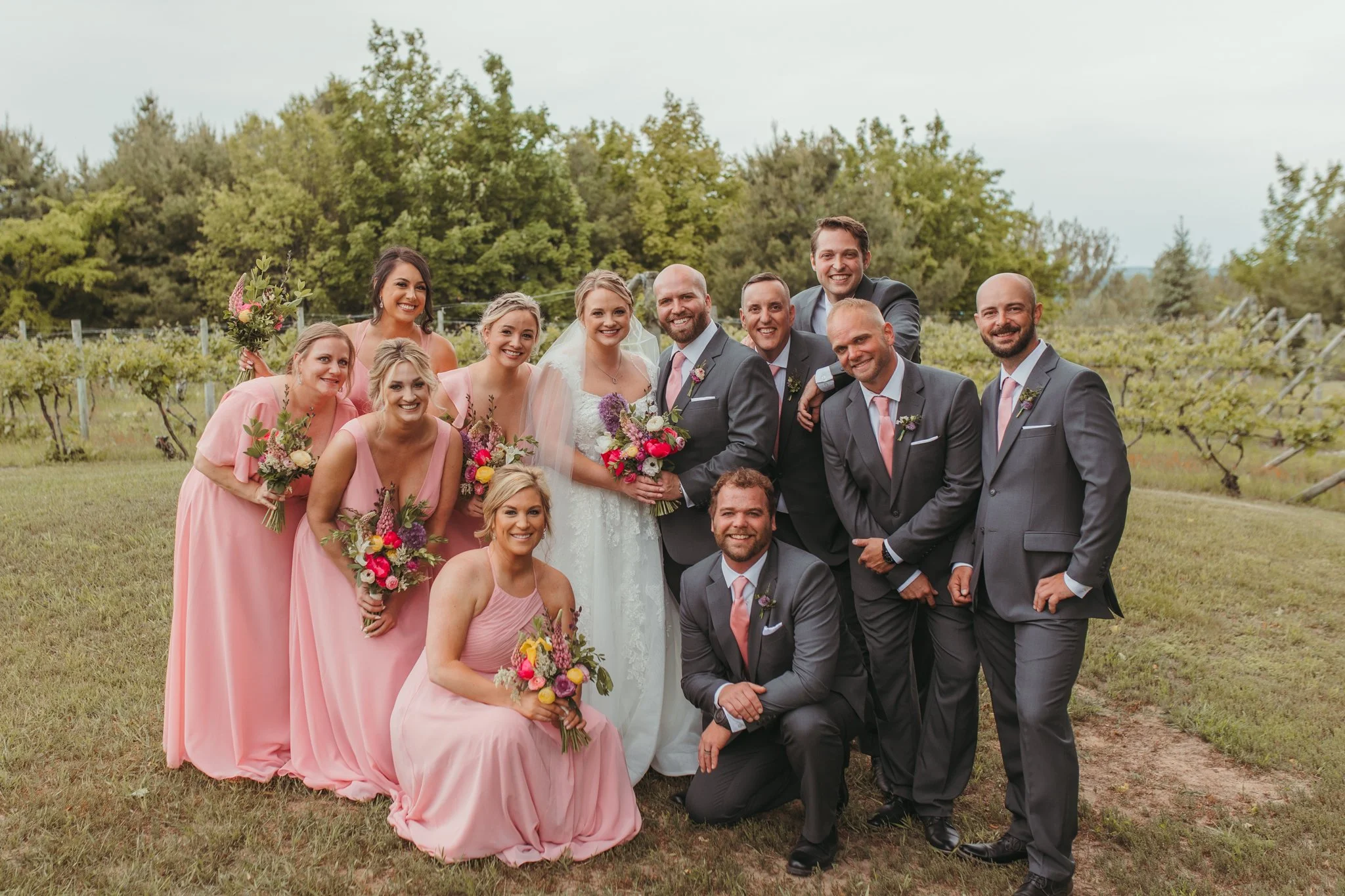
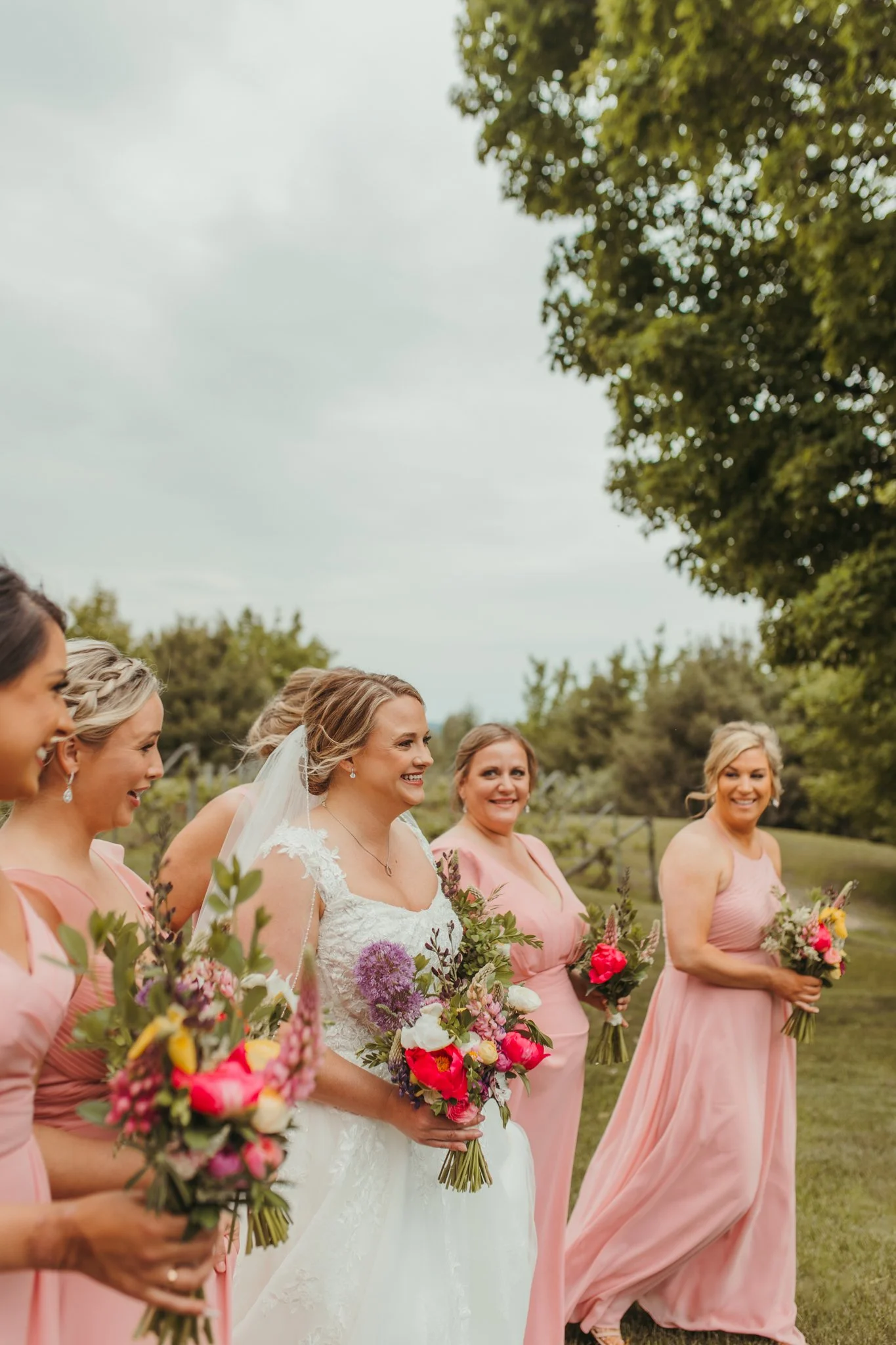
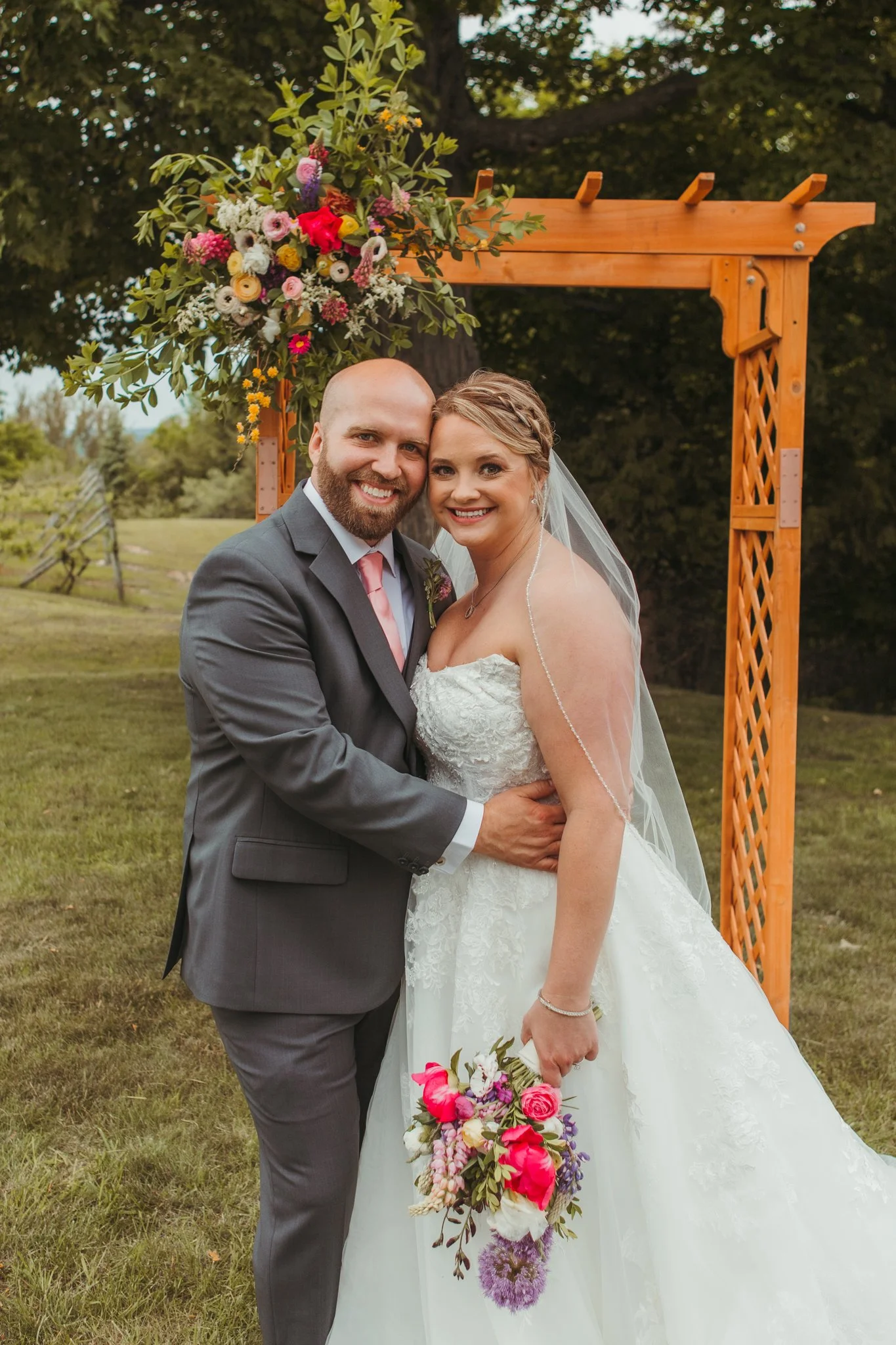
While many spring weddings lean soft and tonal, late spring can also create space for more color. This June wedding at Ciccone Vineyards is a perfect example. Bright pinks, coral tones, and pops of yellow and purple are layered with fresh greenery, creating a palette that feels energetic and expressive, while still rooted in the season.
Using blooms like peonies, ranunculus, and lupine, this style reflects what is naturally available in late spring. The color feels vibrant without feeling out of place, because it’s built from what is already in bloom.
This palette is a strong option for couples who are drawn to color but still want their flowers to feel seasonal. It shows how spring wedding flowers can support a more playful, high-impact look while still staying cohesive.
Image credit: Norpine Photography
Summer Wedding Flowers (July – August Color Palettes)
Summer is when flowers hit their stride. The variety expands, the colors deepen, and the overall look becomes more layered and expressive.
In Northern Michigan, July and August bring some of the most abundant summer wedding flowers, including dahlias, lilies, zinnias, cosmos, snapdragons and garden roses. With so many varieties in bloom at once, palettes naturally feel fuller, dynamic, and more varied than earlier in the year.
This is what allows summer weddings to move in multiple directions. Some palettes stay soft and airy, others lean refined and tonal, and some fully embrace bold, high-contrast color. No matter the direction, the designs are grounded in what is naturally available during peak season.
The result is a style that feels vibrant, flexible, and full of life.
Summer Palette 1: Airy Summer Garden Color
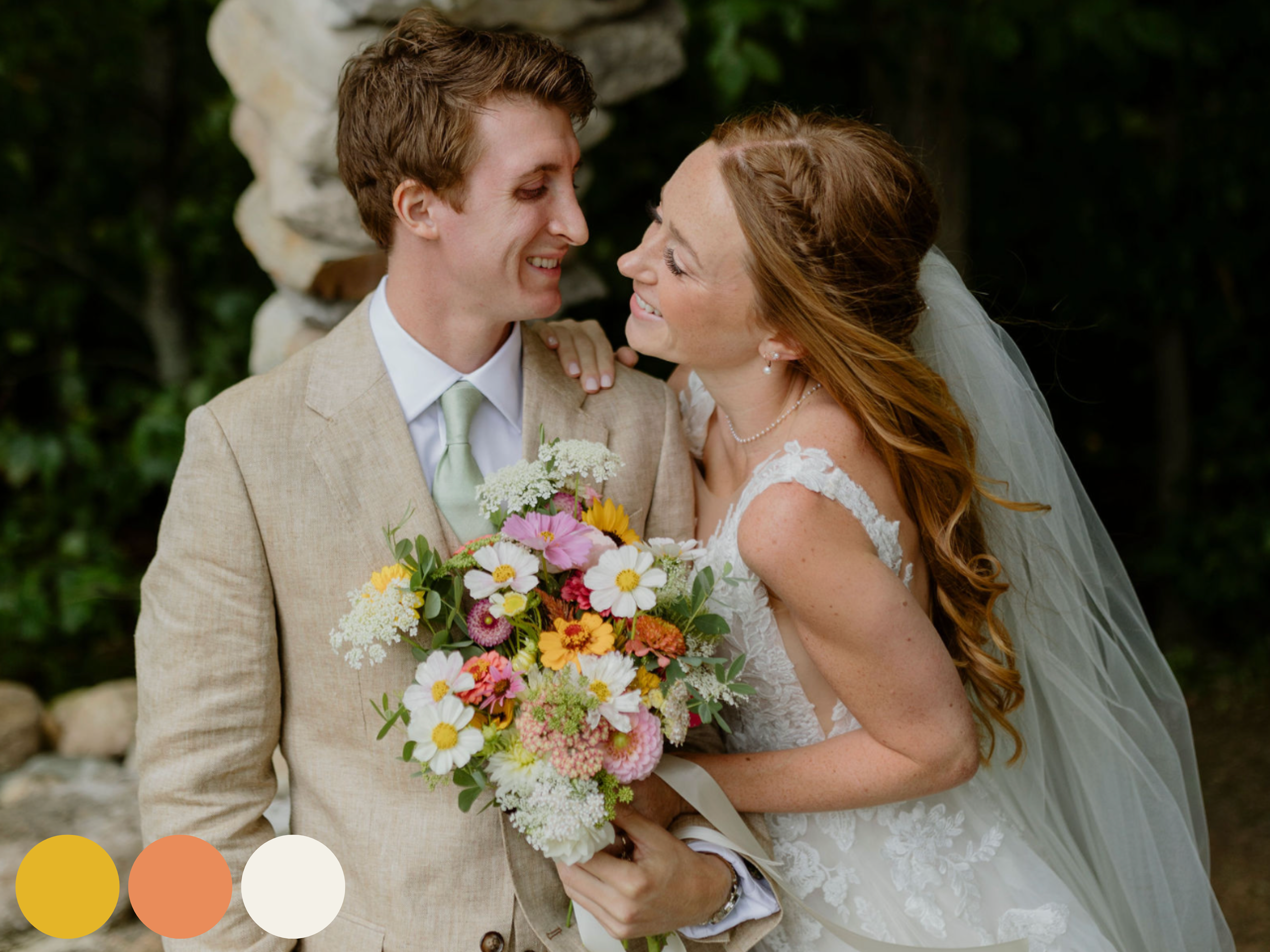
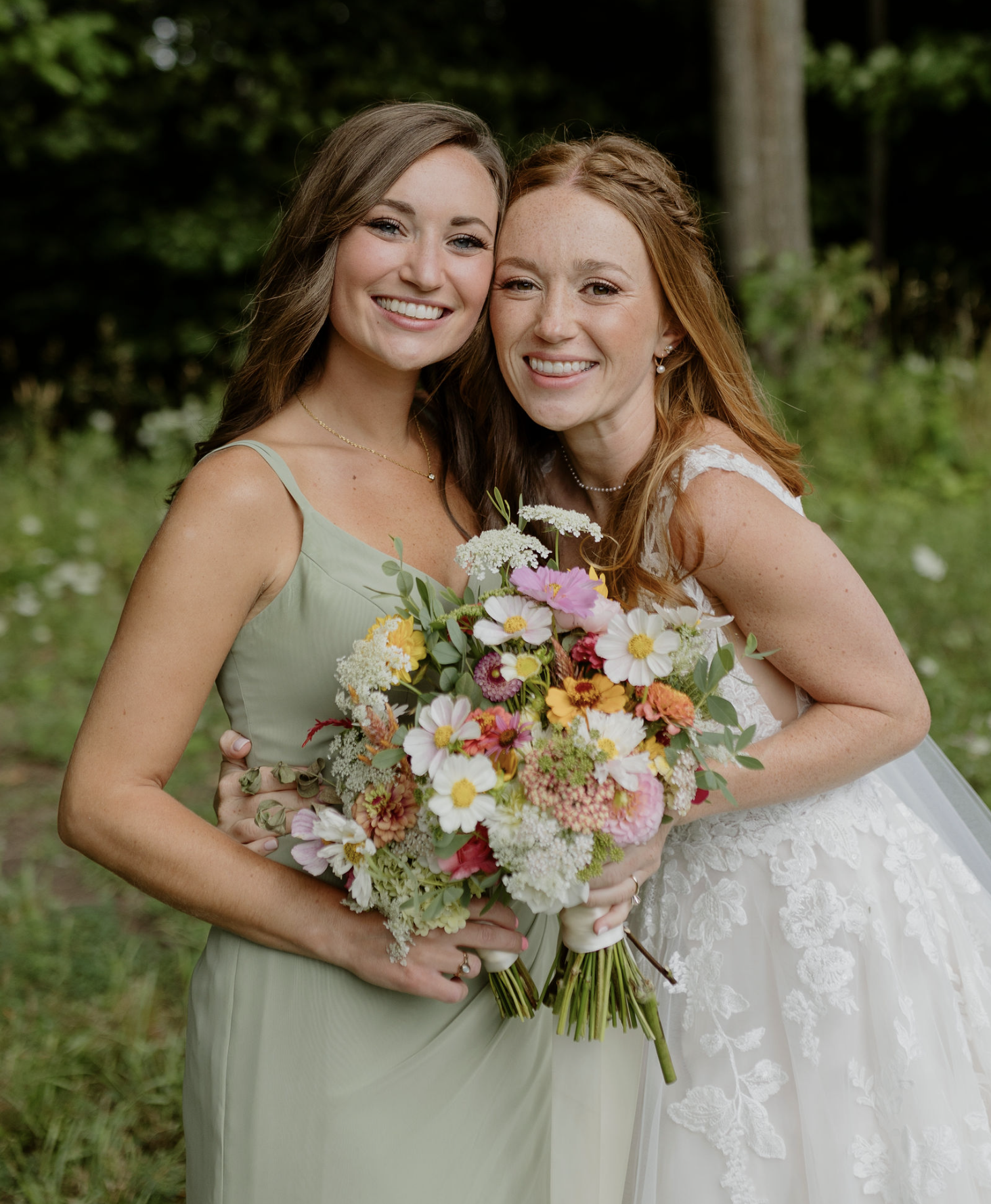
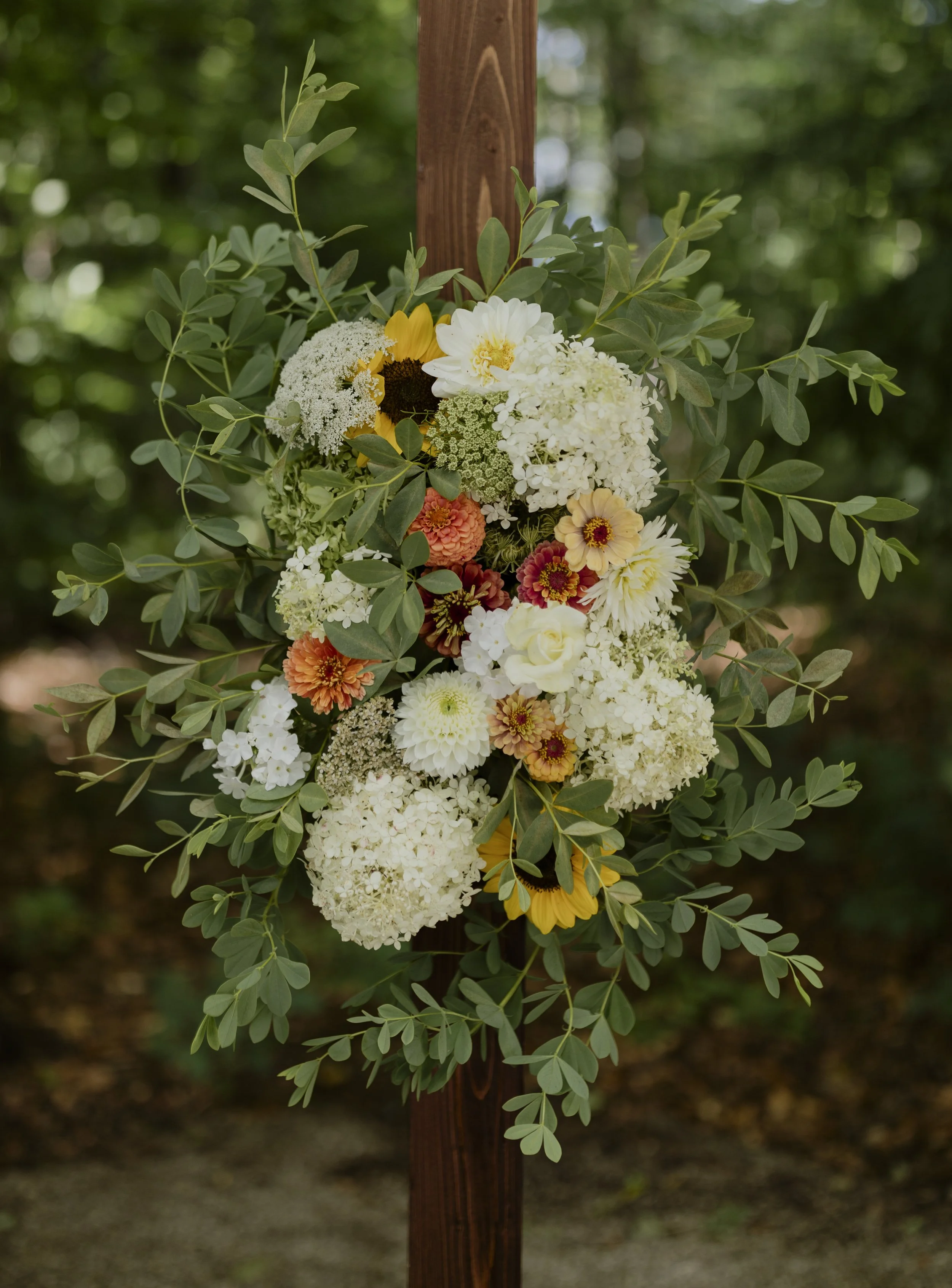
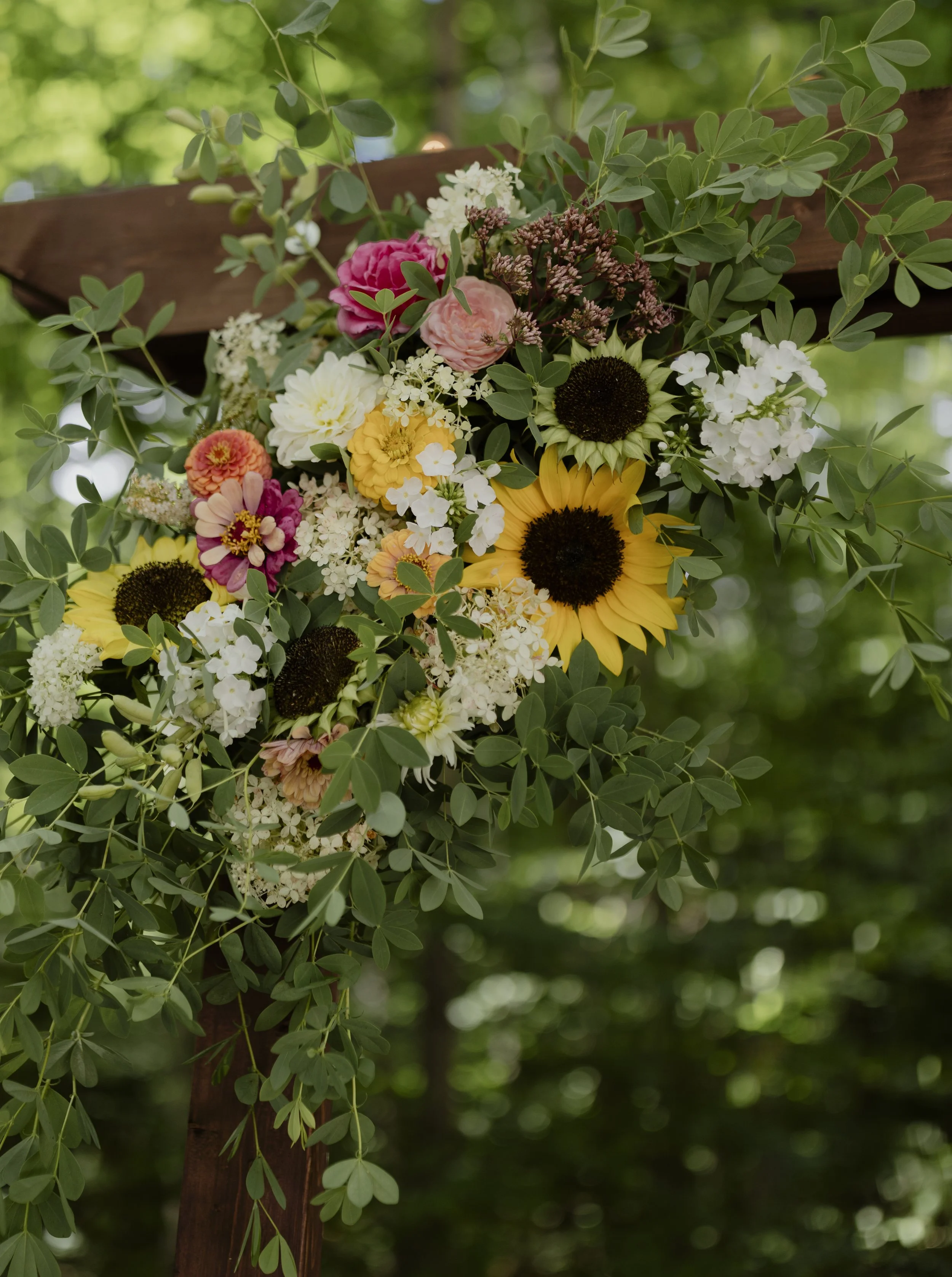
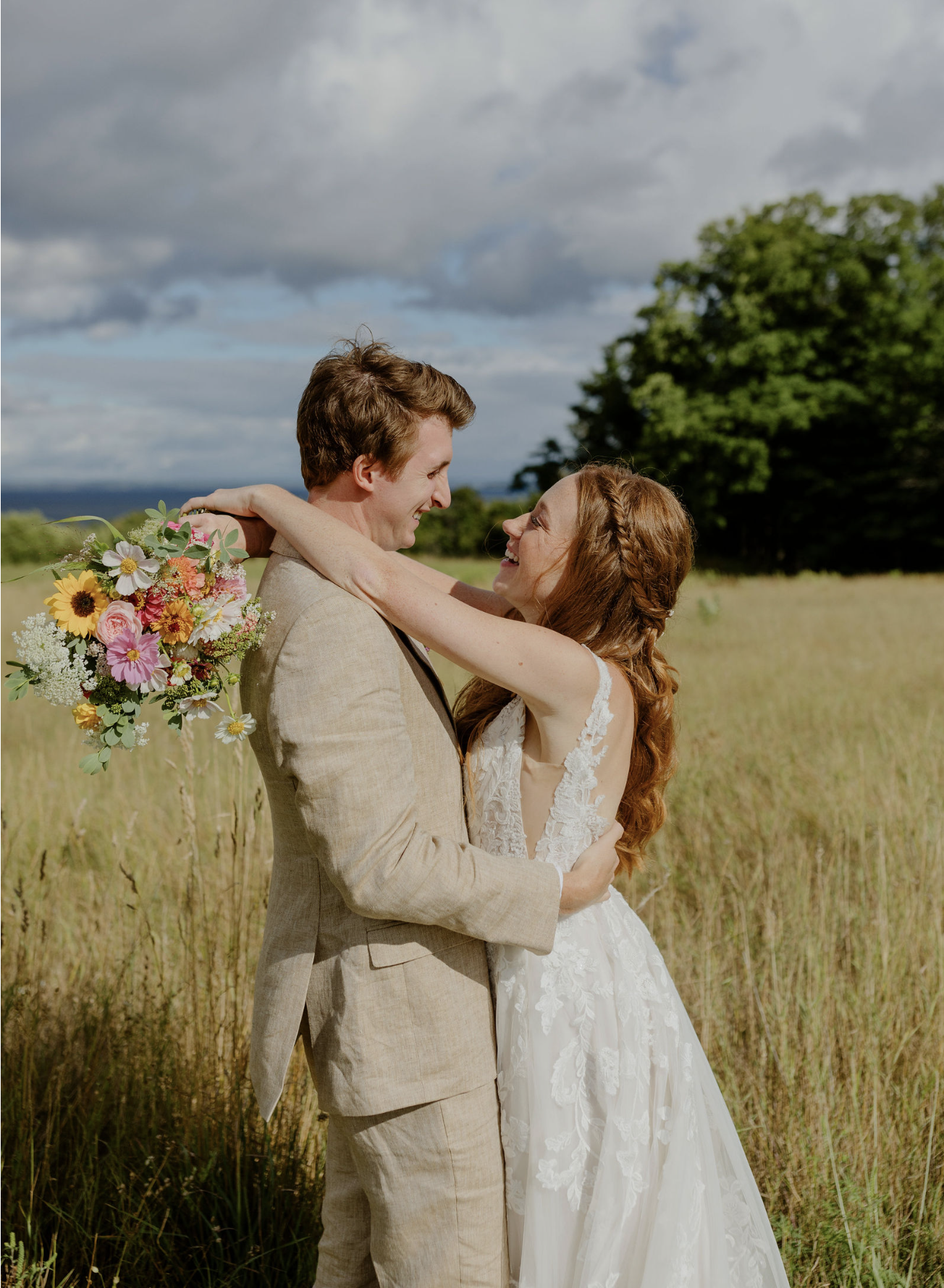
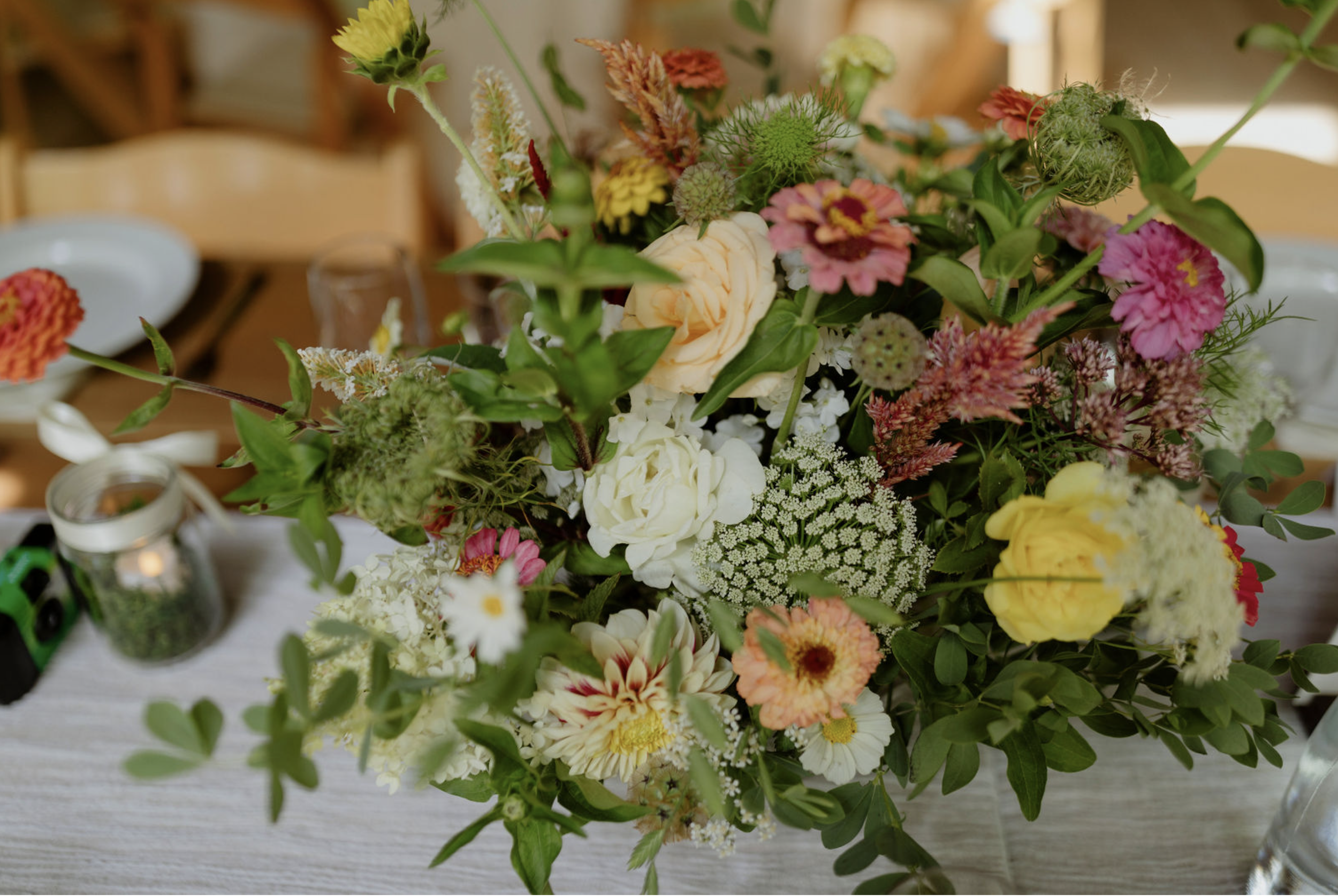
This palette leans into soft, sun-washed color with airy blooms in shades of butter yellow, peach, coral, and pink layered with fresh greens and delicate whites. The overall look feels light, natural, and full of movement.
This August wedding at Foxglove Farm is a perfect example. The arrangements feel loose and expressive, built from flowers that move and breathe within the design rather than feeling tightly structured.
Using blooms like cosmos, zinnias, hydrangeas, sunflowers and Queen Anne’s lace, this style reflects seasonal flowers in July and August, when the range of blooms is starting to dpeak. The variation in color and texture happens organically, creating a palette that feels cohesive without being overly controlled.
This is a softer take on summer wedding flower color ideas, offering a more relaxed, garden-inspired approach to color that still feels bright and full of life.
Image credit: Mishelle Lamarand
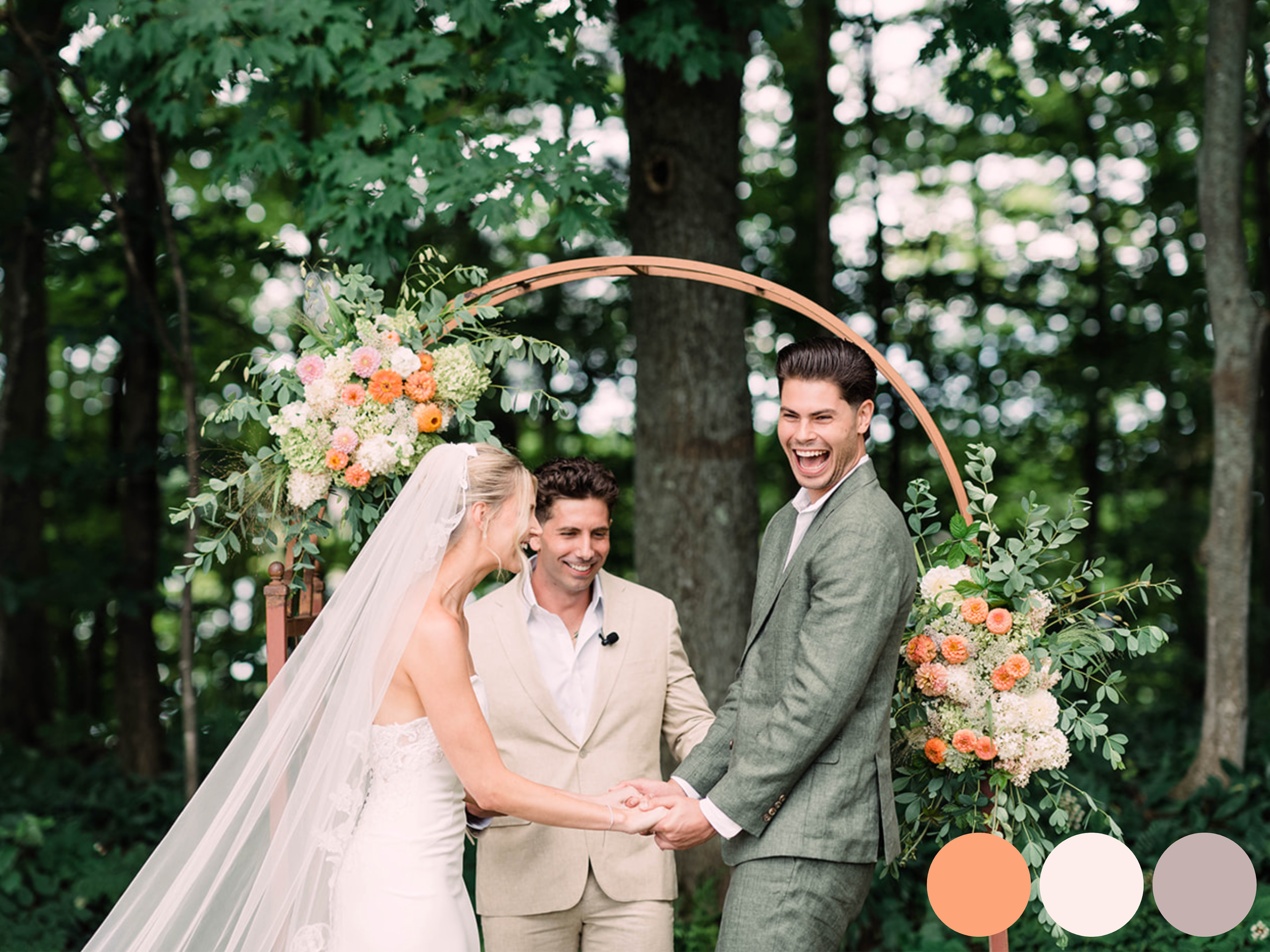
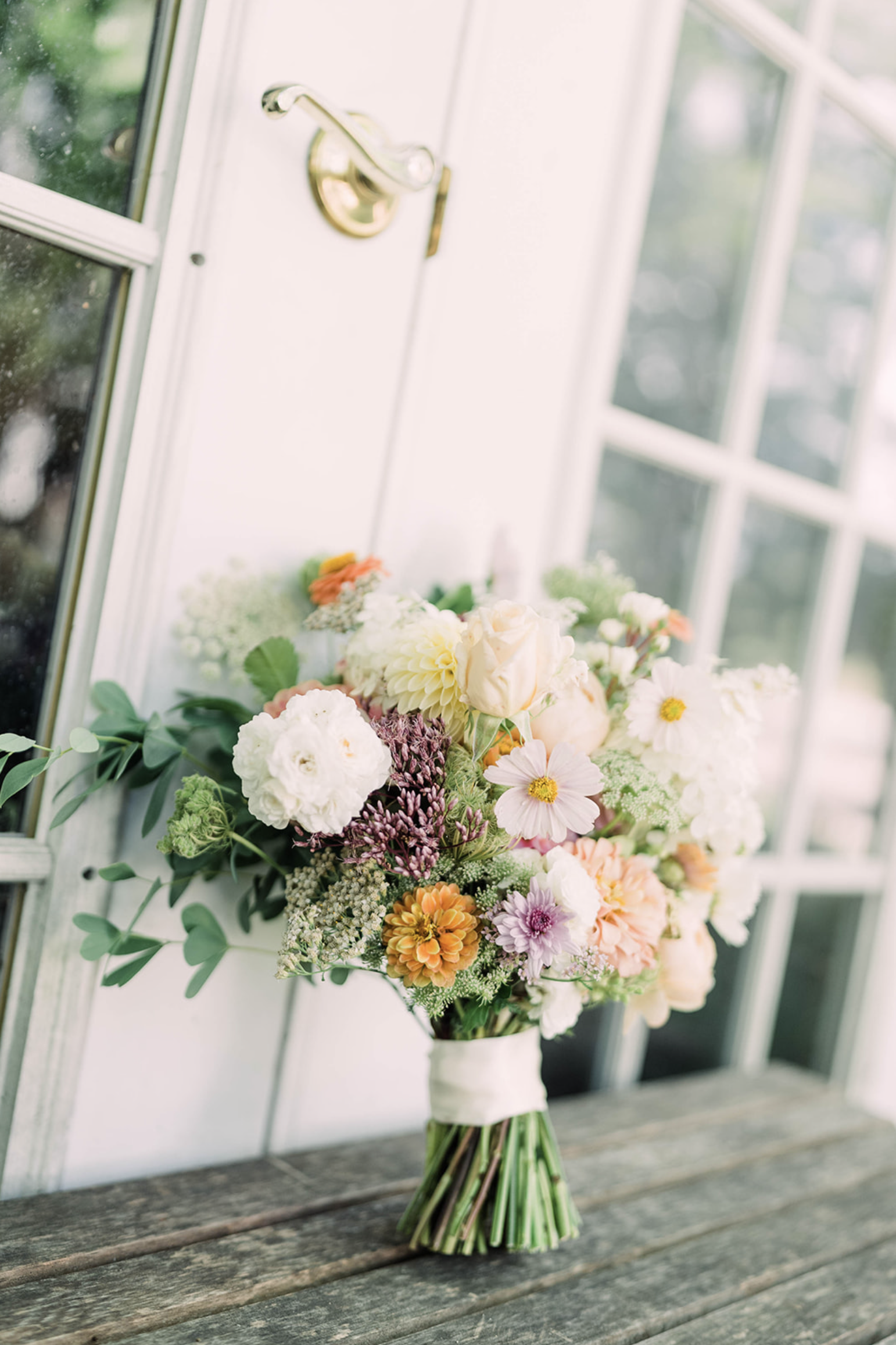
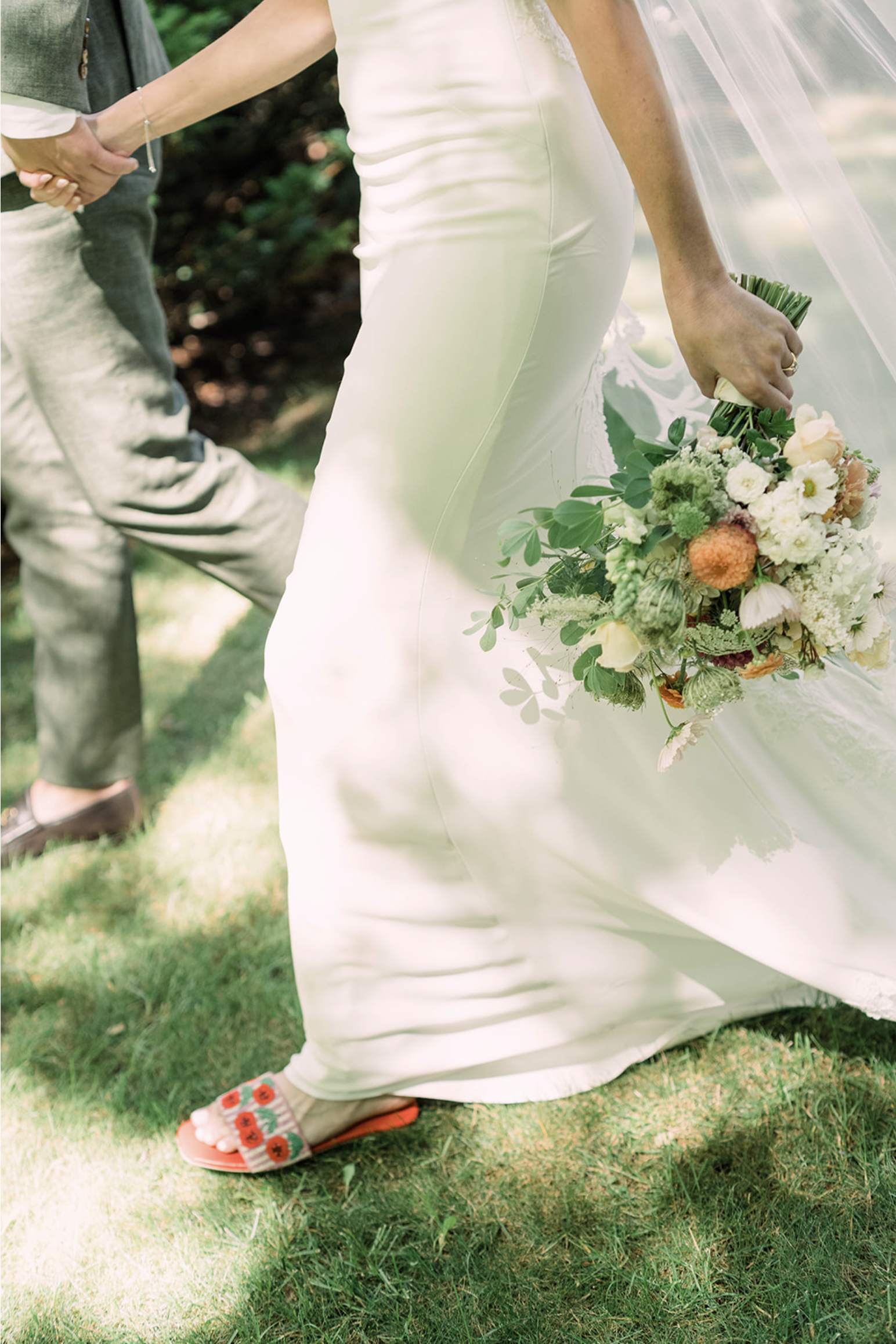
Summer Palette 2: Refined, Neutral Summer Blooms
This palette focuses on soft, cohesive tones like cream, blush, and muted peach layered with fresh greenery. The overall look feels calm, understated, and intentionally restrained, with subtle moments of deeper mauve adding contrast in the bridal bouquet.
This late August wedding at Cherry Basket Farm is a strong example. Even with peak-season blooms like dahlias and garden roses, the palette stays soft and harmonious rather than bold or high-contrast.
Instead of relying on color variation, these designs are built through subtle shifts in tone and texture. The interest comes from how the flowers are layered, not from contrast.
This approach works especially well with summer wedding flowers, showing how even the most abundant blooms of the season can be styled in a way that feels polished and cohesive.
Image credit: Kate English Photography
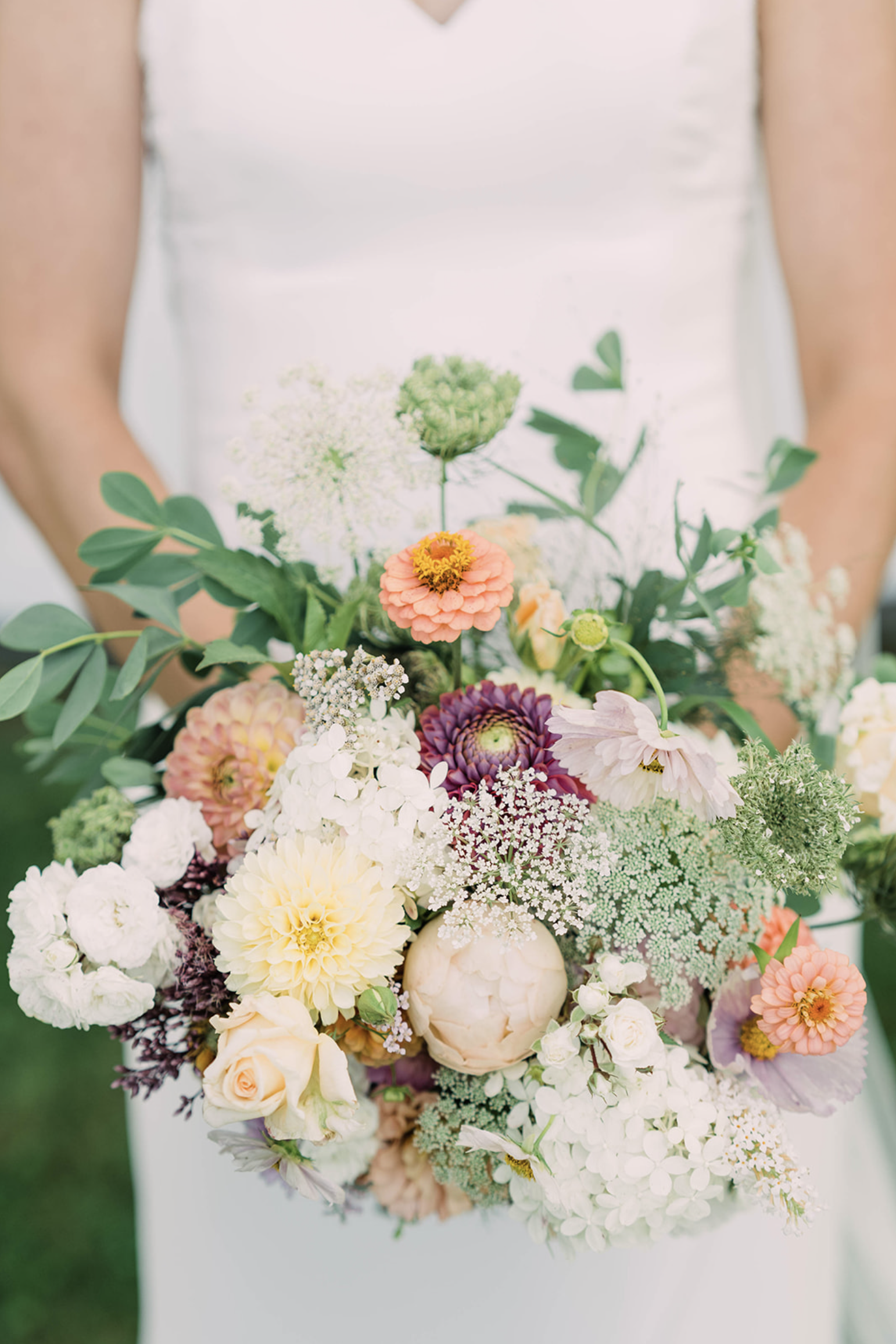
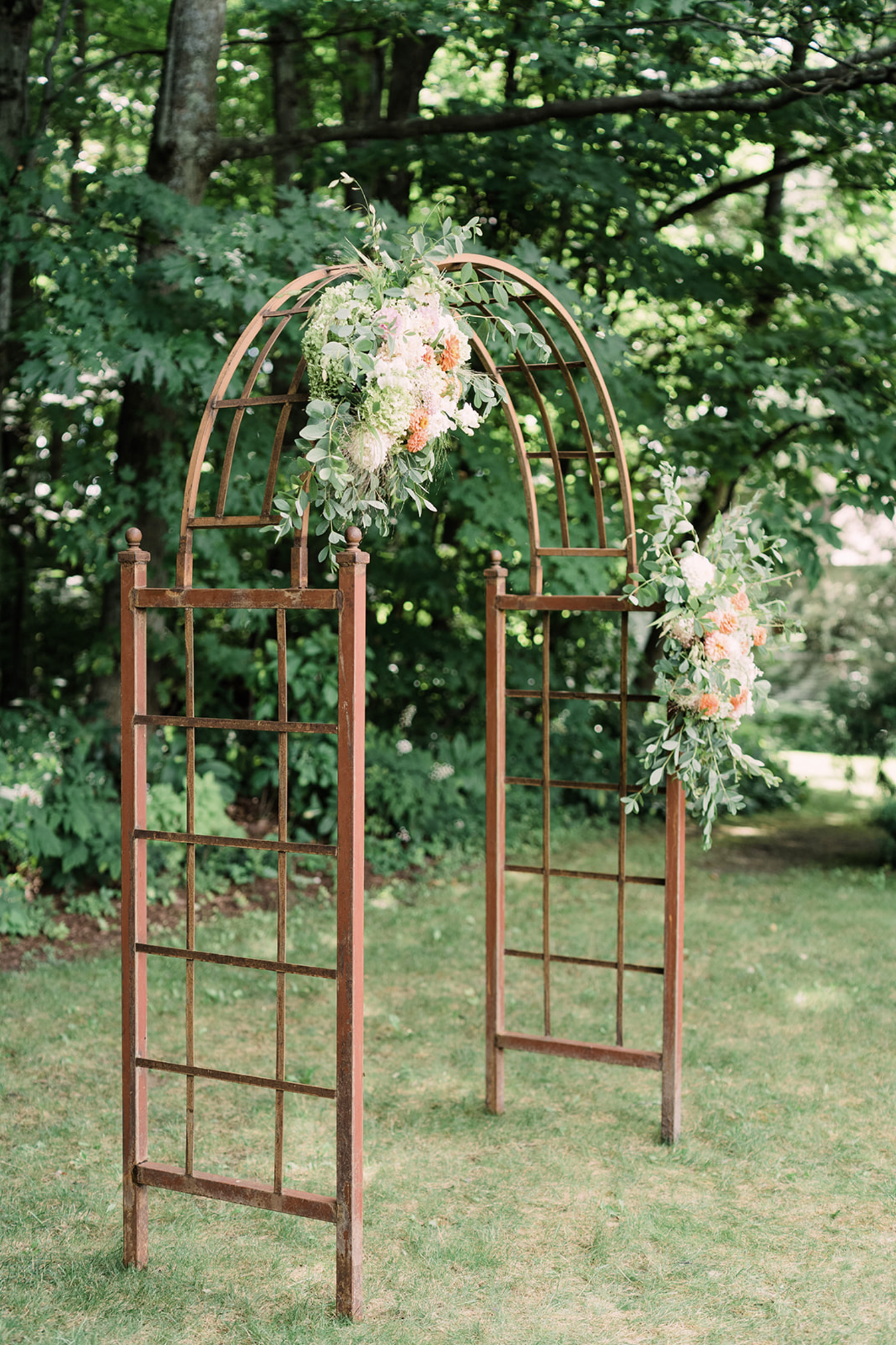
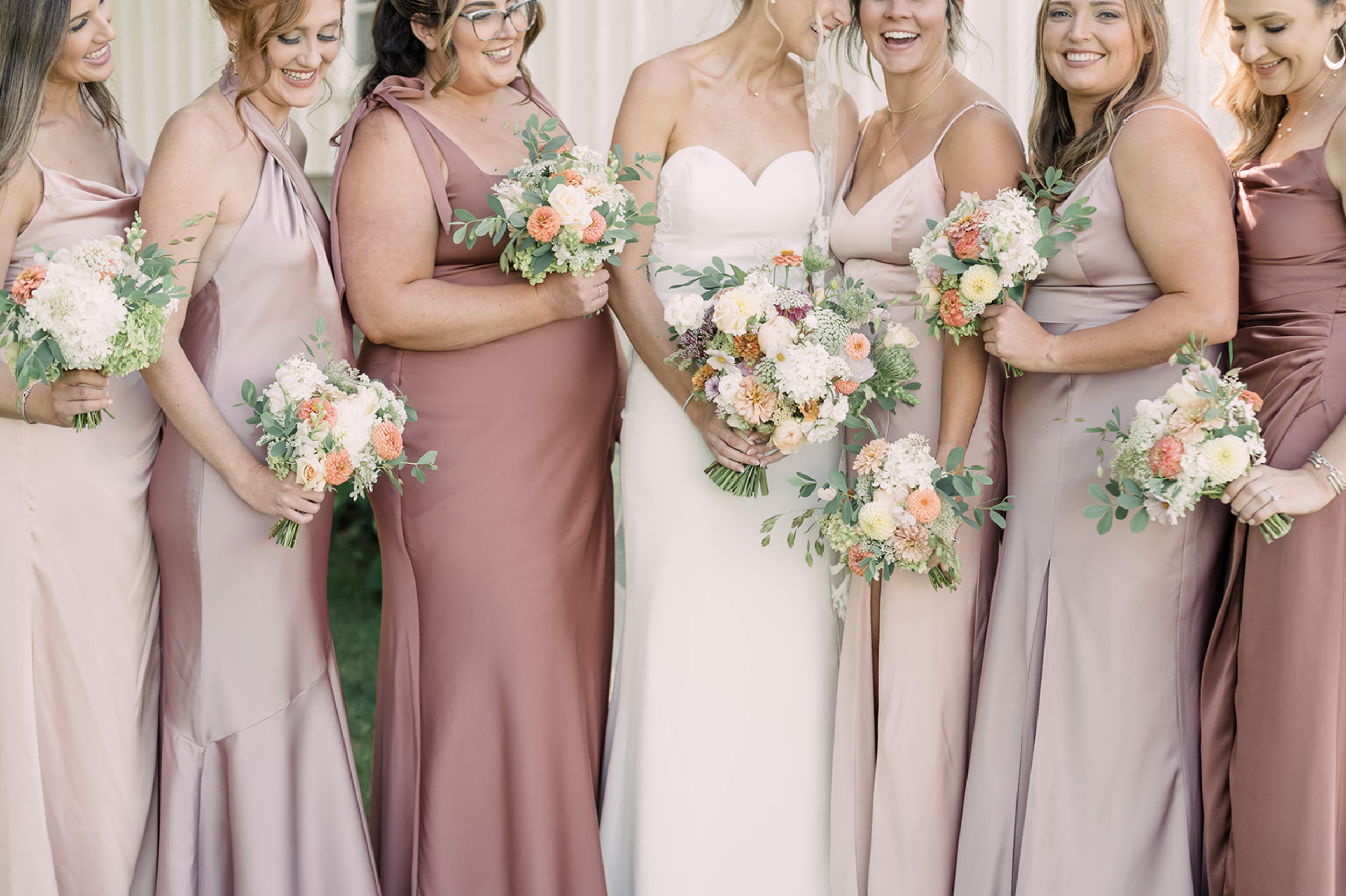
Summer Palette 3: Bold, Playful Summer Blooms
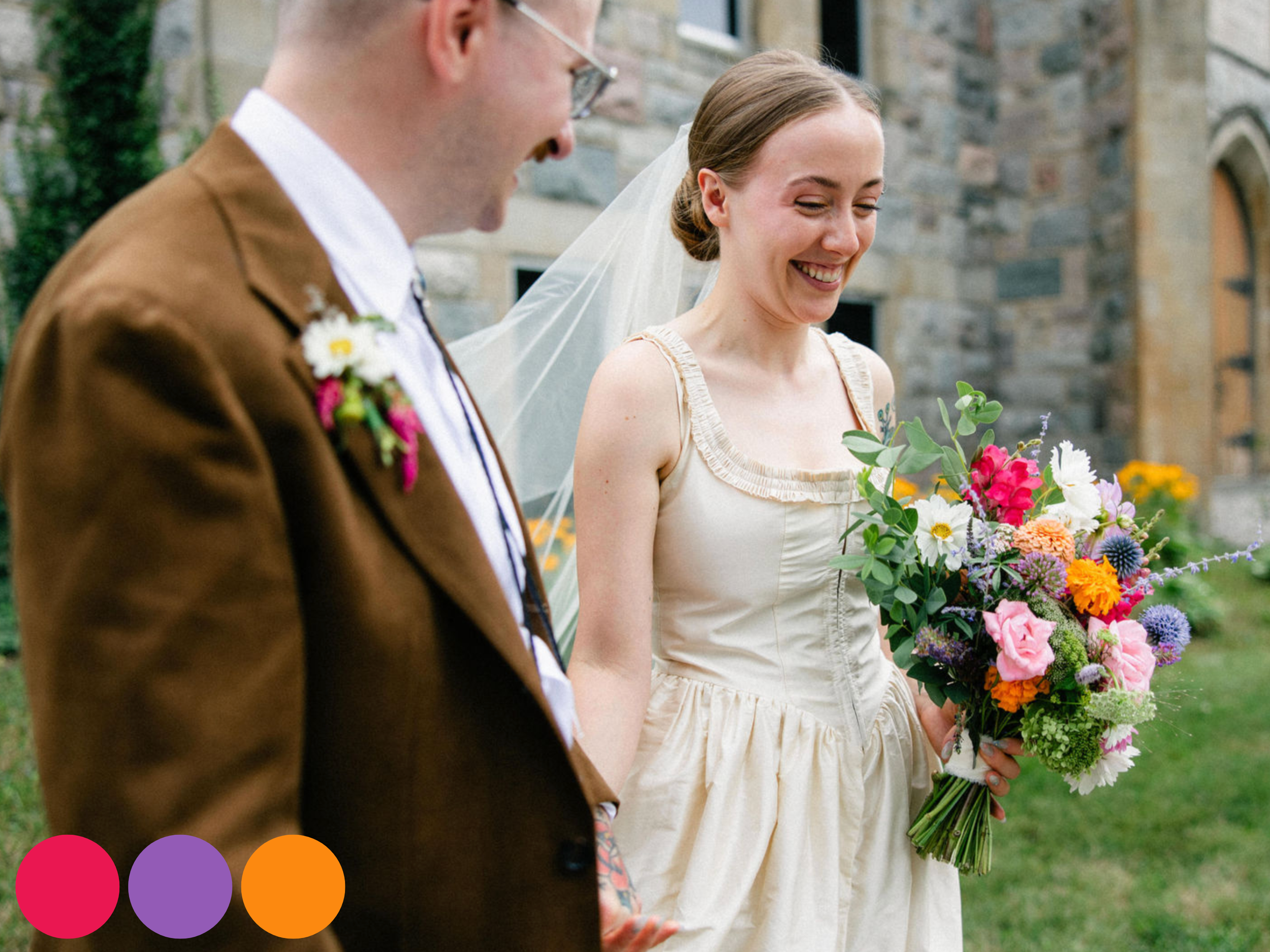
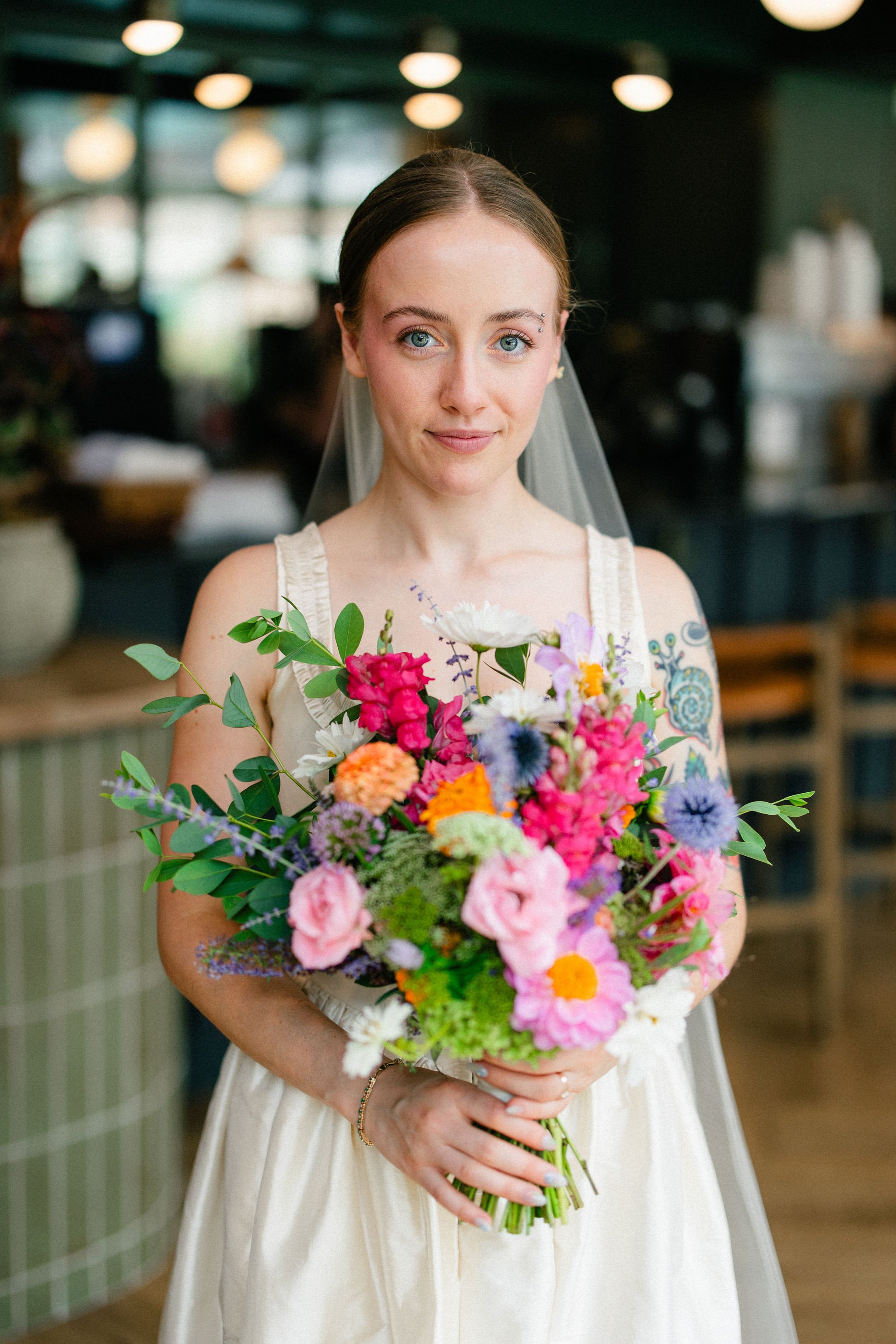
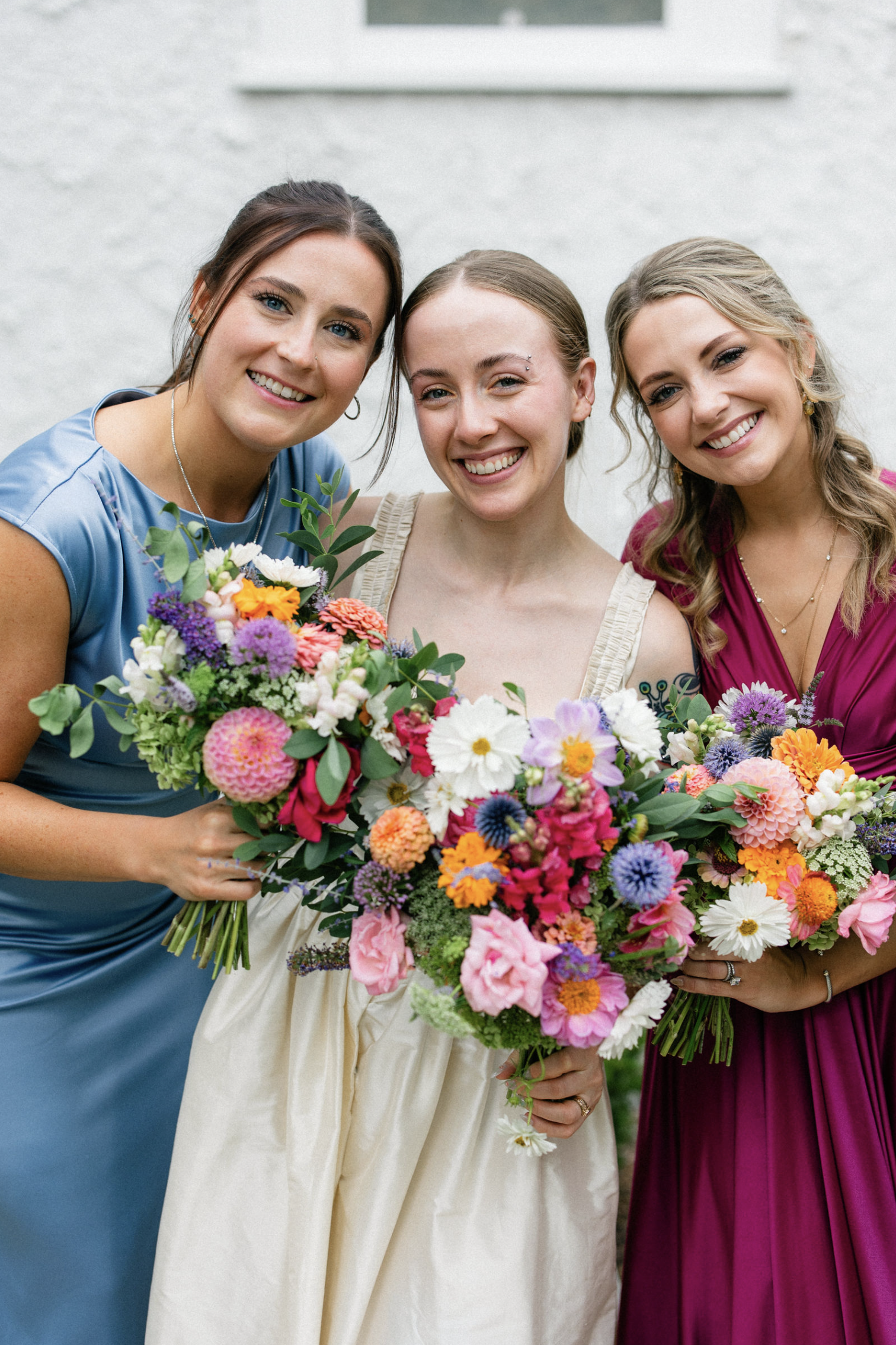
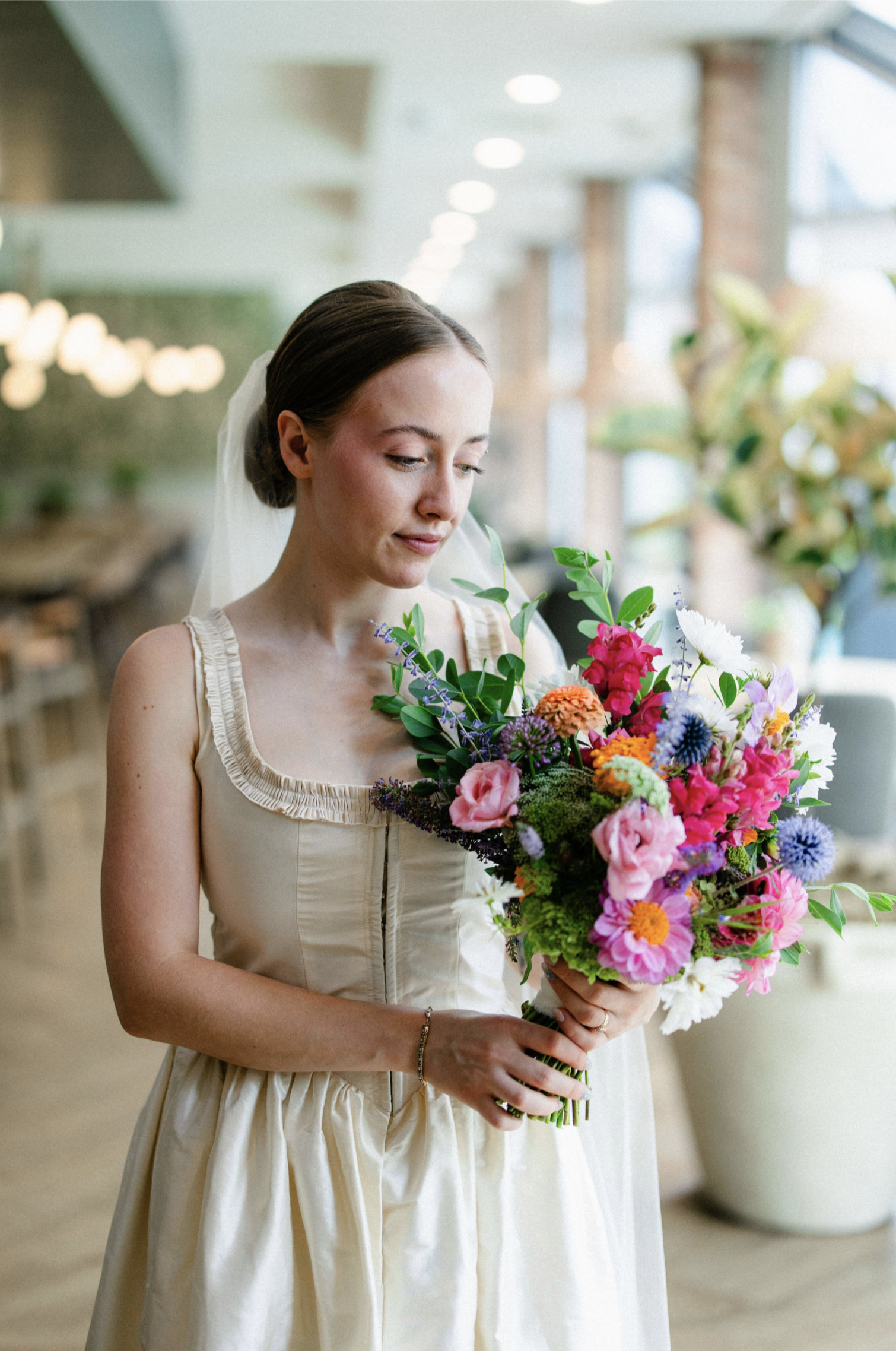
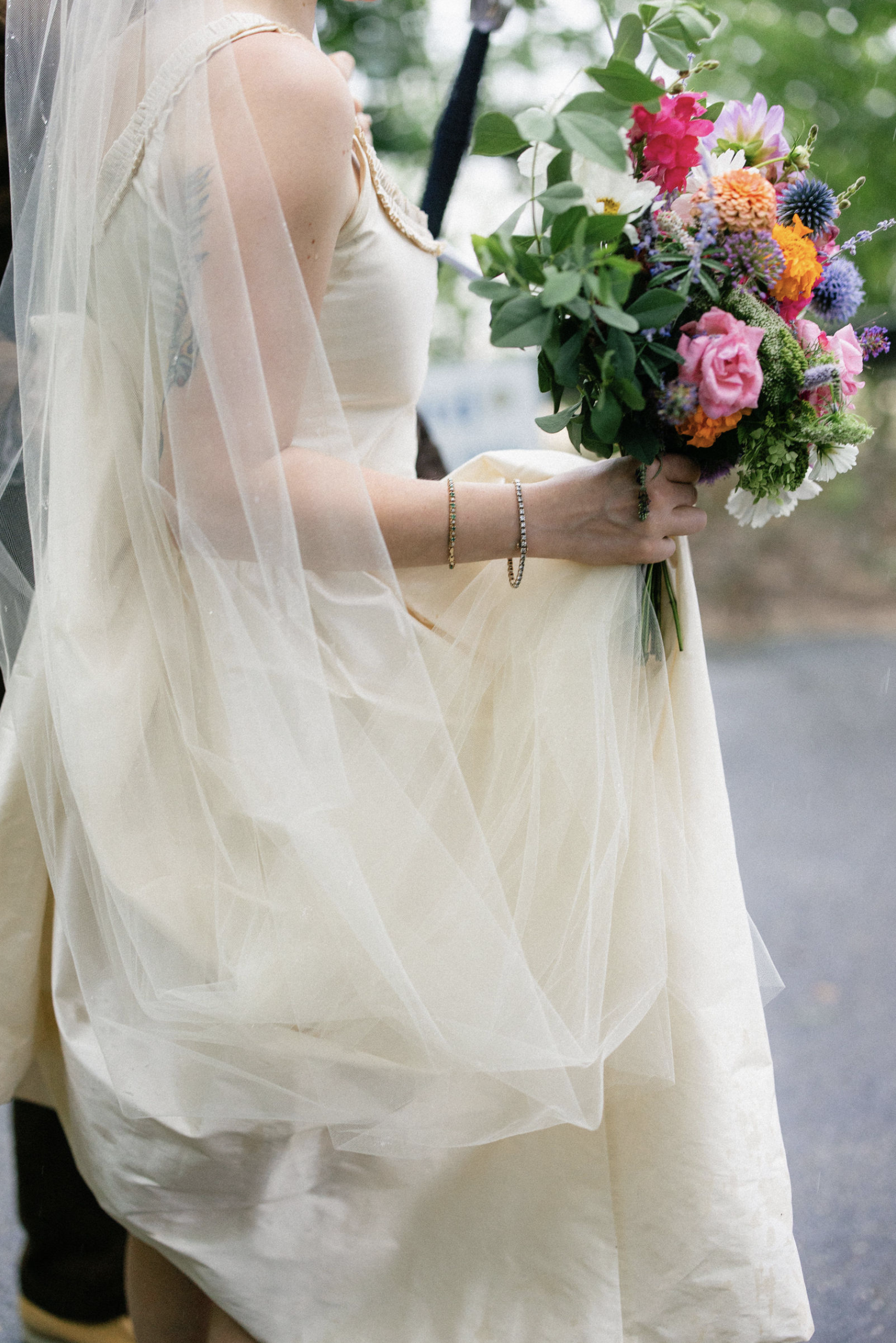
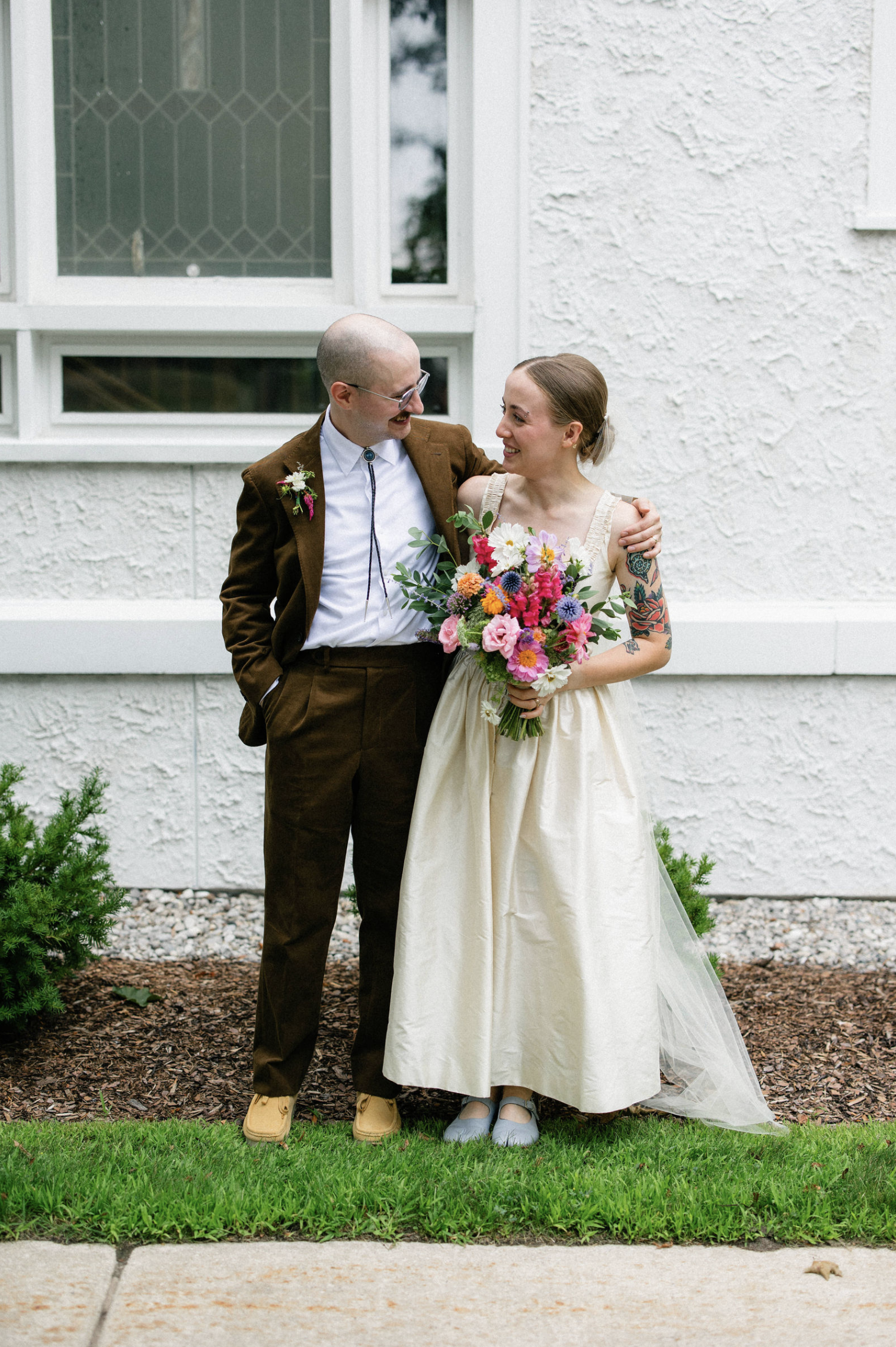
Summer is the natural peak for bright color, with a wide range of blooms available all at once. This August wedding leans fully into that abundance. Bright pinks, vibrant oranges, bold yellows, and rich purples are layered together to create a palette that feels energetic, expressive and full of movement.
Using focal flowers like dahlias, zinnias, and roses, this palette draws from varieties that are thriving in mid to late summer, when everything is in full bloom and color feels almost effortless.
This palette is ideal for couples who are drawn to bright summer wedding flowers and want to fully embrace color in a way that feels joyful, dynamic and rooted in seasonality.
Image credit: Miles and Sarah Photo
Fall Wedding Flowers (September – October Color Palettes)
Fall weddings are defined by richness, warmth, and texture. As the season shifts, flowers begin to mirror the landscape, bringing in deeper tones, layered movement, and a more grounded feel.
In Northern Michigan, September and October offer a wide range of fall wedding flowers, from the last of the bright, summery blooms to the deeper, more muted tones that emerge later in the season. This transition creates a natural range in color palettes, allowing for both vibrant and more subdued designs.
Early fall often holds onto deep color, with flowers that still feel lively and varied. As the season progresses, palettes become warmer and more concentrated, with an emphasis on depth, texture, and contrast.
Because these designs are shaped by what is naturally in bloom, fall palettes feel full, immersive, and closely connected to their surroundings.
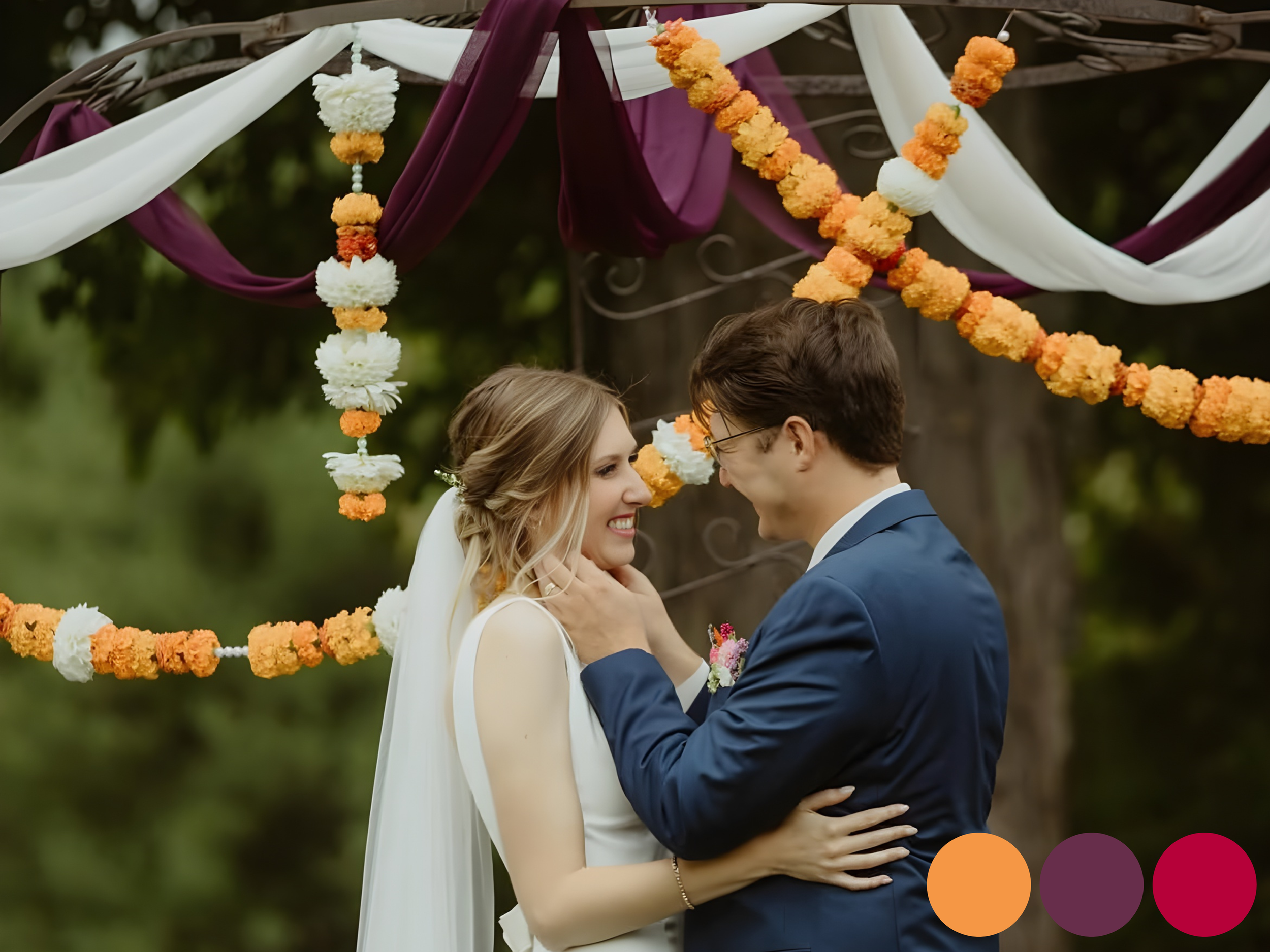
Fall Palette 1: Lingering Summer Color
Early fall often holds onto the full vibrancy of summer, with a wide range of color still in bloom.
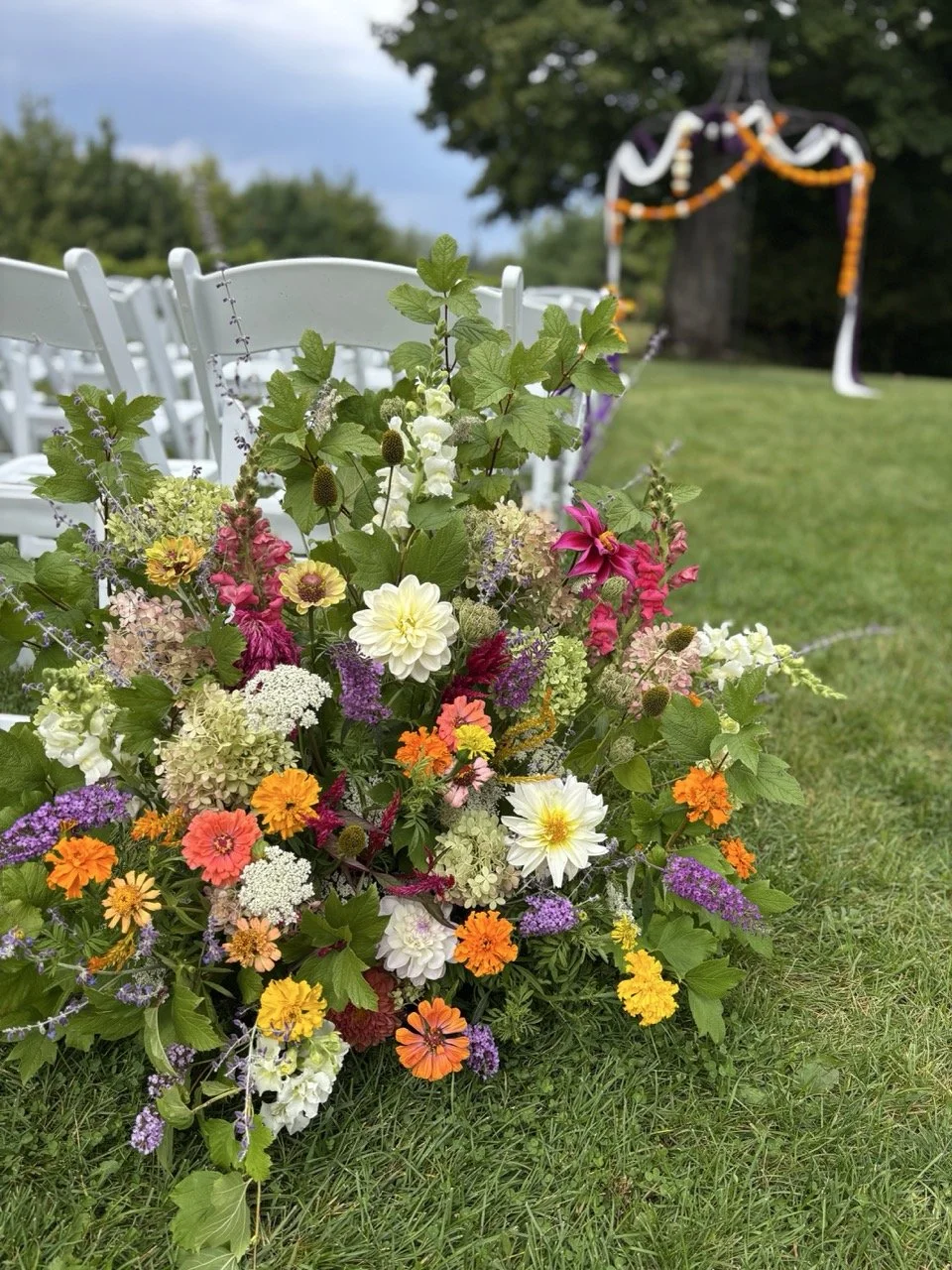
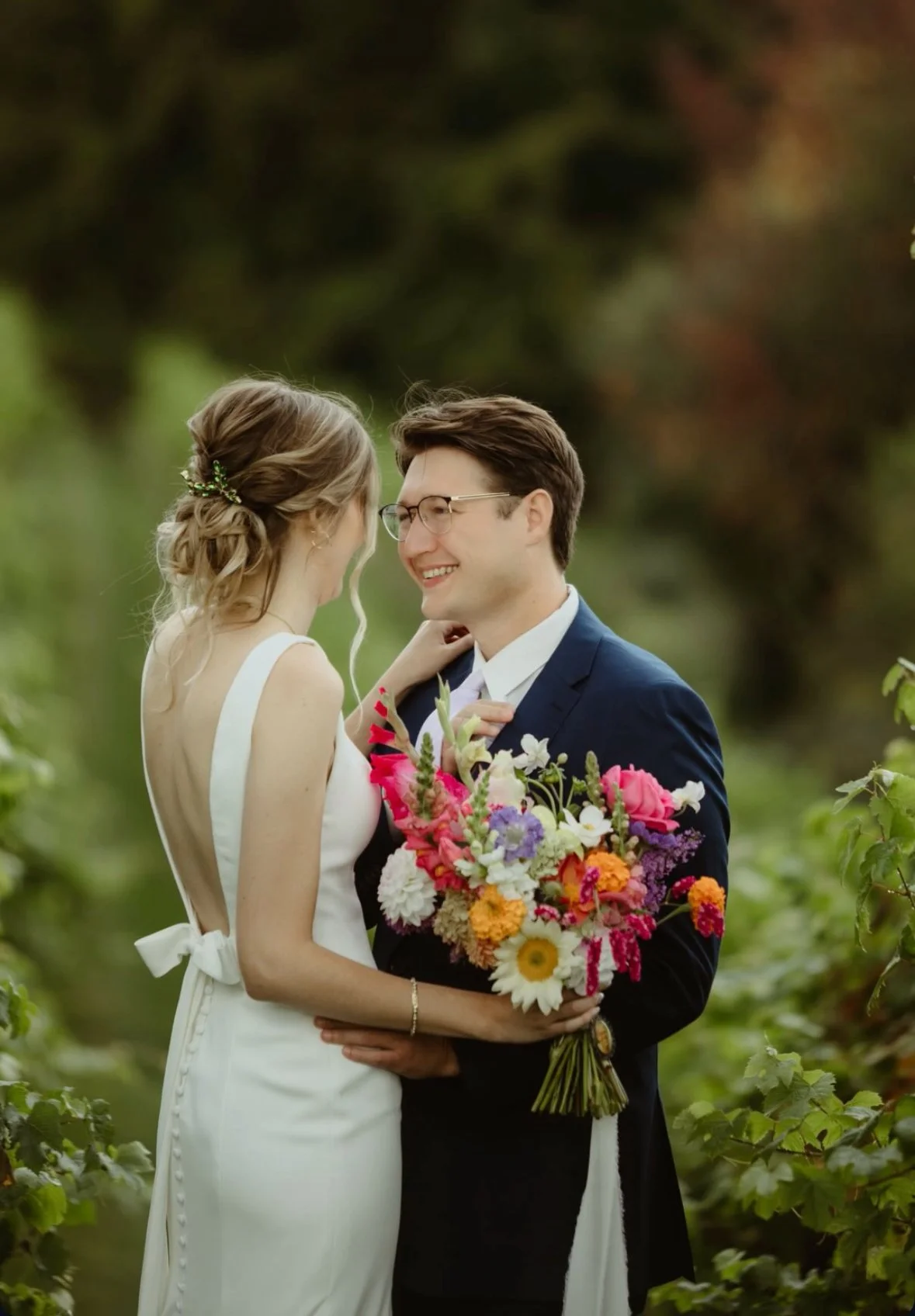
This September wedding at Ciccone Vineyards is a perfect example. Bright pinks, corals, oranges, purples, and soft neutrals are layered together to create a palette that feels expressive and full of movement.
Using blooms like marigolds, snapdragons, sunflowers, roses, and kiss-me-over-the-garden-gate, this palette reflects what is still naturally available in early fall. The mix of flower types creates variation in both color and texture, giving the designs a sense of depth and a scale that feels expansive and full of movement.
As the season begins to shift, subtle elements like deeper-toned attire, natural textures, and a marigold-draped ceremony arch bring in warmth and help anchor the overall look.
This is a natural fit for couples exploring fall wedding flower color ideas who are drawn to brighter tones but still want their flowers to feel connected to the season.
Image credit: Hali Adams Photography
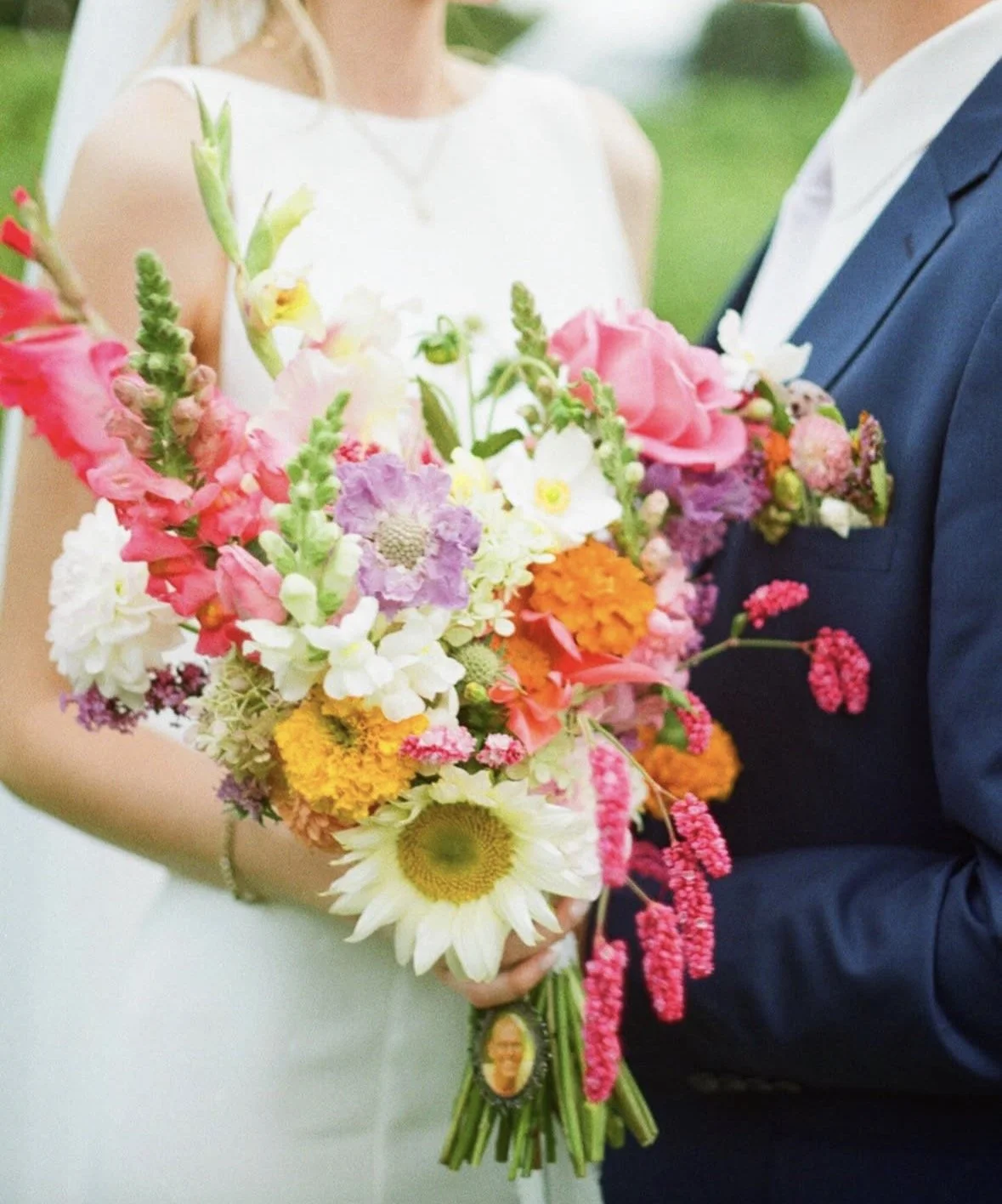
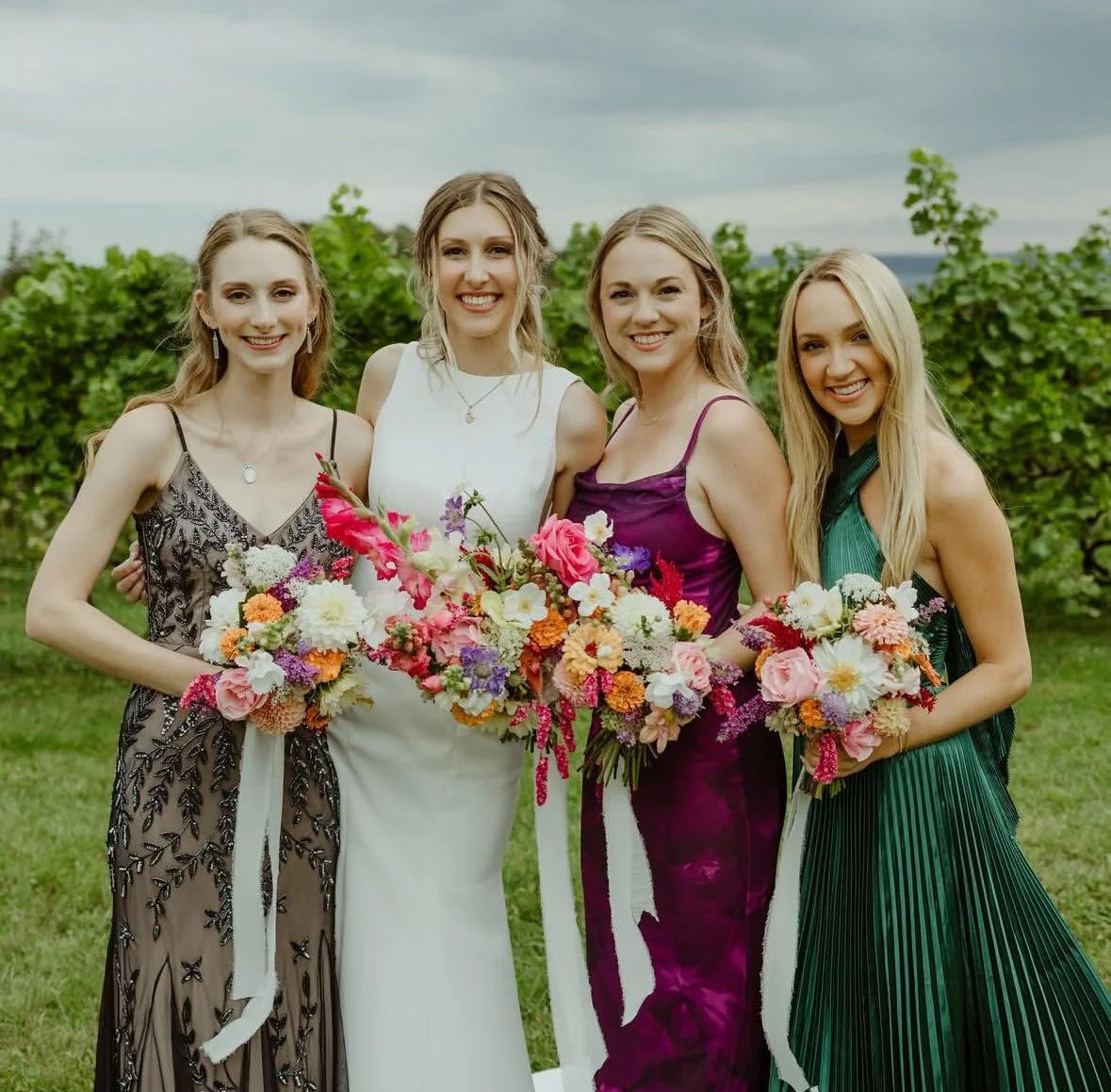
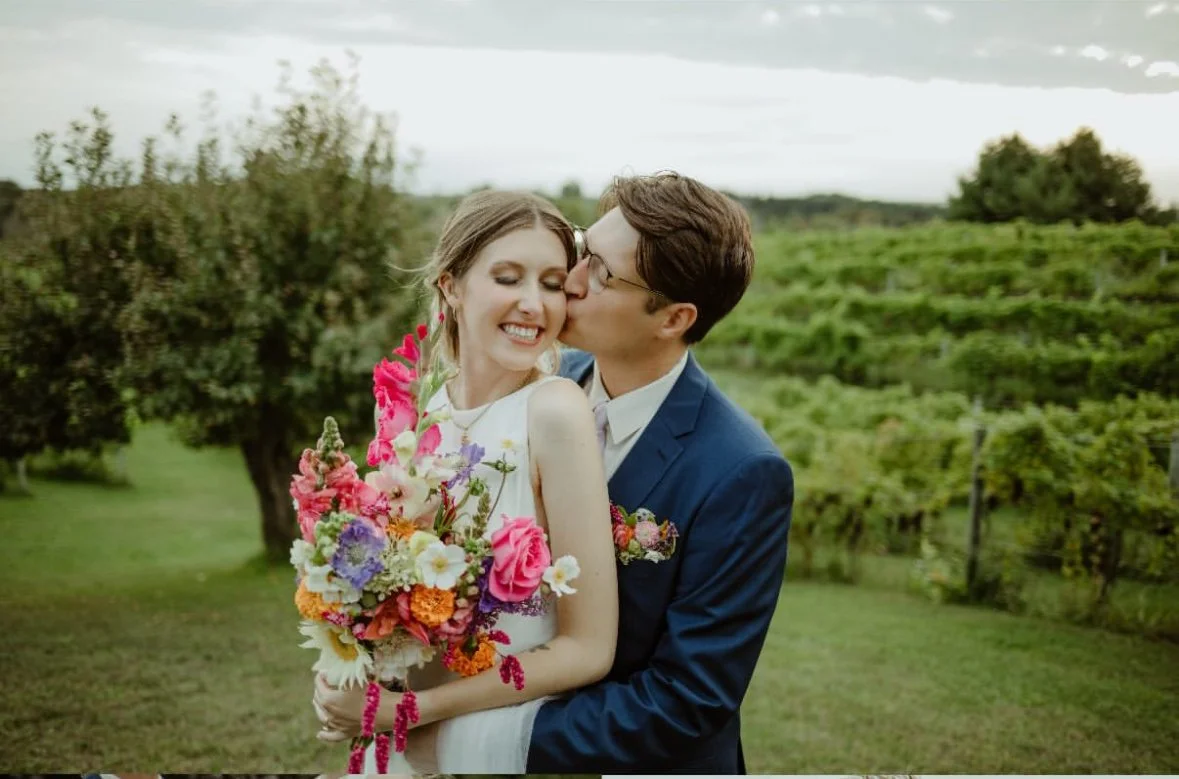
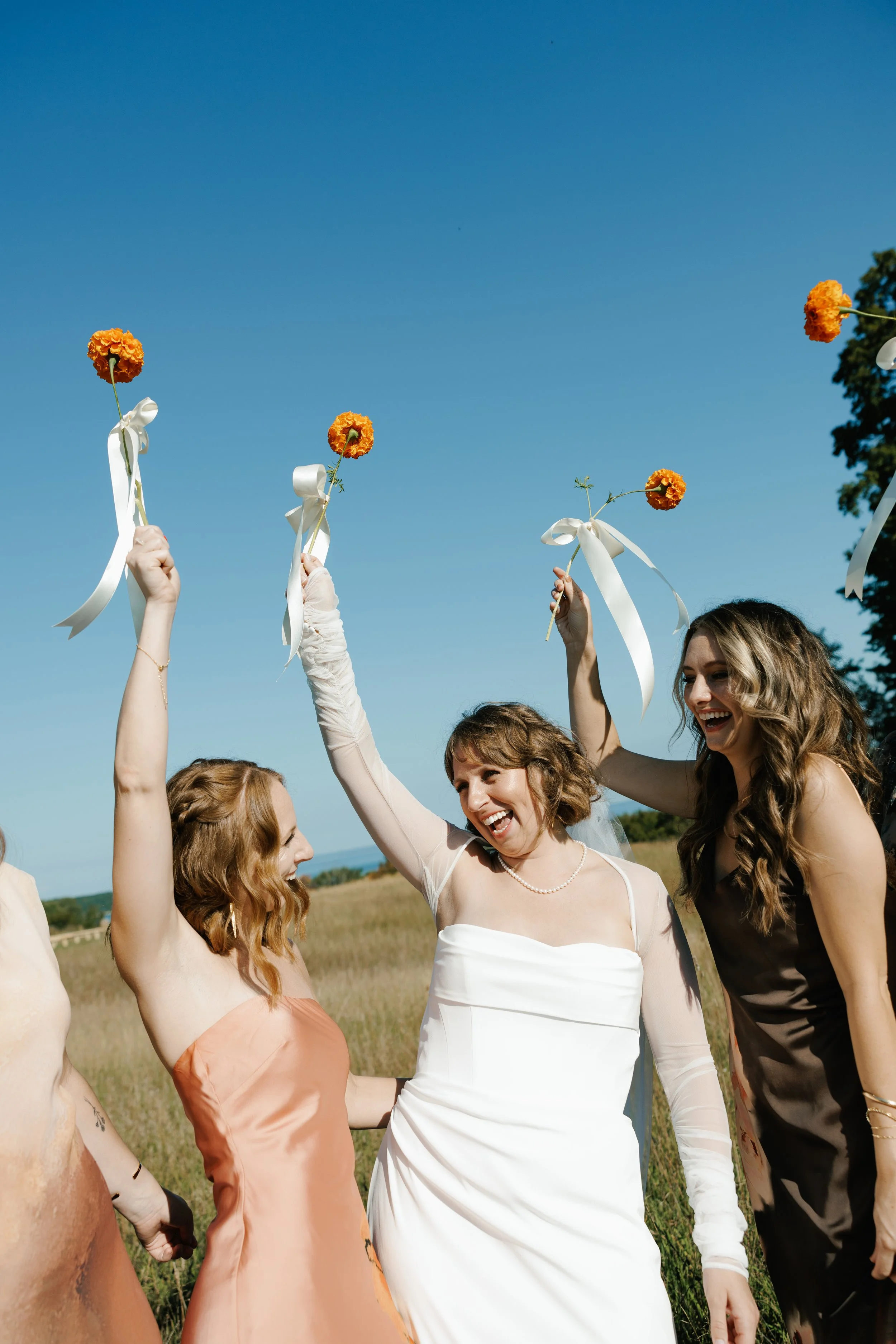
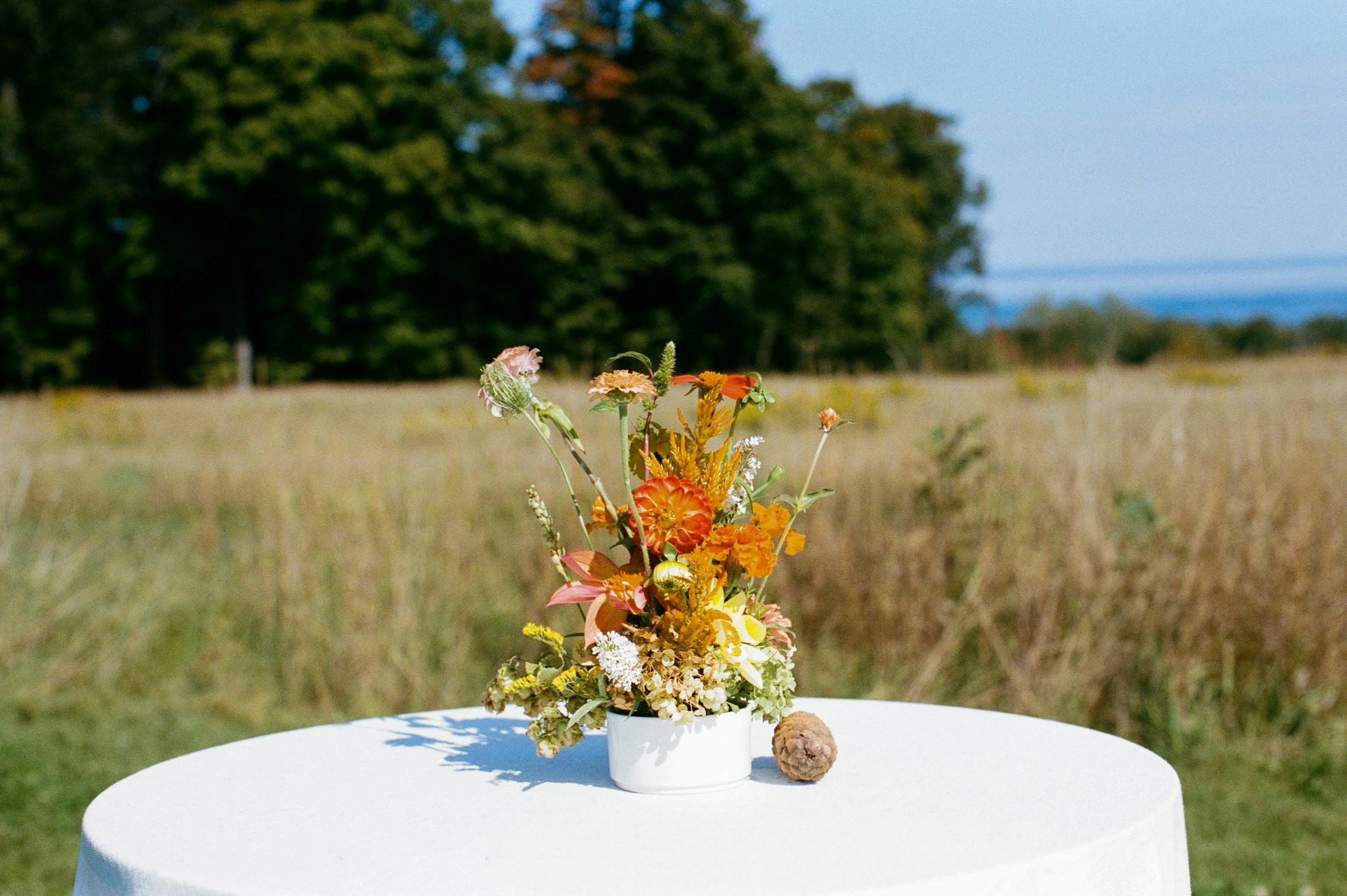
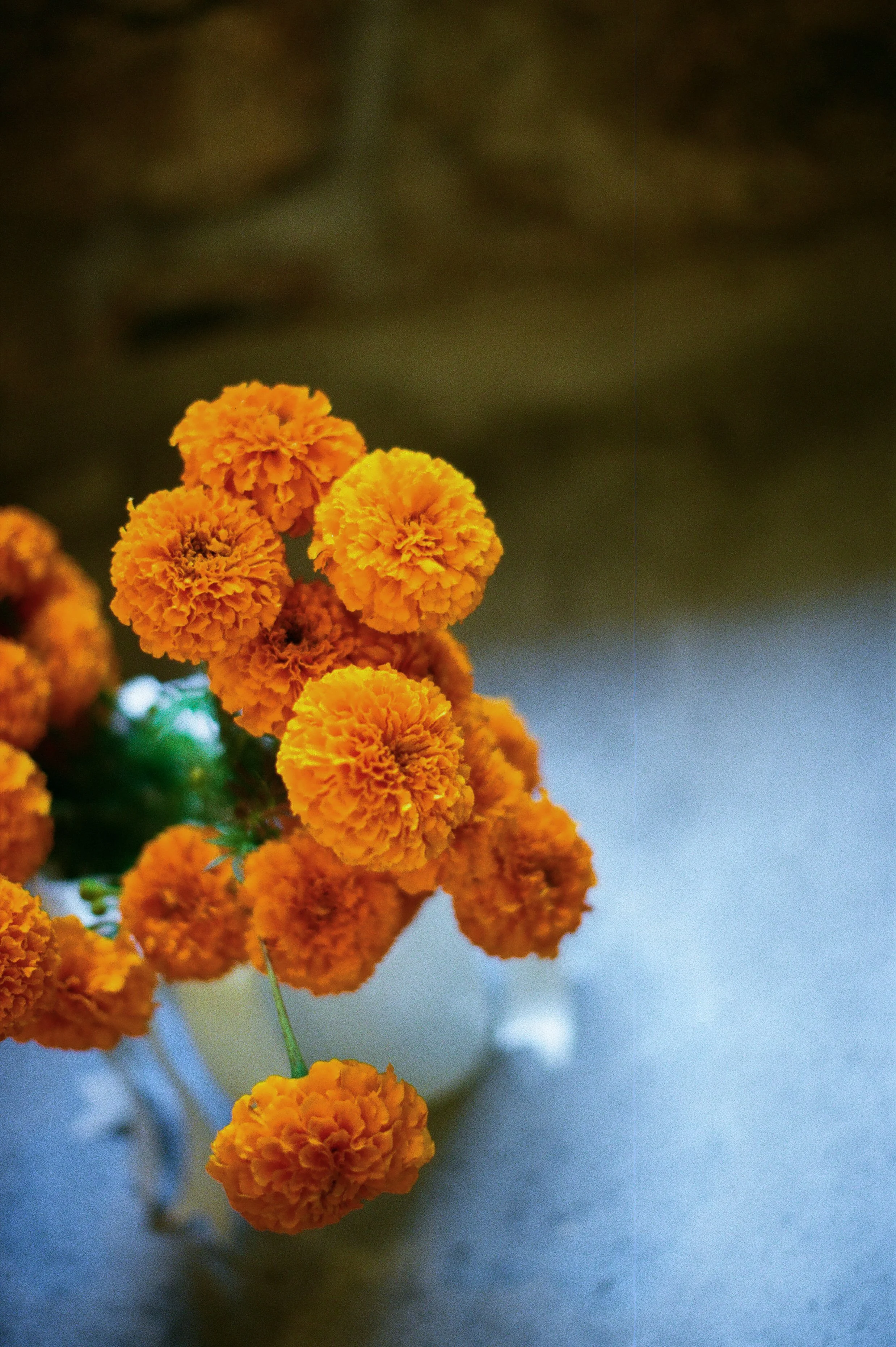
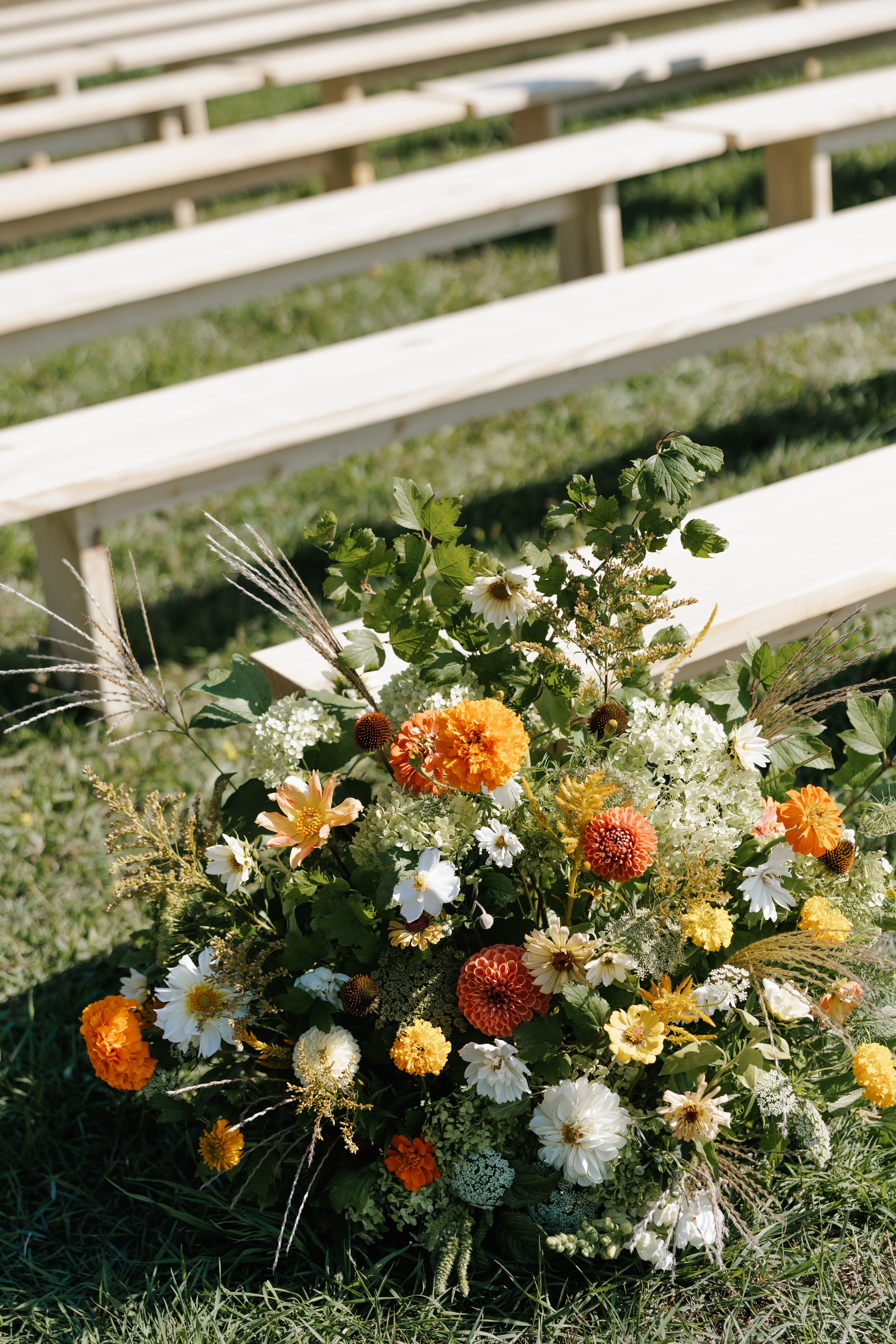
Fall Palette 2: Bright Harvest Color
As fall begins to settle in, palettes start to shift toward warmer, more golden tones while still holding onto a sense of brightness.
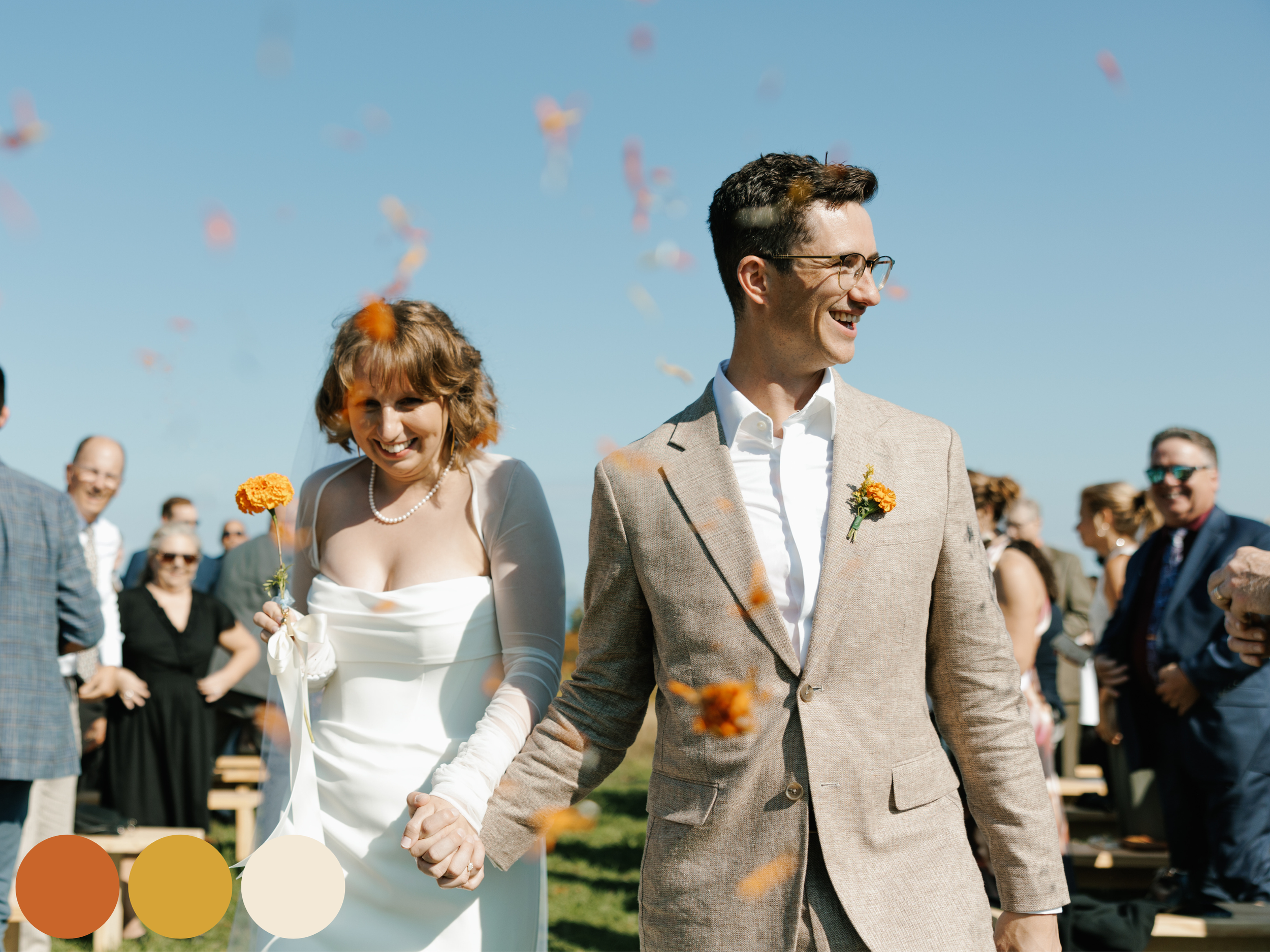
This wedding at Foxglove Farm is a perfect example. Marigolds take center stage, bringing a bold, saturated orange that immediately defines the palette and draws the eye.
Surrounding blooms like zinnias, dahlias, and cosmos support that warmth, adding variation in tone and texture while keeping the overall look light and full of movement.
Built from what is naturally available in early fall, this palette reflects what flowers are in season in September, showing how these blooms can be used in a way that feels vibrant without becoming heavy.
The result is a look that bridges seasons. It carries the energy of summer forward while introducing the warmth that defines fall.
Image credit: Mae Stier
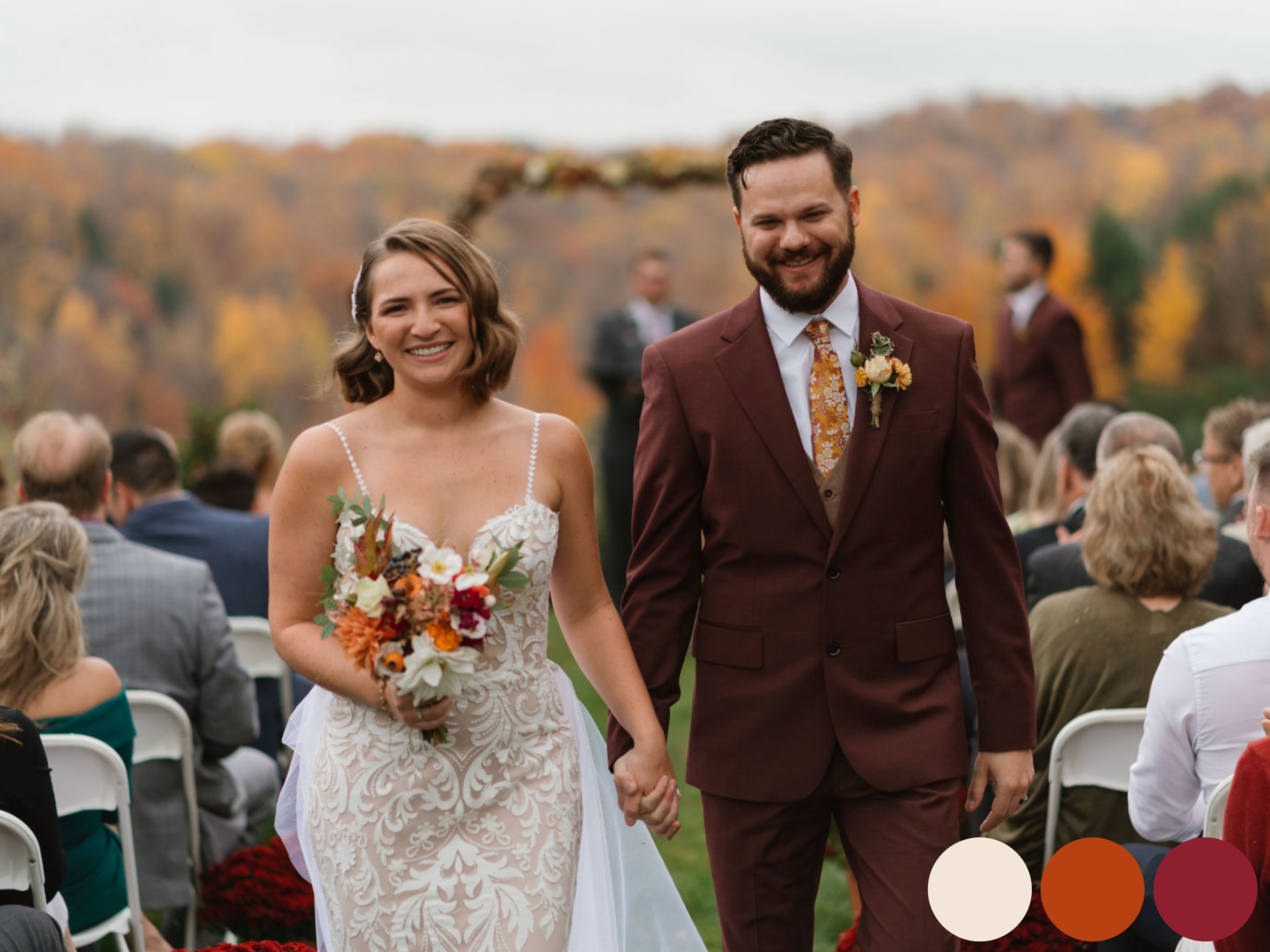
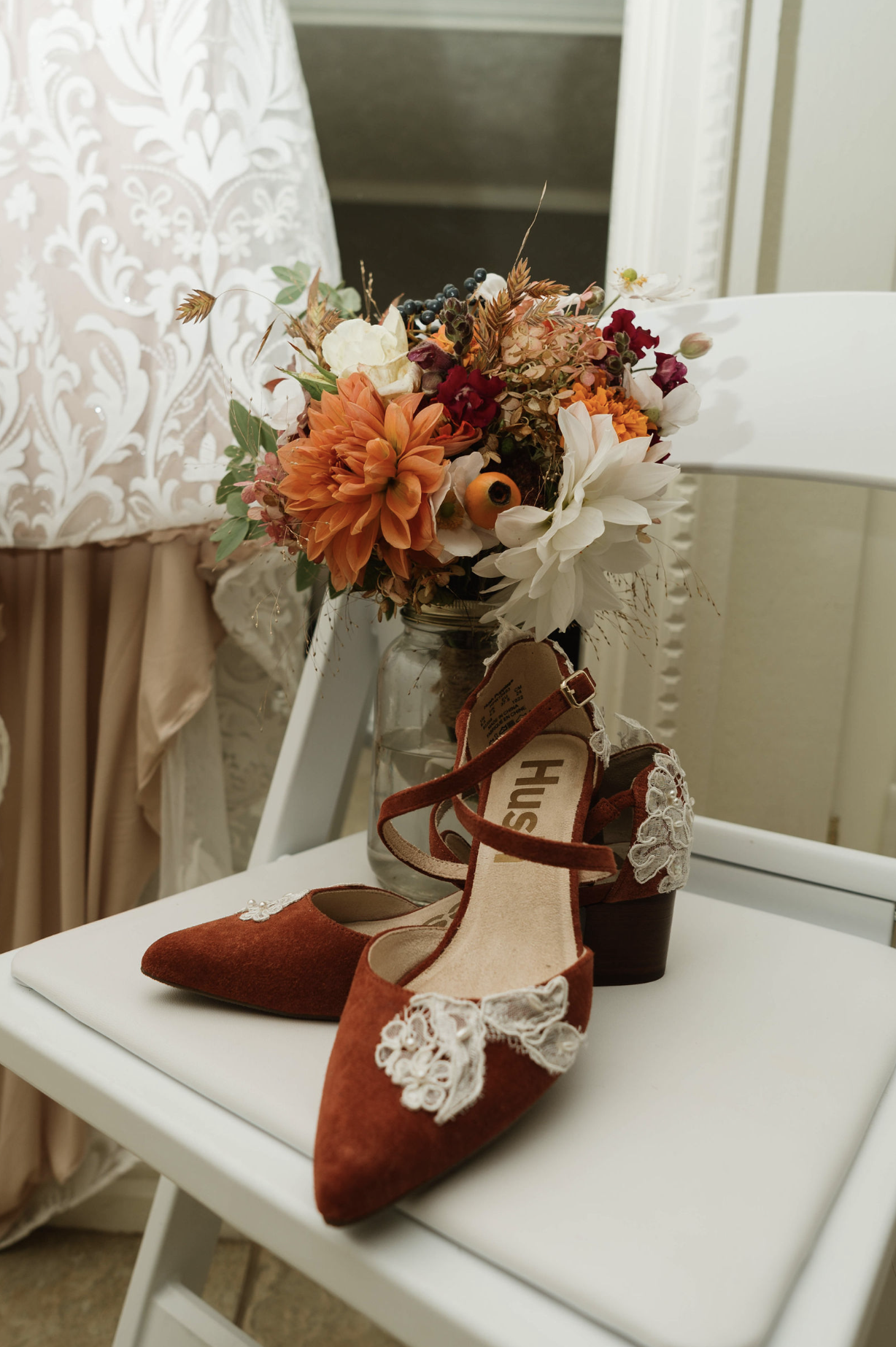
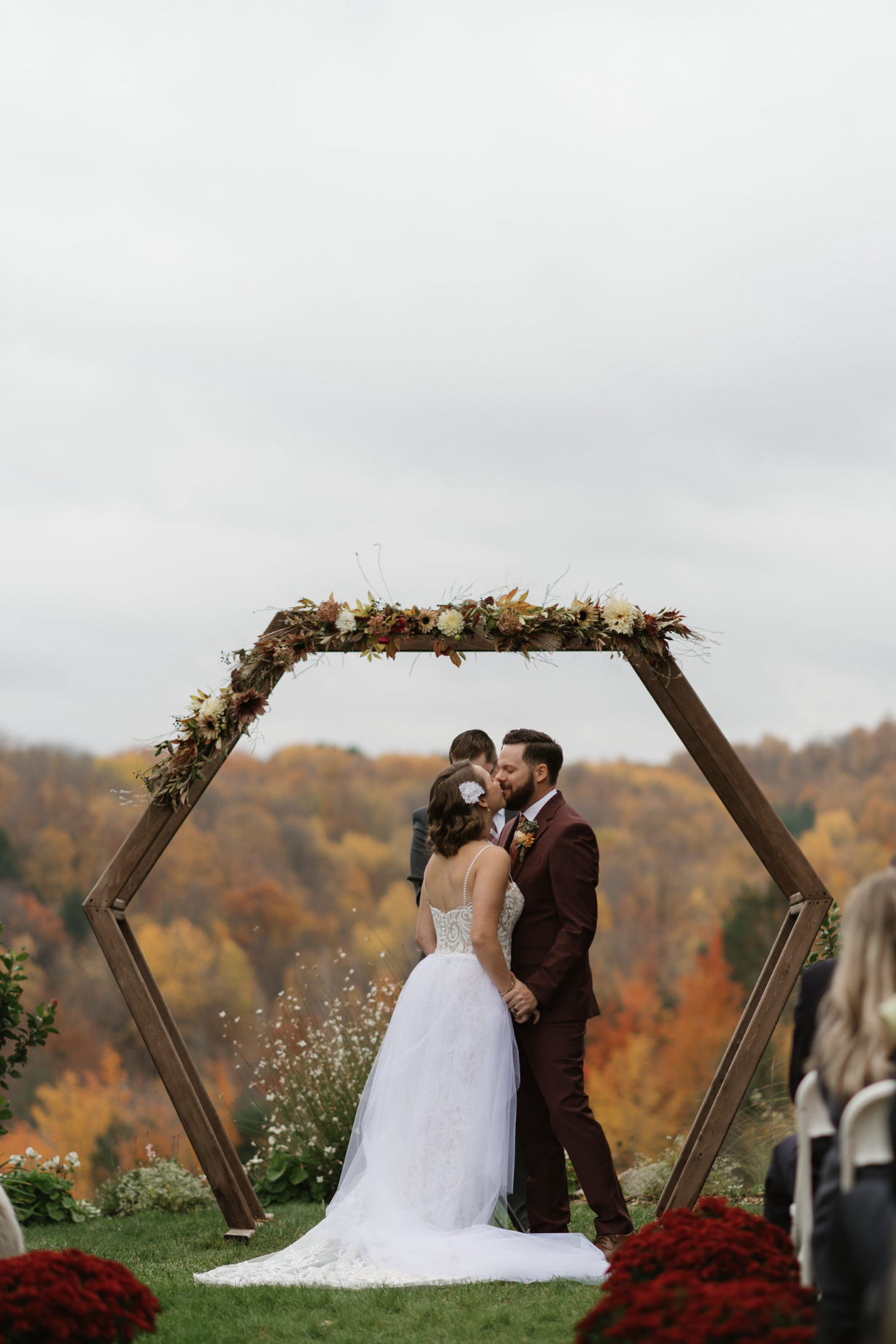
Fall Palette 3: Warm Autumn Tones
As the season deepens, fall palettes shift toward richer, more grounded color.
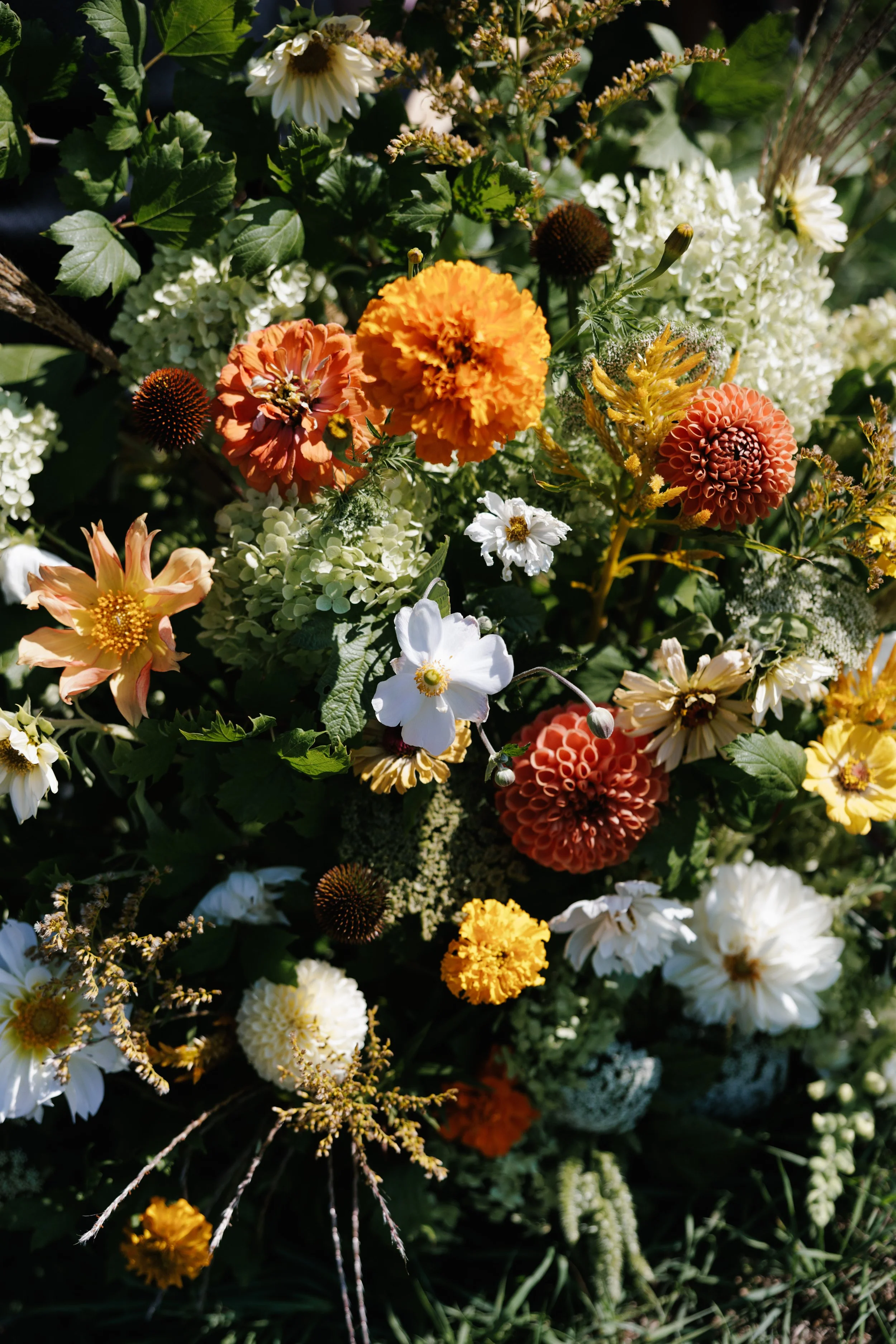
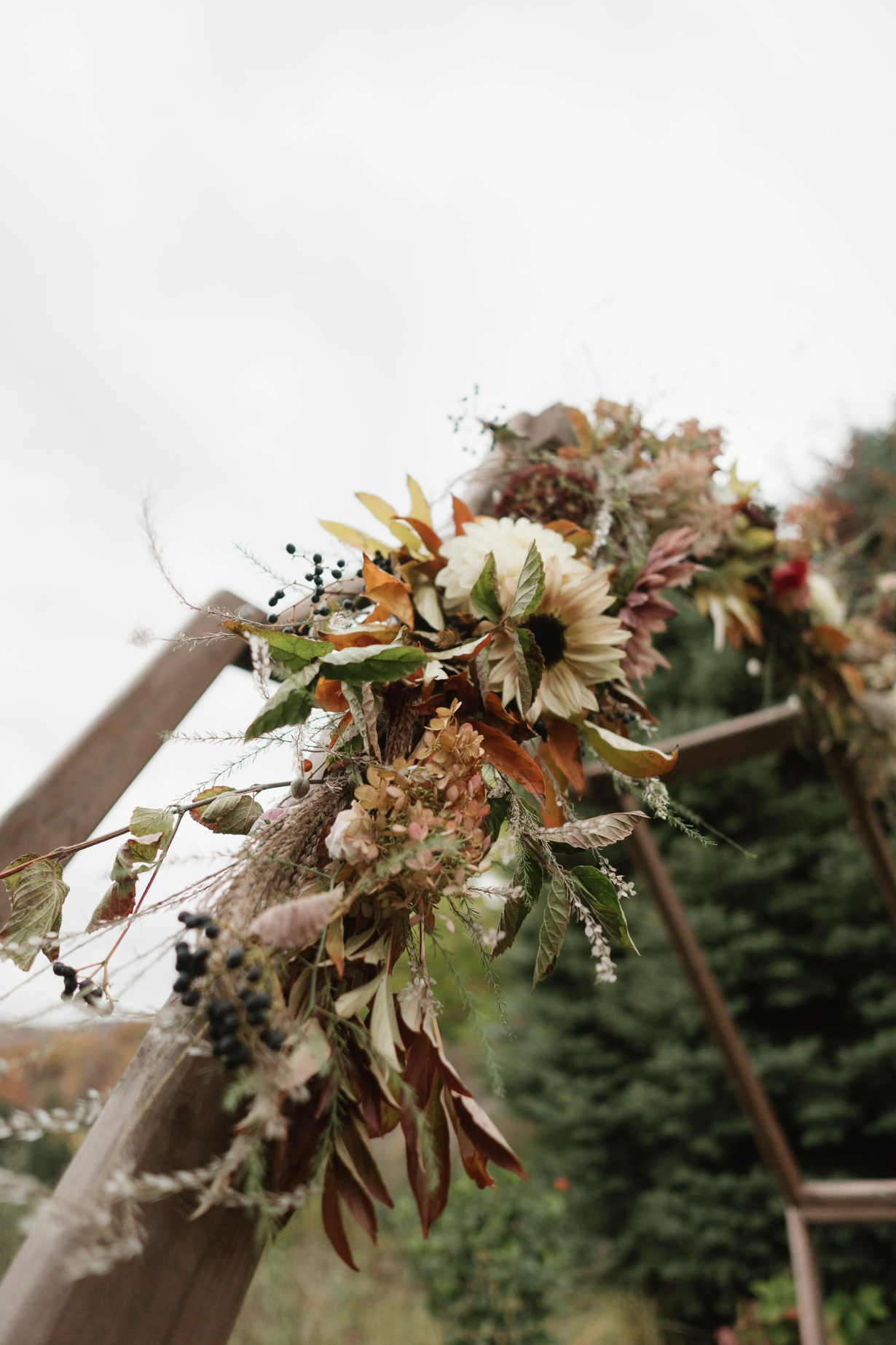
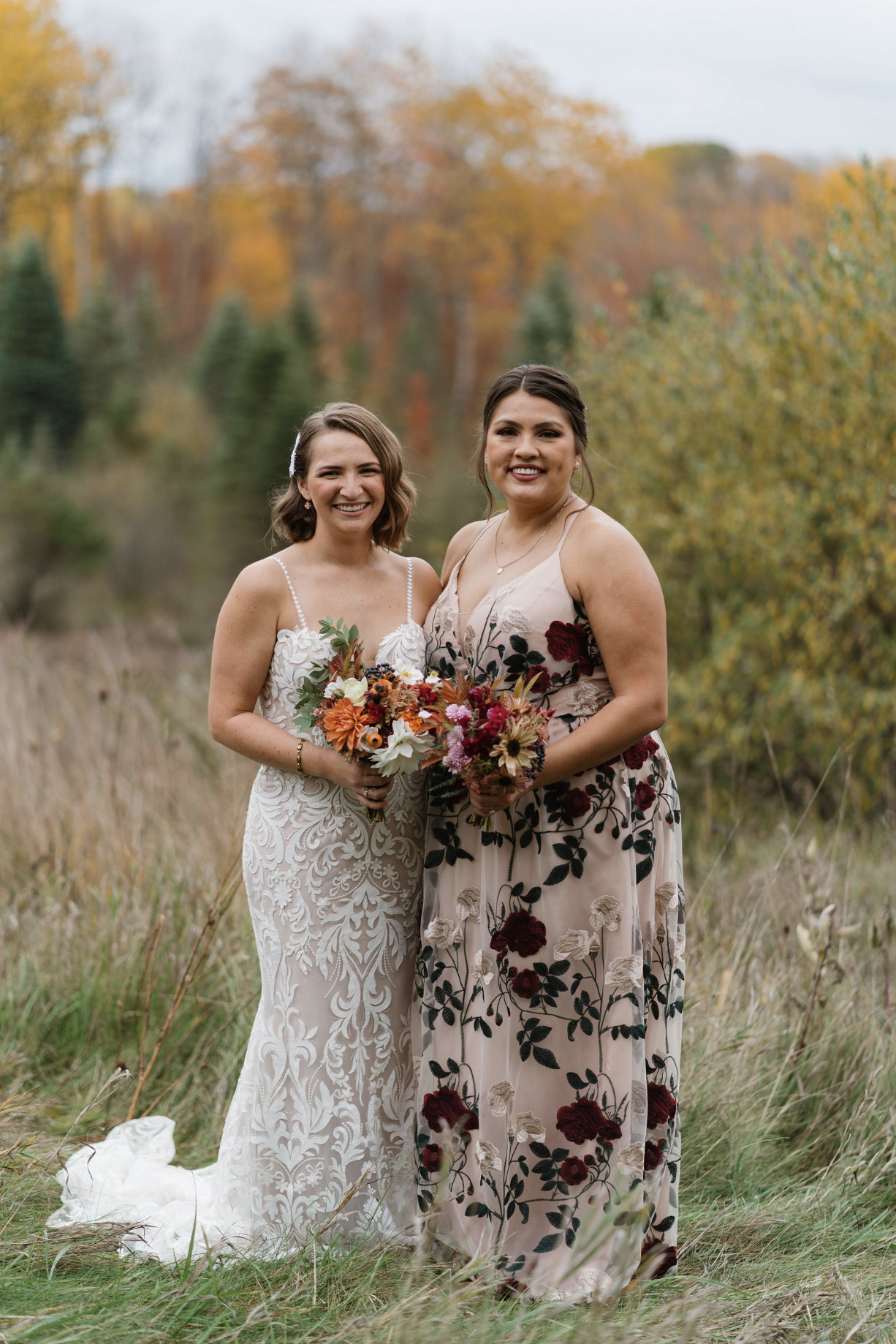
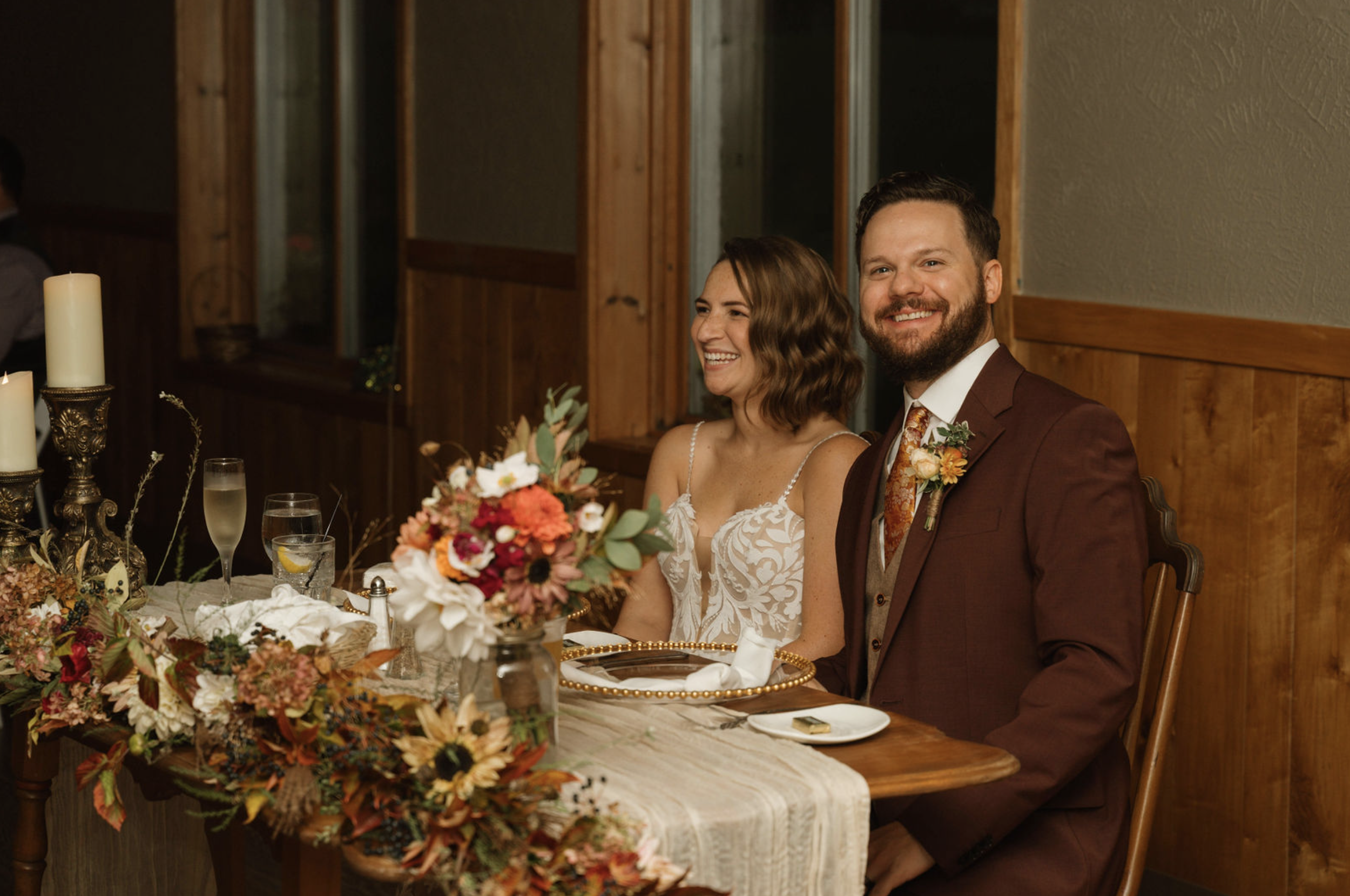
This late October wedding at Timberlee Hills is a perfect example. Tones like rust, terracotta, burnt orange, and deep burgundy are layered with softer neutrals to create a palette that feels warm and immersive.
Using blooms like dahlias and other late-season varieties, these designs reflect what is in bloom in October. The emphasis moves away from variation and toward depth, with color and texture working together to create a more concentrated look.
Compared to earlier palettes, these arrangements feel fuller and more structured. The result is a style that feels anchored to the landscape, with a sense of weight and intention that defines late fall.
This palette is ideal for couples exploring autumn wedding flower colors and looking for something that feels rich, cohesive, and deeply seasonal.
Image credit: Fresh Prints
White Wedding Flowers Across Every Season
White is one of the most timeless choices when it comes to wedding florals. It is often one of the first directions couples are drawn to because it feels clean, classic, and versatile.
What is less obvious is how much white changes throughout the year. The tone, texture, and supporting elements shift depending on what is in bloom, which is why white wedding flowers never look exactly the same from season to season.
Rather than being a single look, white wedding flowers become a foundation that is shaped by the blooms available at that moment.
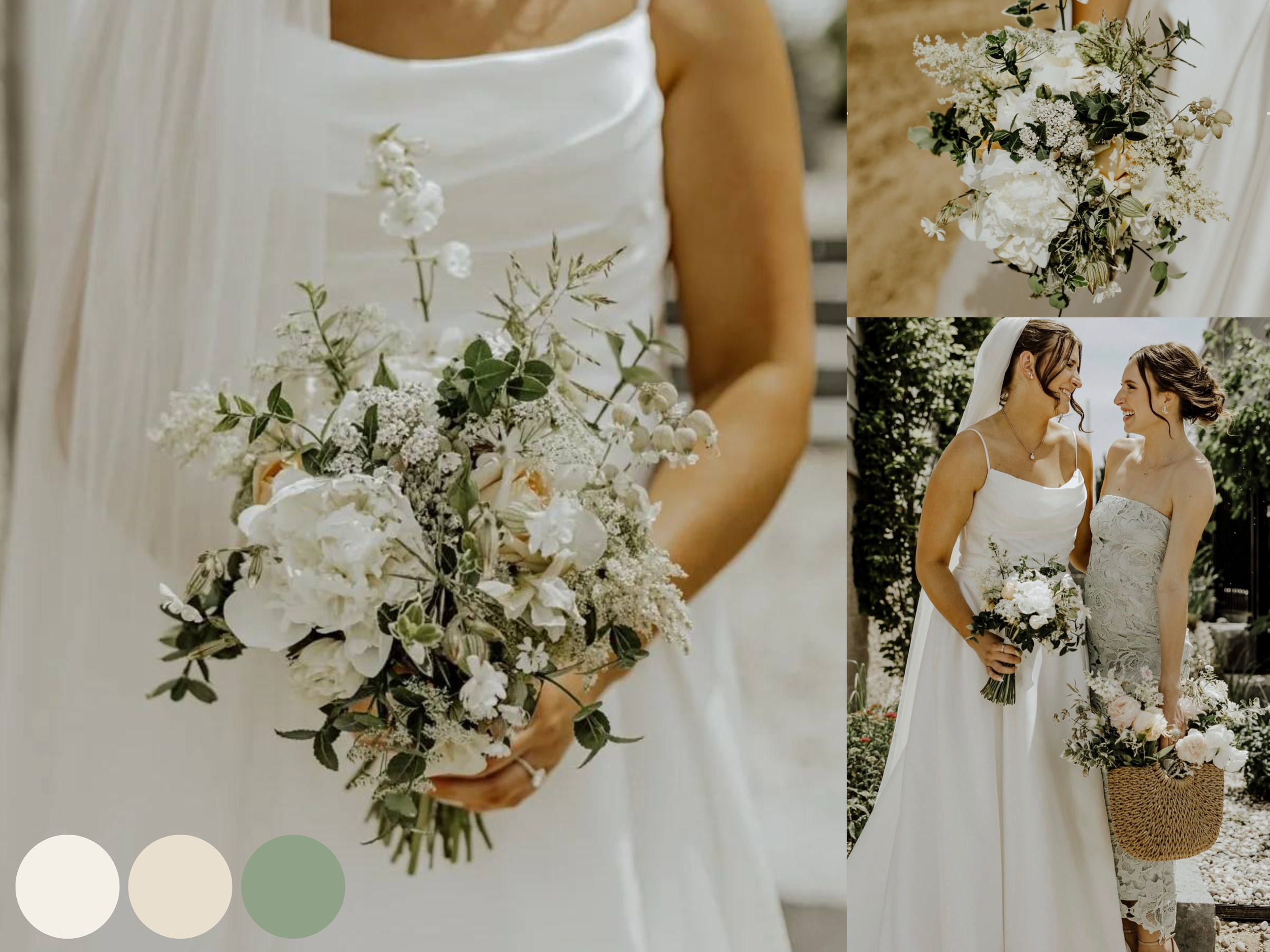
White Spring Palette: Soft & Airy Whites
In spring and early summer, white florals feel soft and light. This wedding at Harbor Brook Hall is a beautiful example. The palette is built from creamy whites and delicate textures, with blooms that feel fresh and full of movement.
Using flowers like roses, anemones, peonies, and other early-season varieties, these designs reflect what is in bloom in spring. The tones often lean warmer, with subtle ivory and cream rather than bright, stark white wedding flowers.
The result is a look that feels romantic, natural, and closely tied to the start of the season.
Image credit: Little Blue Bird Photography
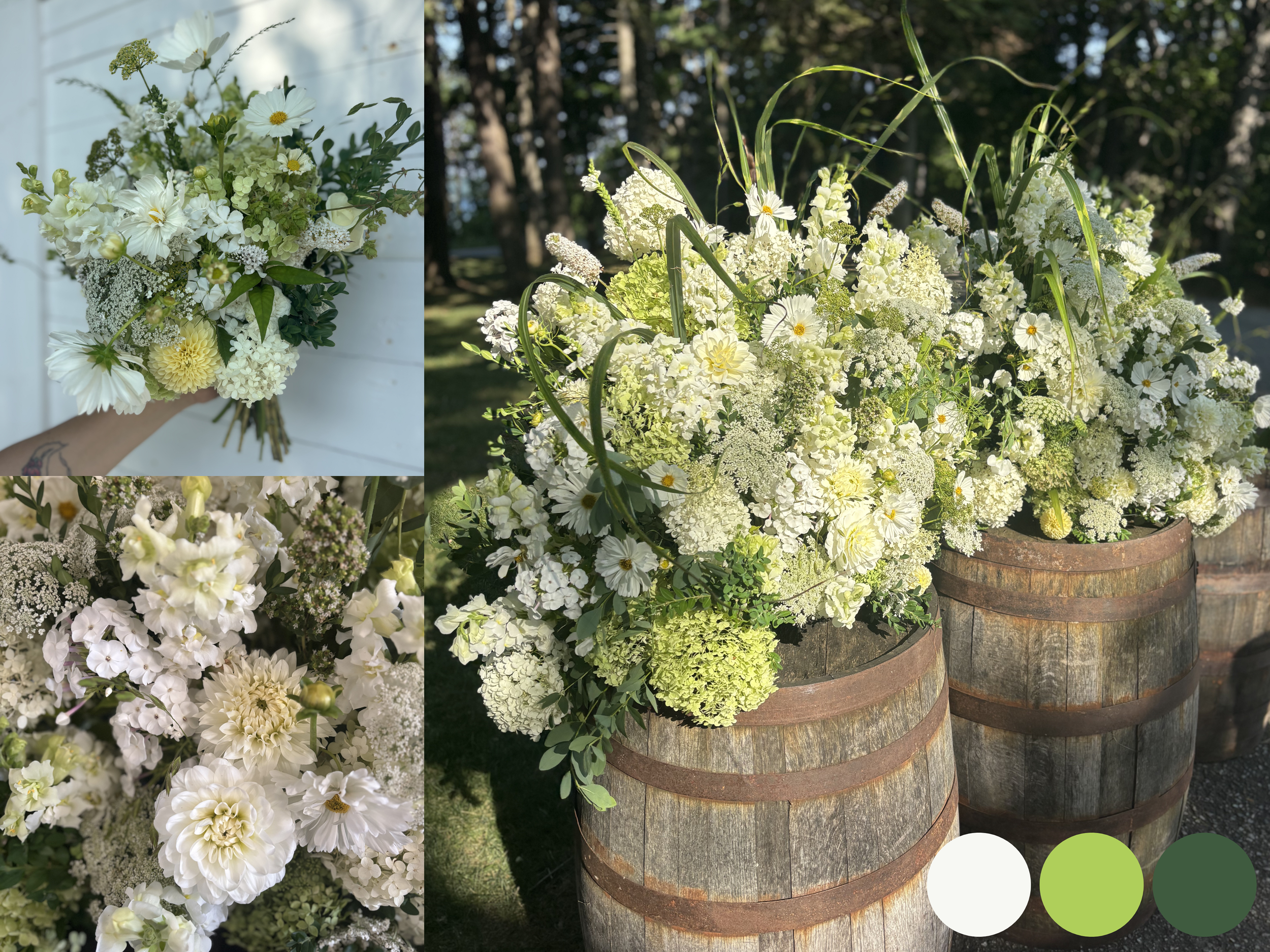
White Summer Palette: Full & Layered Whites
In peak summer, white florals become fuller and more abundant. This Peninsula Room wedding is a perfect example. Larger blooms like hydrangea, garden roses, and dahlias create arrangements that feel lush and layered, with more structure and presence than earlier in the season.
With so many varieties available at once, these designs rely on contrast in size, shape, and texture rather than color. The result is a look that feels complete and dimensional without needing bold tones.
This is a strong direction for couples drawn to white wedding flowers, offering a style that feels classic while still reflecting the fullness of the season.
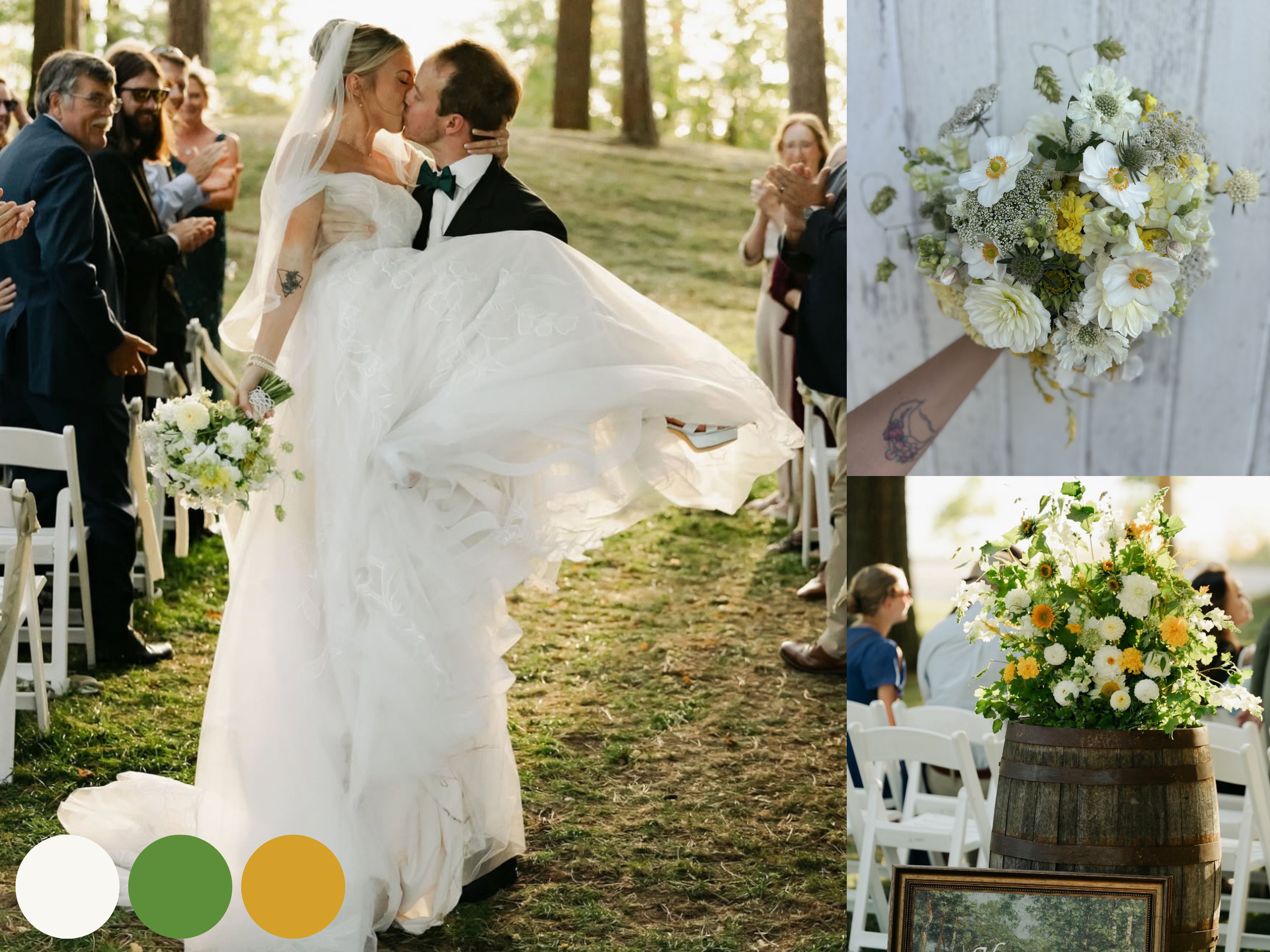
White Fall Palette: Textural & Warm Whites
In fall, white florals take on more depth and contrast. This Mission Table wedding reflects that shift, pairing soft white blooms with rich yellow tones, fresh greenery, and natural textures for a palette that feels grounded and layered.
Late-season flowers bring stronger structure, often combined with foliage, seed pods, and muted accents. The whites themselves tend to feel warmer, blending naturally into the surrounding landscape rather than standing apart from it.
Instead of acting as the main focus, white becomes part of a more textural, dimensional design. This approach works well for couples considering white wedding flowers who want something that still feels seasonal and connected to fall.
Image credit: Carly Lynne Visuals
Choosing Your Wedding Flower Color Palette by Season
Choosing your wedding flowers is not just about color. It is about understanding what is naturally available and allowing that to guide the overall design.
Each season offers its own palette, texture, and rhythm. From the airiness of spring wedding flowers to the fullness of summer wedding flowers and the richness of fall wedding flowers, every part of the year brings something different to work with.
When you begin with designing wedding flowers by season, everything else becomes easier. Colors feel cohesive, arrangements feel natural, and the overall design comes together without feeling forced (or sourced). Instead of trying to recreate a specific look, the process becomes more about discovering what is already there and building from it.
If you are planning a wedding in Northern Michigan and want florals that feel thoughtful, seasonal, and completely your own, you can inquire here to start the conversation.